







Jacobean Settle Bench
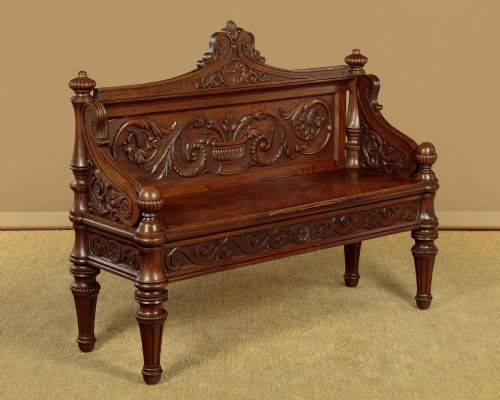
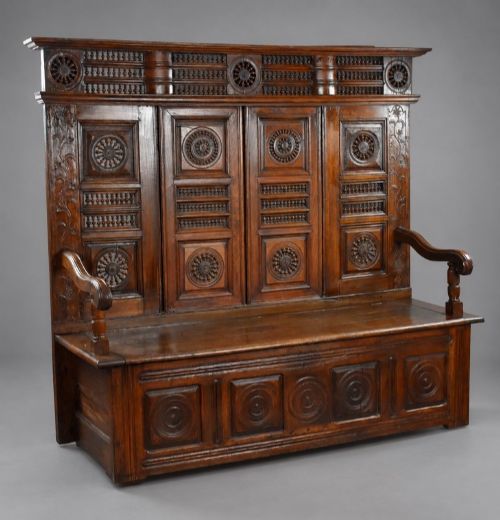
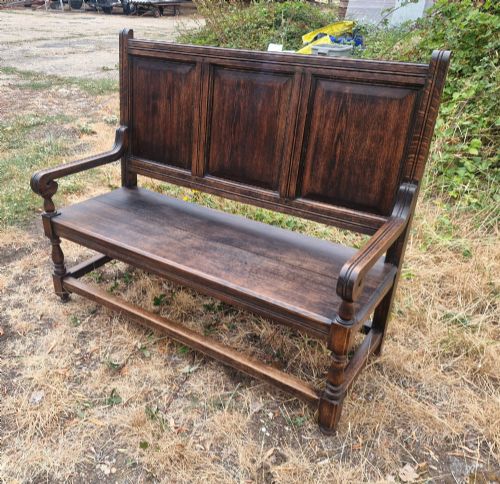
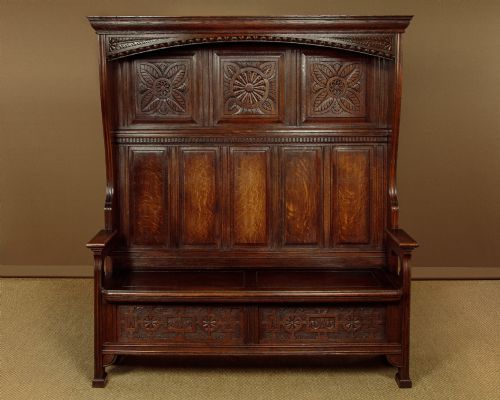
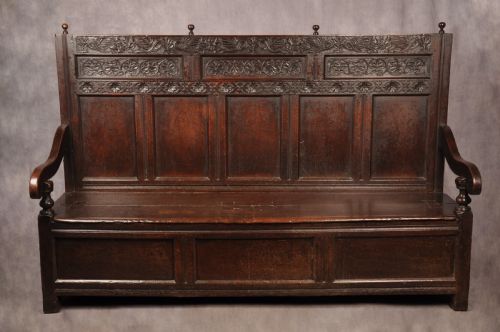
A jacobean settle bench brings solid timber architecture indoors, offering high panelled backs and box seats built for draughty halls.
Jacobean Settle Bench
A jacobean settle bench functions primarily as a heavy seating option for hallways and reception rooms, often incorporating enclosed storage beneath the seat. These pieces range from authentic seventeenth-century examples originating in England to later revival iterations produced across the Victorian and Edwardian periods.
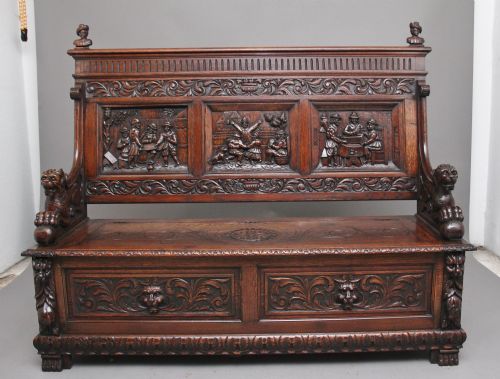
Makers working during the revival eras of the nineteenth and twentieth centuries adopted the proportions and ornamentation of seventeenth-century joinery, producing sturdy oak seating with carved backs.
Quality and Distinction
The distinction between a standard piece and a superior one rests upon the depth and crispness of the carved ornamentation, such as the execution of panel mouldings and figural details like the Green Man. Early seventeenth-century examples derive their standing from original timber surfaces and period construction methods.
Proportion and scale dictate the visual weight of the bench within a room, with smaller proportions and integrated storage drawers marking the more versatile variations. Surface finishes range from stripped golden oak to dark patinated timber and limed backs, each altering the visual clarity of the grain.
Jacobean Settle Bench Retail Price Guide 2026
Typical asking prices for jacobean settle bench among the pieces listed under this phrase on Sellingantiques today, from the lower quarter to the upper quarter. They describe what is for sale here now, not the wider market.
Object variations range from simple hall seats and canopy top box settles to convertible monks benches equipped with storage drawers.
The Jacobean Settle Bench Glossary
- Settle
- A wooden bench with a high back, solid arms, and often a closed base or box seat designed to keep out draughts. These pieces provide traditional seating for hallways and domestic rooms.
- Monks Bench
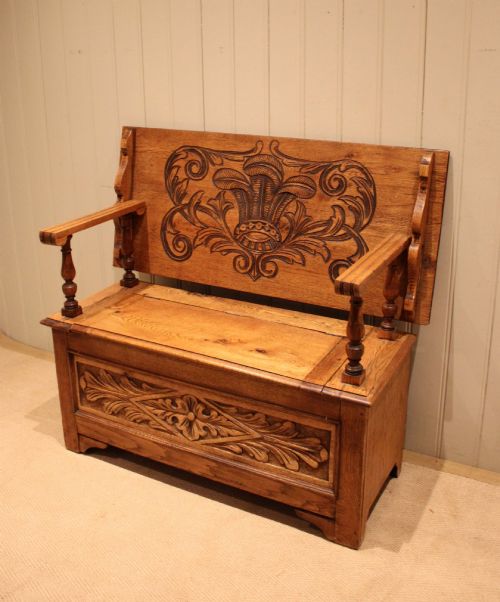
- A dual-purpose convertible piece featuring a hinged top that folds down to form a table or tilts back to serve as a chair or bench back. This form appears frequently in early twentieth-century oak.
- Wainscot
- A type of wooden panelling utilised on the backrests of seventeenth-century settles, constructed from thin boards fitted into grooved framing. The term reflects domestic interior woodwork of the period.
- Box Settle
- A variant of the bench featuring a hinged seat lid that opens to reveal a storage compartment underneath. It combines seating utility with chest storage for blankets or garments.
- Revival
- A nineteenth or twentieth-century stylistic movement that recreates historic aesthetics, seen here in Victorian and Edwardian interpretations of seventeenth-century joinery and carving.
Jacobean Settle Bench: Frequently Asked Questions
How do I spot a seventeenth century settle?
Authentic seventeenth-century pieces show period construction methods such as pegged joints, hand-riven timber, and deep natural patina acquired over centuries of use.
These early examples typically feature solid wainscot panel backs and heavy box bases without the modern mechanical hinges found on later revival pieces.
What is a monks bench used for?
A monks bench serves as a dual-purpose item designed to act as both a hallway seat and a small table through a folding top mechanism.
The hinged back pivots downward to rest on the arms, creating a flat surface for various domestic tasks while concealing storage beneath the seat.
Where should I place a hall bench?
Hall benches and settles suit entrance spaces, corridors, and large reception rooms where their high panelled backs can be appreciated against a wall.
Their enclosed lower box construction also offers practical storage for everyday items while keeping draughts away from the seating area.
Why is limed oak used?
Limed oak finishes involve rubbing a white or light pigment into the open pores of the timber grain to highlight the texture and pattern of the wood.
This treatment appears on specific Victorian and revival pieces to lighten the visual weight of dark oak furniture.