




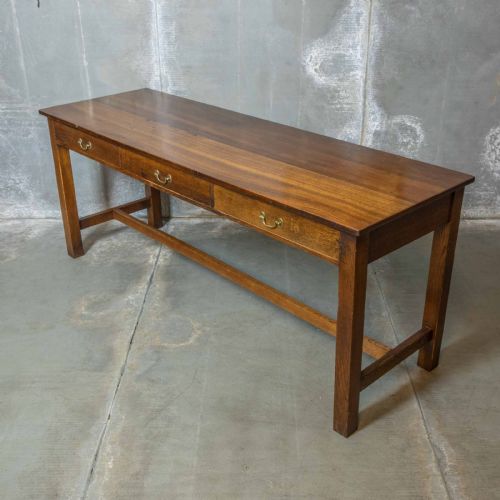


Jacobean Serving Table
These jacobean serving table pieces span sturdy seventeenth-century originals and later revival designs, offering solid oak construction and rich historic character.
Jacobean Serving Table
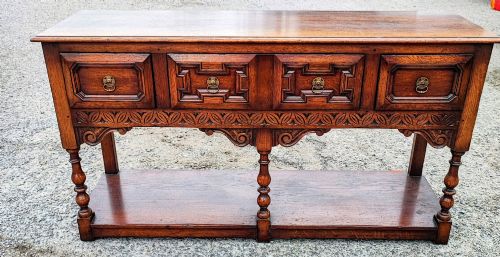
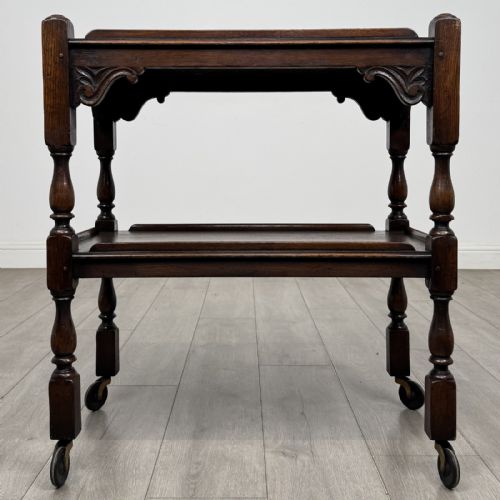
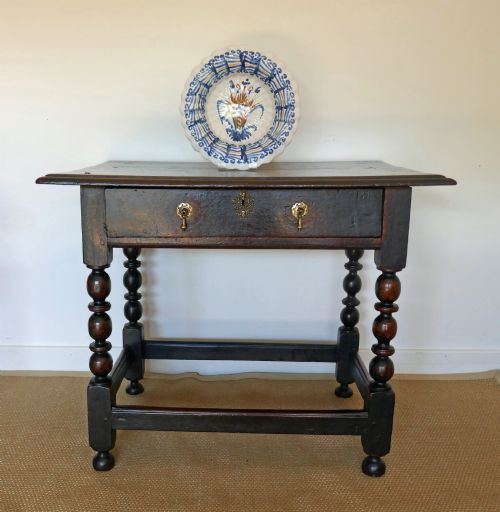
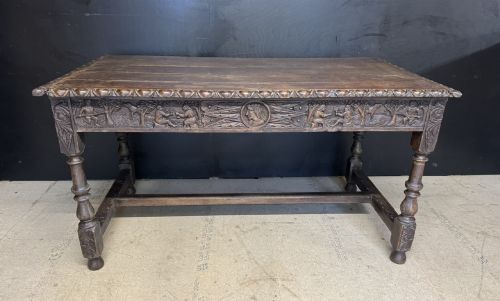
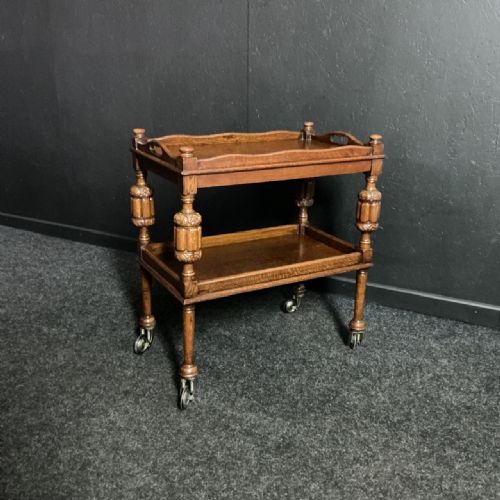
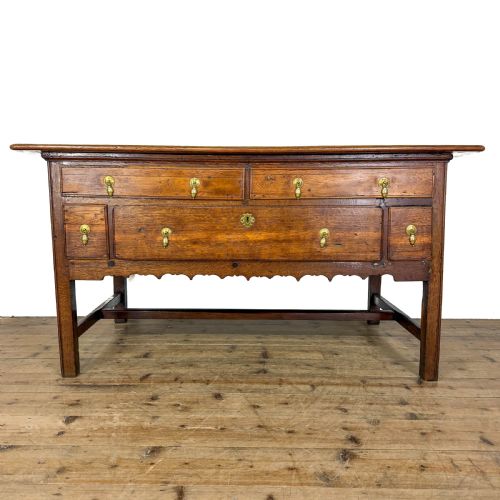
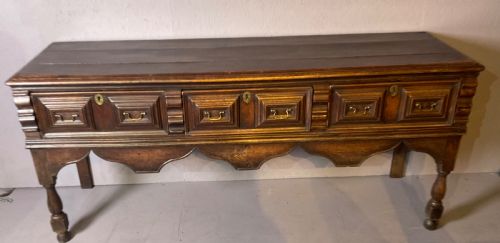
A jacobean serving table typically presents as a heavy oak surface designed for food service or display, drawing on seventeenth-century aesthetics. The selection ranges from authentic seventeenth-century dresser bases and side tables to nineteenth-century Gothic revival pieces and twentieth-century oak tea trolleys.
Buyers encounter robust side tables, low dressers, and refectory serving tables alongside smaller trolley formats mounted on castors. The common thread is solid oak timber and traditional joinery, spanning multiple centuries of British cabinet making.
Materials and construction
Oak dominates every piece in this category, providing the structural integrity and dense grain necessary for centuries of daily use. Joinery relies on traditional pegged mortise and tenon frames, which support heavy tops without modern adhesives.
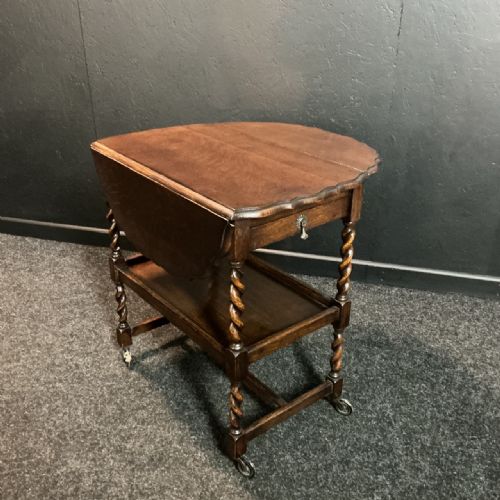
Decoration is achieved through carving, moulding, and turning rather than applied veneer. Artisans utilised techniques such as bobbin turning and barley twisting for legs and supports, complemented by brass or iron hardware where fitted.
Jacobean Serving Table Retail Price Guide 2026
Typical asking prices for jacobean serving table among the pieces listed under this phrase on Sellingantiques today, from the lower quarter to the upper quarter. They describe what is for sale here now, not the wider market.
Oak is the exclusive primary material across all listed items, occasionally paired with brass or iron castors and hardware.
Assessing quality and proportion
Quality rests in the crispness of the carved detail and the integrity of the timber framework. Bold proportions and deep, hand-chiseled relief work separate superior seventeenth-century examples from later, flatter revival interpretations.
Surface patination also dictates distinction. Tables that retain a deep, warm hue through natural waxing outshine pieces with stripped or over-restored finishes.
The Jacobean Serving Table Glossary
- Lowboy
- A small oak table with drawers, typically standing on four legs, used originally for dressing or serving.
- Credence table
- A folding or side table featuring supportive framework, often associated with ecclesiastical or domestic serving.
- Refectory table
- A long, narrow dining or serving table built with substantial timber legs and central stretchers.
- Bobbin turning
- A form of lathe turning that produces a series of spherical or spool-shaped wooden ornaments along a leg or stretcher.
Jacobean Serving Table: Frequently Asked Questions
What is a jacobean serving table?
A jacobean serving table is a sturdy wooden board used for food preparation and display. These pieces usually feature solid oak construction with stylistic roots in the seventeenth century.
Designs vary from low dresser bases with drawers to tall refectory formats and later revival iterations on castors. They serve as functional anchor points in dining rooms and hallways.
How do I date an oak table?
Dating relies on examining the tool marks, timber shrinkage, and joinery methods visible beneath the top and along the frame. Pegged joints and hand-sawn board edges point toward earlier centuries.
Later nineteenth and twentieth-century revivals often incorporate machine-cut elements and standardised hardware. Comparing the style of turning to known period examples helps narrow the decade.
Were tea trolleys part of the jacobean tradition?
Tea trolleys emerged much later, largely taking shape around the early twentieth century. Makers applied jacobean revival styles, such as barley twist legs and carved oak trays, to mobile service carts.
These hybrids combined traditional aesthetic motifs with the modern convenience of wheels and lift-off trays. They bridge historic styling with early twentieth-century domestic life.
How do I care for antique oak?
Antique oak requires stable humidity and regular treatment with traditional beeswax to maintain its moisture balance. Avoid placing these tables near direct heat sources that can split old timber.
Routine dusting with a soft cloth preserves the historic patination accumulated over centuries of use. Gentle care ensures the surface remains protected against daily wear.