

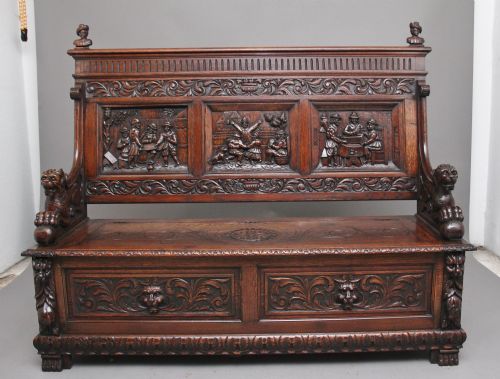


Jacobean Revival Hall Bench
A jacobean revival hall bench brings heavy carved timber and high-backed presence into an entranceway, offering both seating and hidden storage.
Jacobean Revival Hall Bench
When you search for a jacobean revival hall bench, you are looking at substantial entryway seating rooted in the robust styles of the nineteenth and early twentieth centuries. These pieces draw heavily on earlier seventeenth-century motifs, translating heavy proportions and dark timbers into functional furniture for Victorian and Edwardian halls.
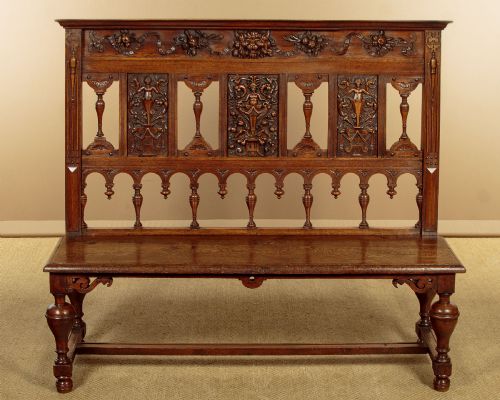
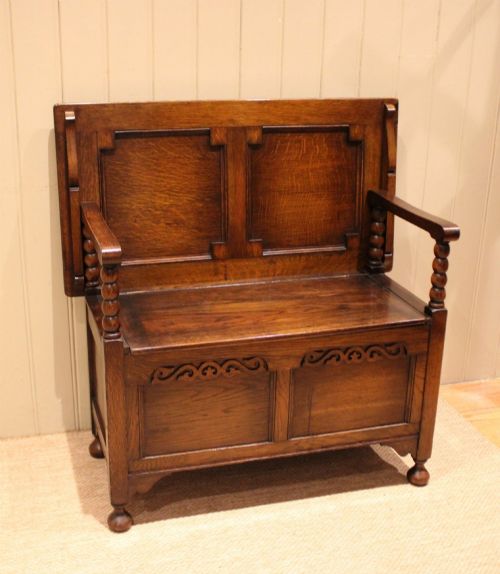
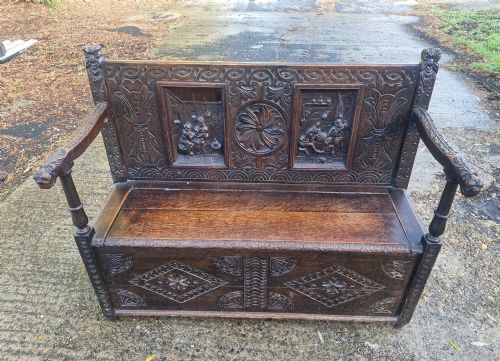
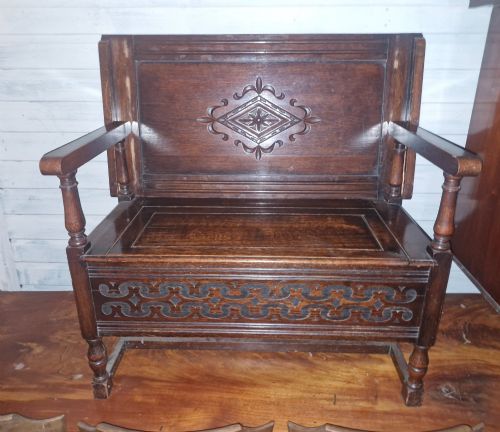
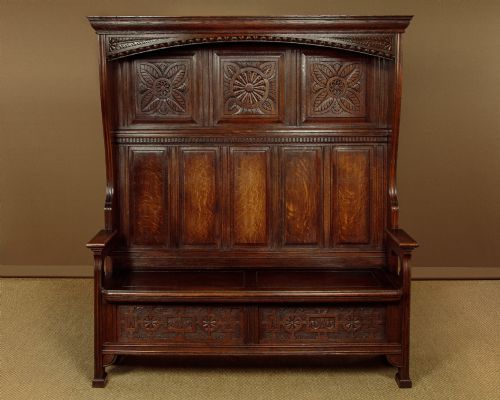
The versions you are most likely to meet on this page include box settles, monks benches with fold-over tops, and panelled hall seats. Originating across periods from the mid-nineteenth century through to the 1930s, they often feature hinged seats that lift to reveal storage space for boots and heavy garments.
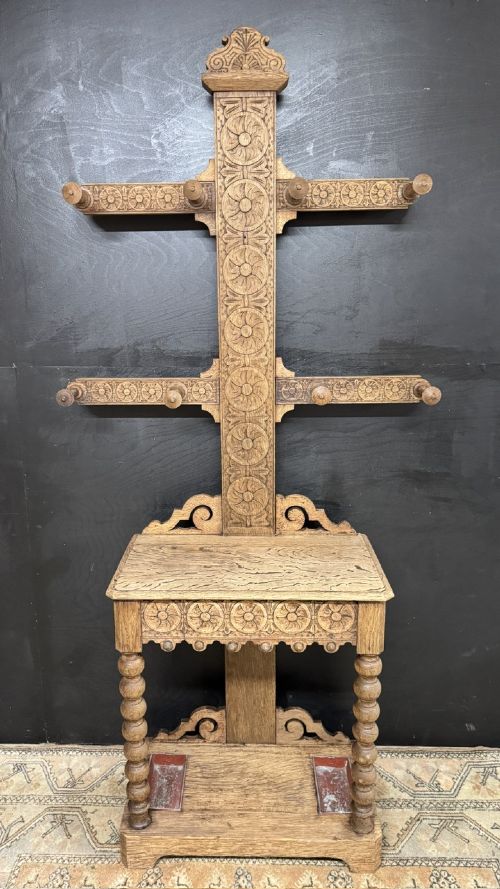
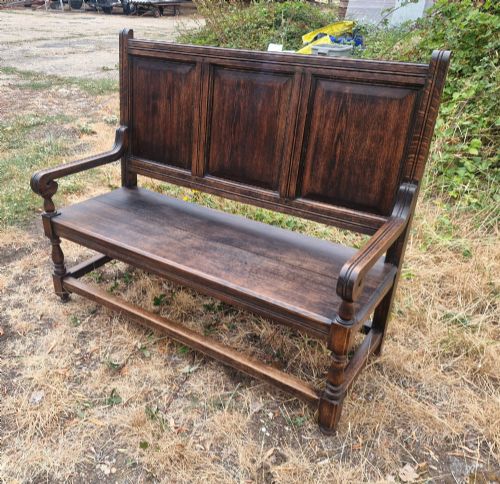
Forms vary from high-back settles to smaller hall seats and combination items incorporating stick and hat stands. Oak serves as the primary material across nearly every listed example, grounding the category in traditional British cabinet-making traditions.
Materials and construction
Makers built these pieces primarily from solid oak, utilising its dense grain to support deep relief carving and structural panels. Iron and other metals appear in hardware such as hinges and brackets, while occasional textiles like velvet and fabric fringe turn up on associated window seats.
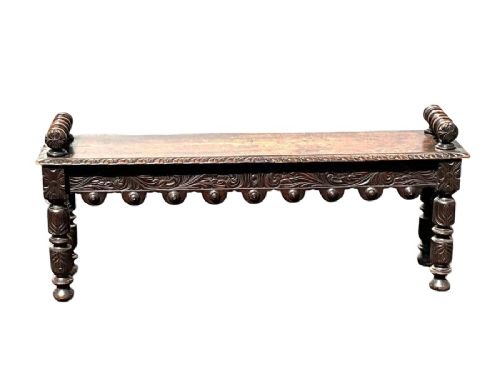
Joinery relied on traditional panelled construction, allowing the heavy timber to expand and contract without splitting. Carvers applied surface ornament by hand, working directly into the oak boards to create strapwork, linenfold, and figural details like the Green Man.
Jacobean Revival Hall Bench Retail Price Guide 2026
Typical asking prices for jacobean revival hall bench among the pieces listed under this phrase on Sellingantiques today, from the lower quarter to the upper quarter. They describe what is for sale here now, not the wider market.
Listings span from the mid-nineteenth century through to the 1930s, with oak appearing as the dominant material across all periods.
Judging quality in these benches
The distinction between standard production and finer examples rests in the depth and execution of the carved ornament. Crisp, hand-chiselled detailing on the crest rails and front panels separates superior seating from simpler, mechanically produced alternatives.
Timber selection and structural integrity also define the upper tier of these pieces. Heavier gauge oak, well-fitted lidded storage compartments, and robust stile-and-rail construction ensure the bench remains solid under daily use in a busy entrance hall.
The Jacobean Revival Hall Bench Glossary
- Settle
- A wooden bench with a high back, solid arms, and often a storage box beneath the seat. This form provided draught protection in large halls.
- Monks bench
- A versatile seat featuring a hinged back that folds down flat over the armrests to form a table top. They combine dual functions in a single timber frame.
- Box settle
- A heavy seat incorporating a lidded chest directly under the squab or wooden seat base. It offered practical storage for heavy woollens and boots.
- Green Man
- A sculptural architectural motif depicting a human face disgorged from foliage or entirely composed of leaves and vines. It appears frequently in carved woodwork.
- Strapwork
- Flat, interlaced bands carved in low relief to resemble leather straps or ribbons folded into geometric patterns. This decoration is typical of revival cabinetry.
Jacobean Revival Hall Bench: Frequently Asked Questions
How were these benches used originally?
These benches sat in entrance halls to provide a firm seat for putting on footwear and receiving visitors. The high backs and enclosed box bases helped shield people from cold draughts blowing in through front doors.
Many examples doubled as storage chests for outdoor wear, hats, and walking sticks. Versatile versions like monks benches could also serve as makeshift tables when the top was folded forward.
How do I tell an 1860 bench from a 1920 one?
Mid-nineteenth-century examples often display denser, deeper hand-carving and heavier proportions associated with Victorian revival movements. Timber patination tends to show a darker, richer warmth accumulated over decades of use.
Twentieth-century pieces from the 1920s and 1930s sometimes utilise lighter golden oak finishes and slightly more stylised machinery-assisted joints. Examining the construction of the interior storage box usually reveals the manufacturing era.
Where should I place a hall bench at home?
An entrance hall or wide corridor is the most natural setting, allowing the bench to function as practical seating for daily comings and goings. The internal storage space works well for keeping shoes and scarves out of sight.
They also suit large living rooms or reception areas where a substantial timber seat anchors an empty wall. Ensure you measure the clearance needed if you choose a design with a fold-over top.