
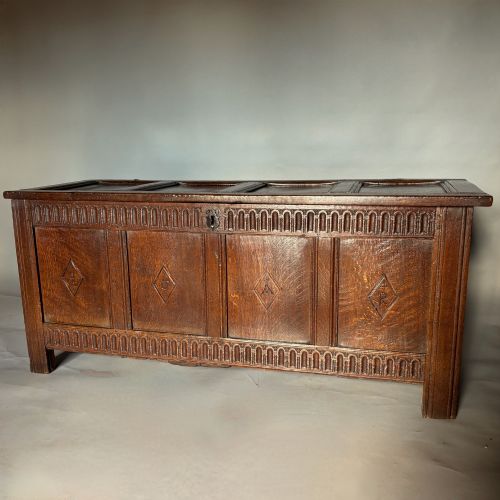
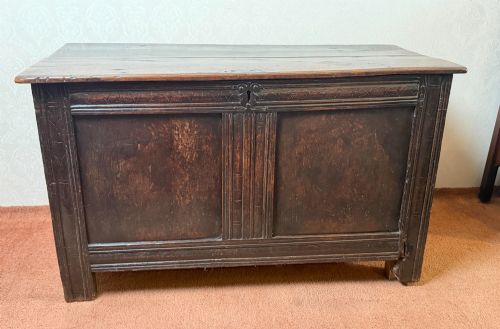
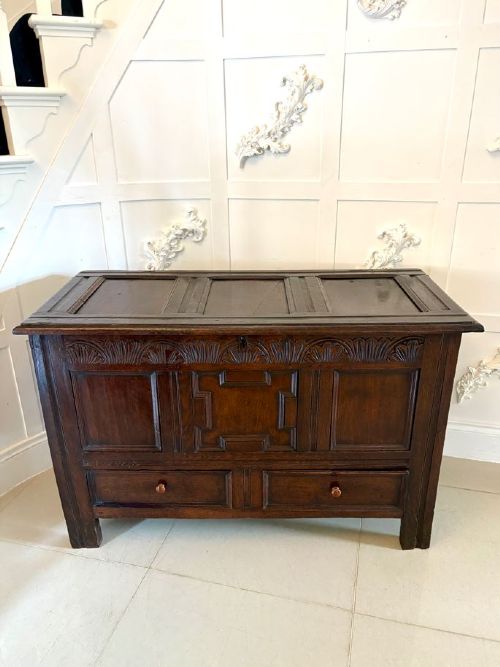
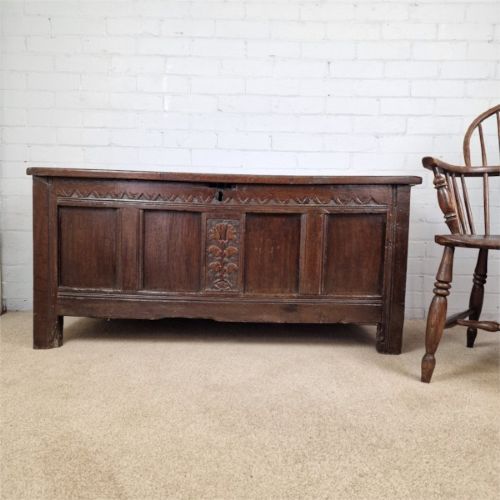

Jacobean Oak Blanket Box
A jacobean oak blanket box provides robust storage in heavy timber, bringing seventeenth-century character and practical depth to a room.
Jacobean Oak Blanket Box
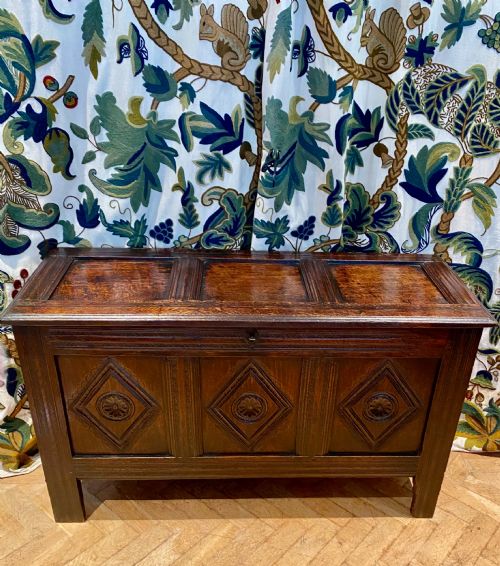
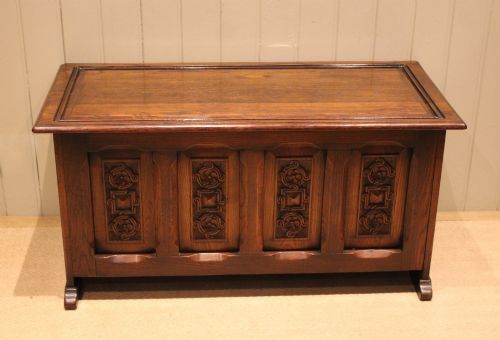
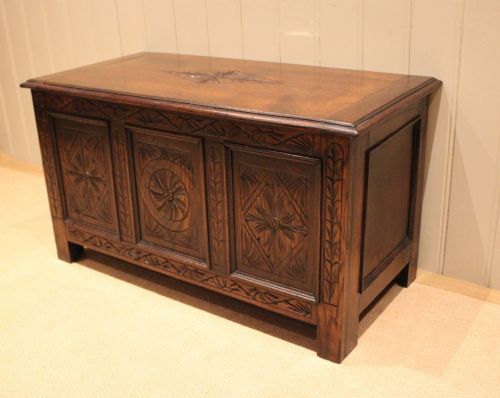
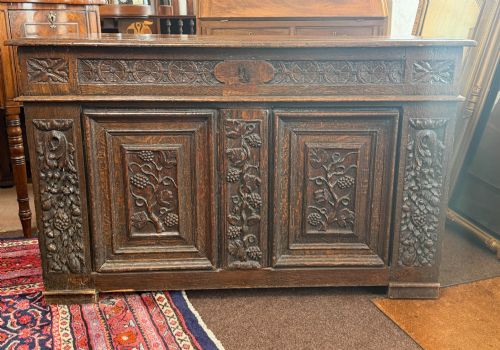
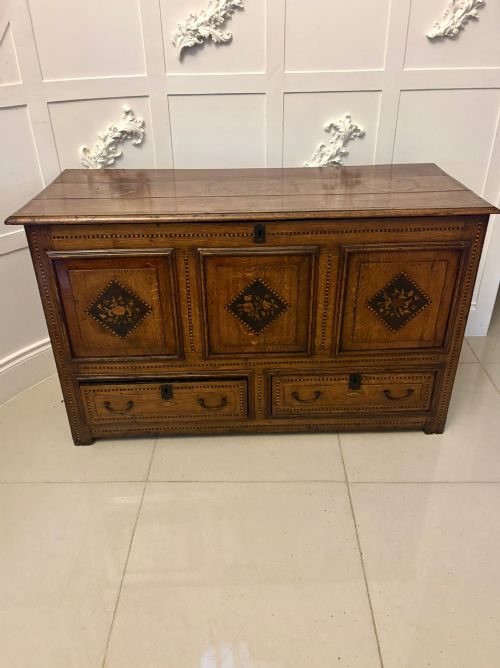
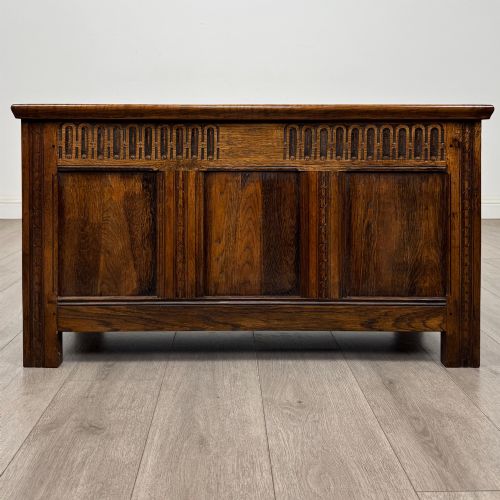
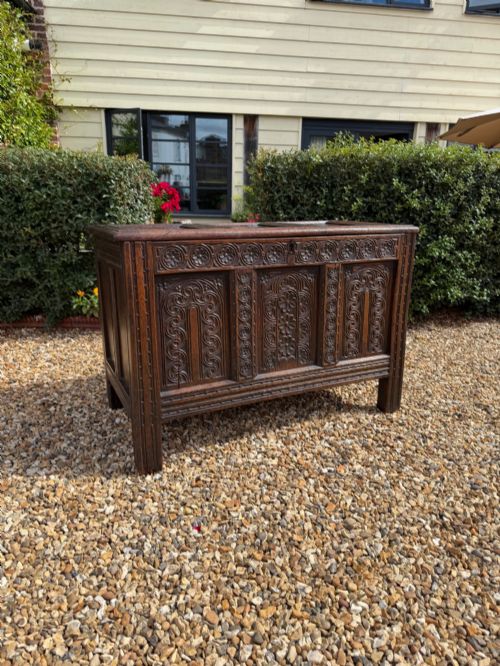
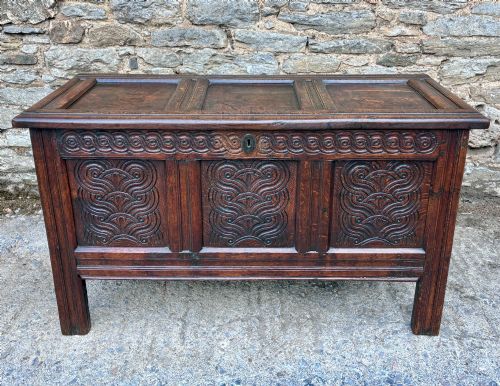
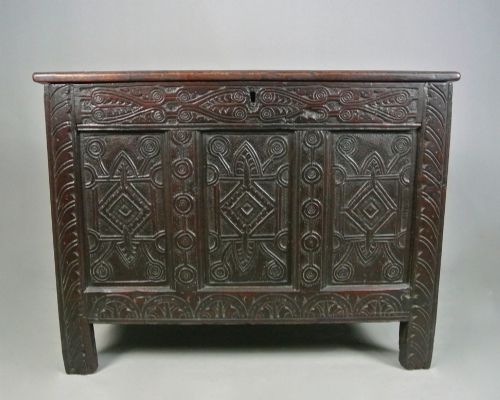
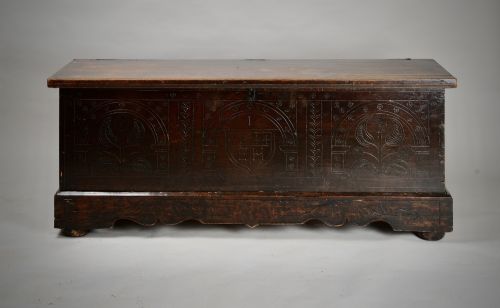
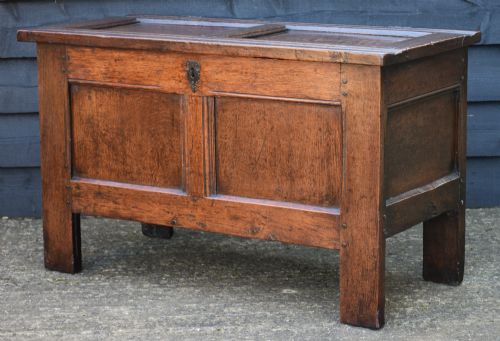
A jacobean oak blanket box typically takes the form of a coffer or chest designed for household storage, most frequently appearing in seventeenth-century pieces or later revivals from the twentieth century. These items range from plain panelled boxes to heavily carved examples featuring marquetry inlay or specialised forms such as mule chests and sword chests.
Buyers encounter period originals alongside pieces made during the Edwardian era and the nineteen-thirties in Jacobean Revival styles. The construction relies on sturdy timber frames enclosing recessed panels, creating a substantial silhouette suited to hallways, bedrooms, or living spaces.
How they were made
The primary material is oak, utilised either as solid timber or carved framing, often paired with iron hardware and brass details. Certain examples incorporate mixed inlay woods, ebonised wood, or marquetry inlay to decorate the primary surfaces.
Joinery methods define the construction, utilising framed panels rather than simple boards to accommodate the natural movement of timber over centuries. Carving is executed directly into the wood surface, sometimes enhanced with surface treatments like ebonising to create contrast.
Object forms recorded here include coffers, mule chests, sword chests, storage chests, and box stools.
What varies in quality
Quality rests on the crispness and depth of the carved ornamentation, the integrity of the original oak timber, and the proportion of the box. Early seventeenth-century examples with original joinery and minimal later alteration sit apart from twentieth-century revival pieces.
The Jacobean Oak Blanket Box Glossary
- Coffer
- A traditional heavy storage chest with a hinged lid. These boxes were used historically for storing valuables, linen, and documents.
- Mule chest
- A storage chest featuring one or more drawers beneath the main lift-top compartment. This form bridges the gap between the traditional coffer and the chest of drawers.
- Marquetry inlay
- Decorative patterns formed by fitting contrasting veneer woods into prepared recesses in the primary timber. This technique adds pictorial or geometric detail to the panels.
- Linenfold
- A style of wood carving that mimics folded fabric or linen cloth. It appears frequently on panels of period boxes.
- Ebonised wood
- Timber treated with a chemical stain or finish to imitate ebony. It provides a dark contrast against natural oak.
Jacobean Oak Blanket Box: Frequently Asked Questions
What is a jacobean oak blanket box?
A jacobean oak blanket box is a heavy wooden chest designed for storage, originating either in the seventeenth century or created during later twentieth-century revival periods. These items feature sturdy timber construction and panelled sides.
Many examples display carved ornamentation or inlay work reflecting seventeenth-century aesthetic traditions. They serve as functional furniture pieces that bring historical presence to modern interiors.
How were these chests used historically?
Historically, these chests served multiple domestic functions including the storage of heavy textiles, blankets, clothing, and valuable family documents. Because households possessed fewer fitted wardrobes, secure lidded boxes were essential for protecting belongings.
They also functioned occasionally as impromptu seating or tables within domestic spaces. The heavy lid kept contents secure from dust and pests in early homes.
How do I tell seventeenth-century pieces from later revivals?
Distinguishing period pieces involves examining the timber grain, tool marks, and construction methods used in the joinery. Seventeenth-century examples show hand-worked surfaces and period-appropriate peg fastenings that differ from twentieth-century machinery output.
Revival pieces made in the nineteen-twenties or thirties often utilise cleaner cuts and standardised dimensions while imitating older styles. Comparing the interior construction and wear patterns helps clarify the age of the timber.
Where should I place a blanket box at home?
These chests suit placement at the foot of a bed, along an empty hallway wall, or as a focal point in a living room. Their flat lids allow them to double as display surfaces for books or decorative objects.
The deep interior space provides practical concealment for bulky items like spare bedding or seasonal cushions. Placing them away from direct heat sources protects the historic oak timber from splitting.