


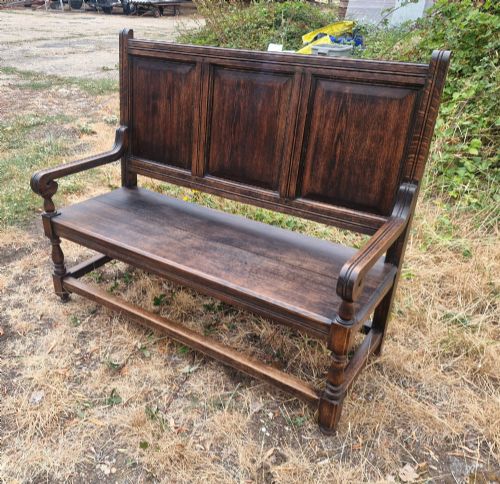

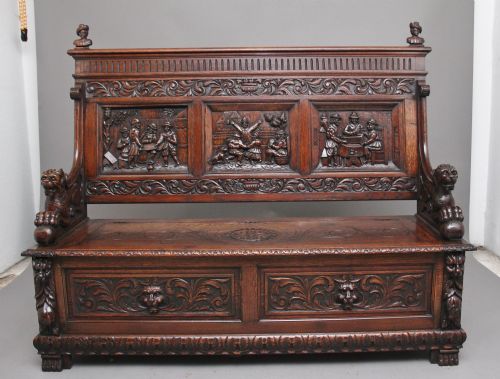
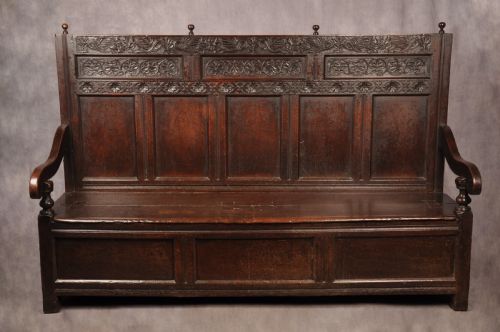


Jacobean Monks Bench
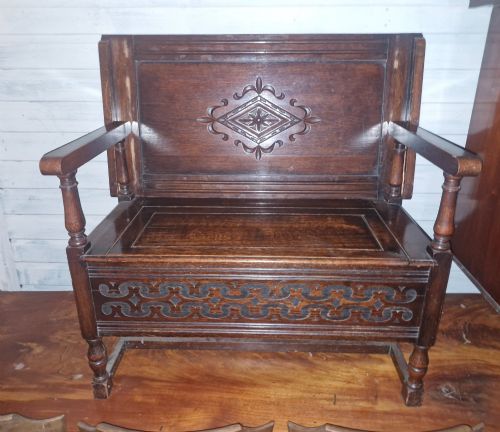
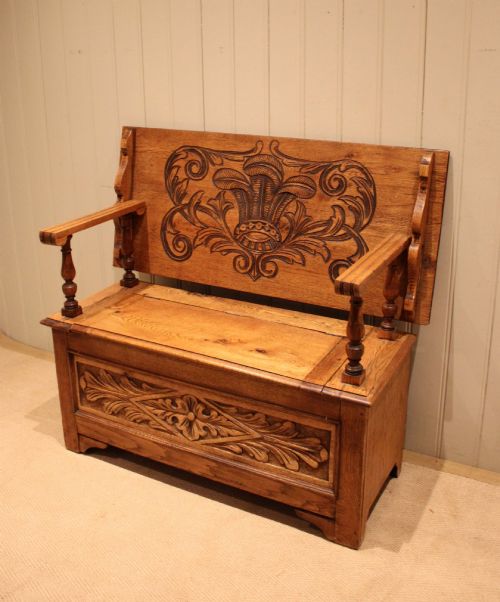
A jacobean monks bench combines heavy oak timber with a clever folding top to serve as both seat and table in a single piece.
Jacobean Monks Bench
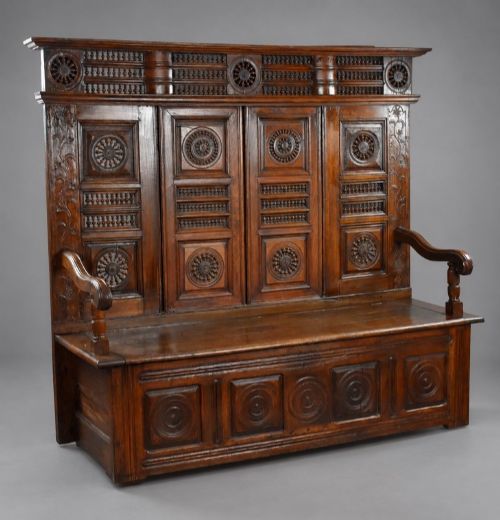
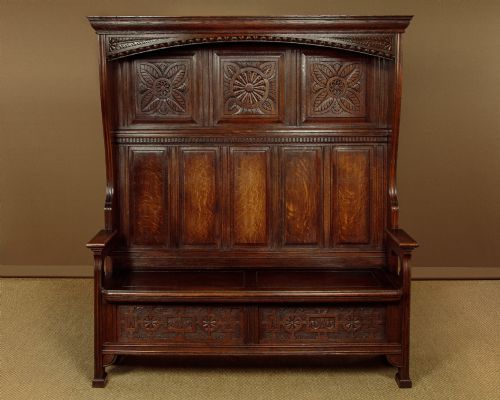
Buyers seeking a jacobean monks bench encounter a form rooted in the seventeenth century, though the selection here spans periods from the seventeenth century through the Victorian era and the early twentieth century. These objects function as hall seats, box settles, and convertible chair-tables, utilising folding tops or lift-up lids to reveal storage space beneath the seat.
The majority of pieces met on this page belong to the revival movements of the Victorian, Edwardian, and 1920s eras, mirroring the older seventeenth-century proportions and carved panels. While genuine period examples survive from the 1600s, twentieth-century interpretations remain common and offer the same sturdy oak construction and dual-purpose utility.
Forms vary from high-back box settles to compact hall seats and chair-tables, often incorporating panelled backs, arms, and enclosed storage. These sturdy seats suit hallways, reception rooms, and living spaces where traditional proportions and solid timber provide both a practical place to sit and a flat surface when the top is turned over.
Assessing Quality and Execution
The distinction between standard examples and superior pieces rests in the depth and crispness of the carved detail, particularly on the back panels and arms. Crisp, hand-carved motifs show greater articulation than later or more mechanical stamping methods.
Timber selection and structural integrity define the overall calibre of a piece, with dense, figured oak and tight joinery representing the upper tier of craftsmanship. The smooth operation of the folding top mechanism and the preservation of original panels further distinguish finer items.
Jacobean Monks Bench Retail Price Guide 2026
Typical asking prices for jacobean monks bench among the pieces listed under this phrase on Sellingantiques today, from the lower quarter to the upper quarter. They describe what is for sale here now, not the wider market.
Listings span periods from the seventeenth century through Victorian and Edwardian times up to the 1930s, constructed predominantly in solid oak with occasional fruitwood and iron hardware.
The Jacobean Monks Bench Glossary
- Monks Bench
- A convertible seat featuring a hinged top that folds down over the arms to form a table. This dual-purpose design saves space in smaller rooms.
- Box Settle
- A high-backed wooden bench with an enclosed storage compartment beneath the seat. The lift-up lid provides access to the interior box.
- Wainscot
- A style of wooden panelling utilising framed construction with pegged joints. It appears frequently on the backs of early seats and settles.
- Jacobean Revival
- A design movement popular during the nineteenth and early twentieth centuries that imitated seventeenth-century styles. It is characterised by dark oak, heavy proportions, and geometric carvings.
Jacobean Monks Bench: Frequently Asked Questions
What is a monks bench used for?
These pieces serve as dual-purpose furniture functioning primarily as a hall seat or armchair with a solid back and arms. When the top is folded forward, it rests horizontally to create a table surface.
The enclosed box beneath the seat provides hidden storage for household items, making the form practical for hallways and reception spaces where floor space is limited.
How do I identify a 17th-century piece?
Seventeenth-century examples display hand-cut joinery, pegged tenons, and distinct tool marks from period hand tools on the unexposed timber surfaces. The oak develops a deep, dry patina over centuries of handling and polishing.
Later revival pieces often feature machine-cut elements, standardised proportions, and brighter finishes that lack the varied surface texture of genuine early timber.
Where should I place a monks bench?
These sturdy seats suit entrance halls, boot rooms, and spacious landings where their solid oak construction withstands everyday use. They also fit well in living rooms as feature armchairs with the added benefit of a tabletop surface.
Keep the timber away from direct heat sources and strong sunlight to prevent the solid oak panels from drying out or splitting over time.
What is the difference between a settle and a monks bench?
A settle is a long wooden bench with a high back and solid arms designed to block draughts in older homes. Most settles feature a fixed back and a lift-up seat hiding a storage box.
A monks bench specifically incorporates a pivoting or folding top mechanism that transforms the seat back into a flat table surface, offering an extra level of daily versatility.