





Jacobean Hall Bench
When you want a jacobean hall bench, you are looking at substantial oak seating designed to anchor an entrance hall with traditional presence.
Jacobean Hall Bench
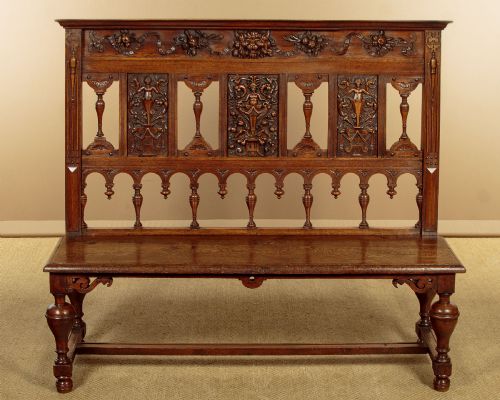
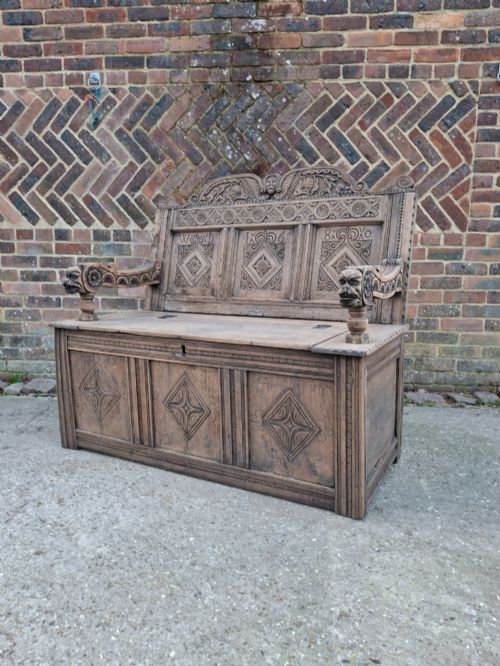
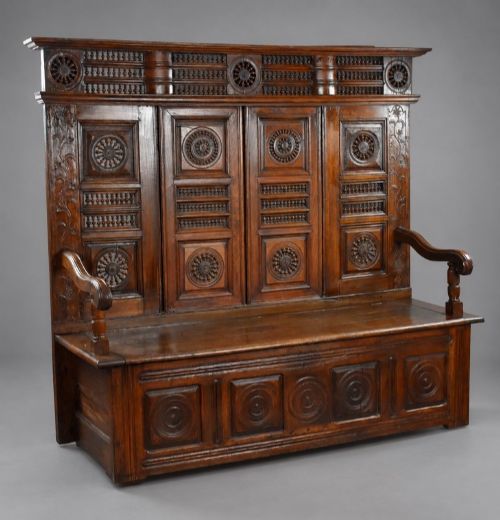
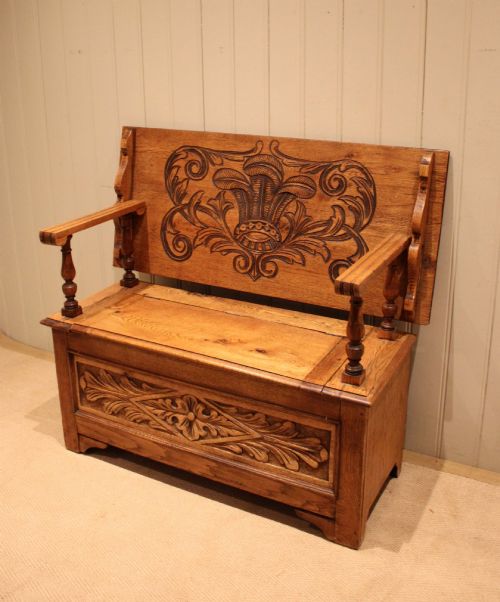
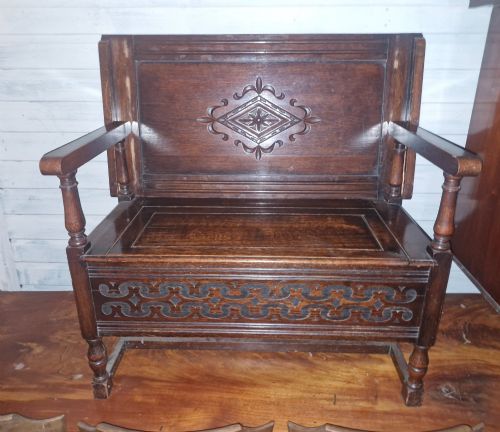
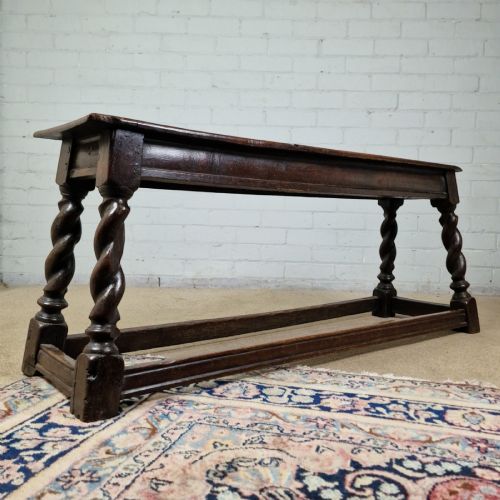
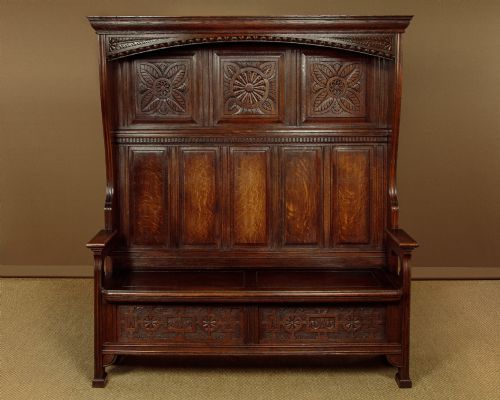
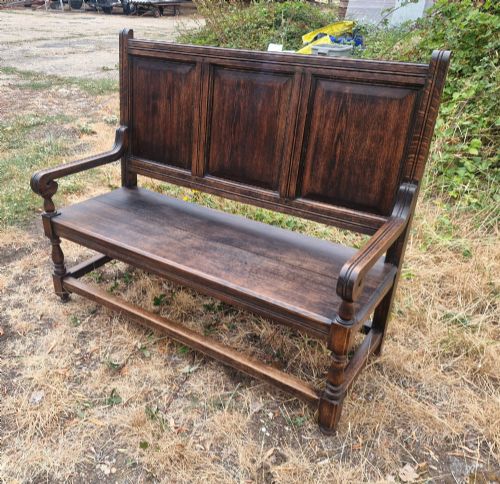
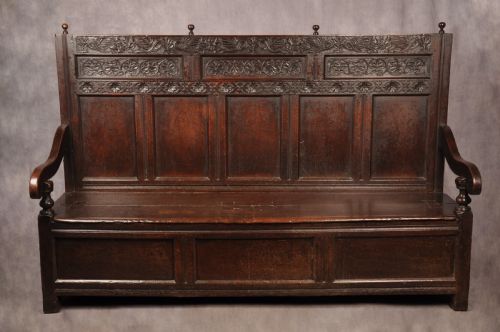
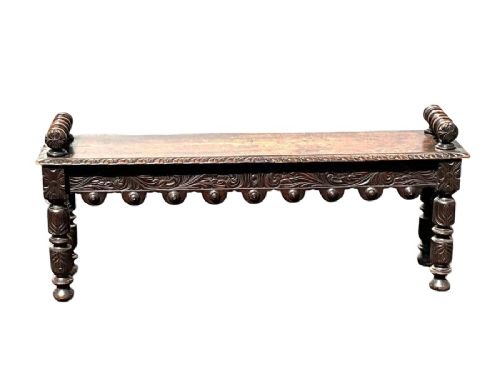
A jacobean hall bench encompasses heavy oak seating forms including settles, monks benches, and panelled hall seats designed for hallways and reception rooms. These pieces appear in authentic seventeenth-century examples as well as later nineteenth- and early twentieth-century revivals.
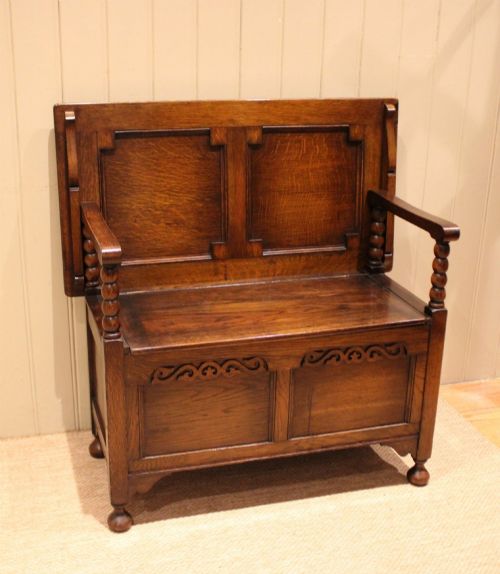
The version most commonly met on this page is the early twentieth-century carved oak monks bench or hall settle, often featuring a lift-up seat, fold-over top, or panelled back. Alongside these revival pieces, genuine seventeenth-century oak and fruitwood settles surface from English and Scottish origins.
Distinctions in execution
The distinction between ordinary and superior pieces rests on the depth and crispness of the hand carving, the selection of figured timber, and the integrity of the original construction. Earlier seventeenth-century origins display patination and joinery methods distinct from later revival interpretations.
Proportion and scale dictate the success of the piece within an interior, with smaller proportions and balanced canopy tops or box settle configurations representing more thoughtful workshop design.
Jacobean Hall Bench Retail Price Guide 2026
Typical asking prices for jacobean hall bench among the pieces listed under this phrase on Sellingantiques today, from the lower quarter to the upper quarter. They describe what is for sale here now, not the wider market.
The Jacobean Hall Bench Glossary
- Settle
- A wooden bench with a high solid back, solid arms, and often a box base beneath the seat. This form protected sitters from draughts in early halls.
- Monks Bench
- A dual-purpose seating form featuring a hinged top that folds down to convert the backrest into a table surface. It combines a seat with a small table.
- Panelled Oak
- Timber construction utilising fitted rectangular wooden panels set within grooved framing stiles and rails. This method accommodates seasonal wood movement.
- Fruitwood
- Dense timber harvested from fruit-bearing trees, utilised in seventeenth-century cabinet making for alternative grain patterns and colour.
- Box Settle
- A bench featuring an enclosed storage compartment beneath the hinged seat. This design maximised utility in historical domestic interiors.
Jacobean Hall Bench: Frequently Asked Questions
What is a monks bench?
A monks bench is a dual-purpose wooden seat with a hinged back that folds flat to form a table top over the base. This allowed furniture to serve multiple functions in compact spaces.
Versions on this page span early twentieth-century revival production, constructed in solid oak with lift-up seat storage beneath the convertible top.
How do I date an oak settle?
Dating relies on examining construction methods, tool marks, timber shrinkage, and the style of the carving. Seventeenth-century examples exhibit pegged mortise and tenon joints and deep natural patination.
Revival pieces from the Victorian and Edwardian eras typically employ machinery alongside hand finishing, reflecting the historicism popular during those periods.
Where were hall benches placed?
Hall benches stood in entrance halls, corridors, and reception rooms to provide seating for visitors removing outerwear. The enclosed box bases and high backs offered practical storage and draught exclusion.
Their substantial oak frames anchored large entrance spaces while serving everyday domestic needs.
Are these benches comfortable?
Historical hall benches prioritize sturdy construction and upright posture over modern cushioned comfort. Many designs feature high wooden backs and flat wooden seats.
Some examples incorporate fabric pads or loose cushions to soften the rigid oak surfaces for extended seating.