


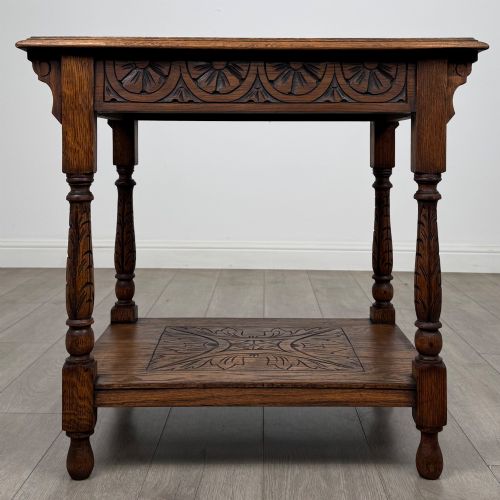
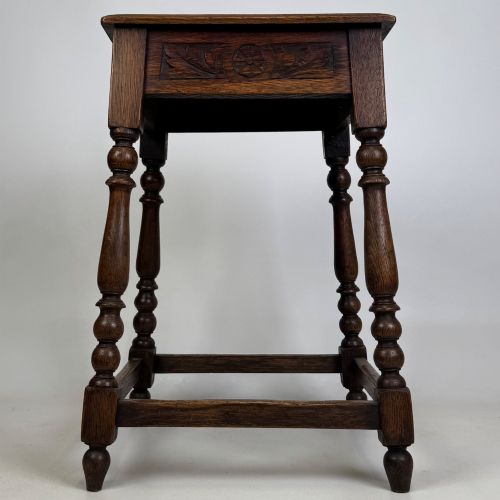
Jacobean Carved Table
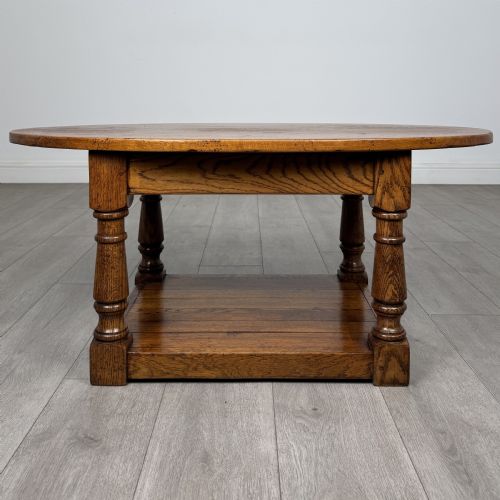
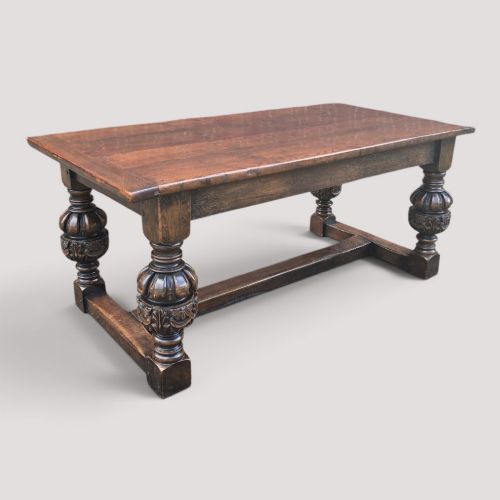
These heavy timbers and deep relief panels give a jacobean carved table its enduring presence in a room.
Jacobean Carved Table
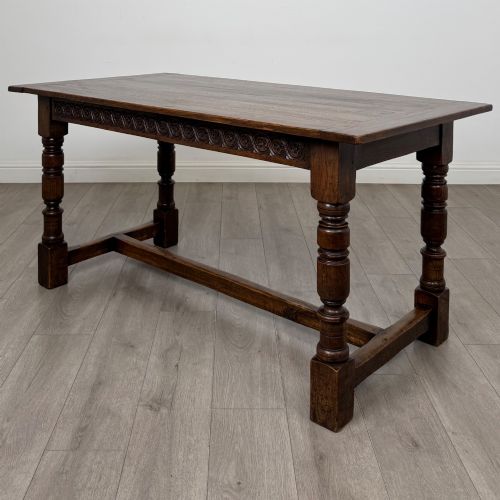
A jacobean carved table encompasses formal dining boards, refectory surfaces, and smaller side furniture produced across several centuries. The selections found here bridge original seventeenth-century examples and later revival interpretations from the Victorian, Edwardian, and interwar periods.
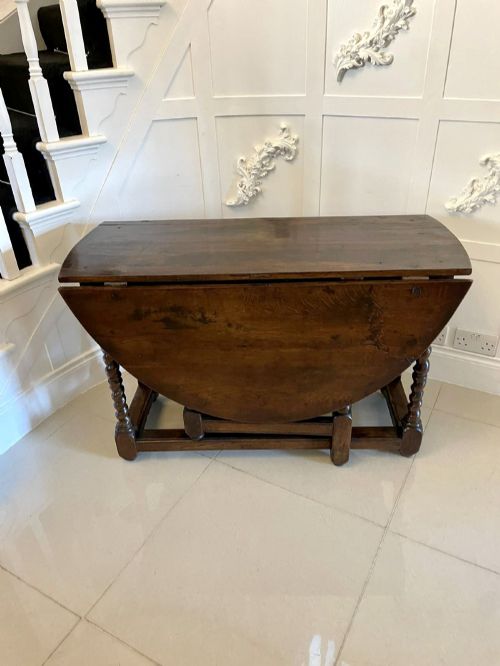
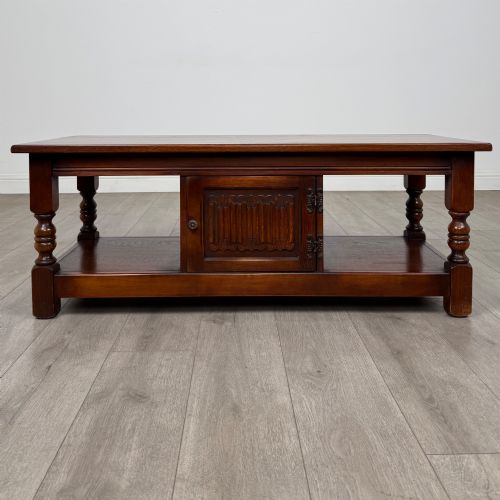
The practical forms range from massive draw-leaf and refectory dining tables to compact side tables, console desks, and occasional pieces. Many incorporate structural devices like drop leaves or extension mechanisms designed to alter the footprint of the surface.
Originating in English traditions, these objects lean heavily on sturdy construction and functional proportions. The mix spans authentic period survivors alongside revival iterations built to mimic the substantial weight of early furniture.
How they were made
Solid oak provides the primary structural foundation for almost every piece, sometimes supplemented with secondary timbers like elm for top planks. Joinery relies upon traditional mortise and tenon frames held together with wooden pegs.
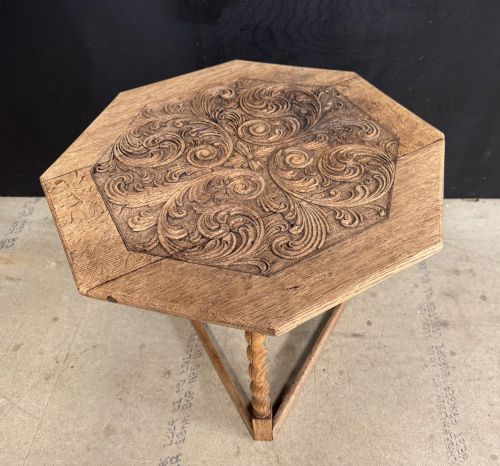
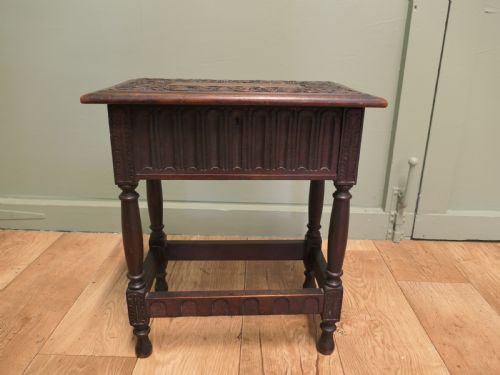
Carving is executed directly into the dense wood grain using handheld chisels and gouges to produce geometric guilloche patterns, scrolling foliage, and strapwork. Surface finishing typically involves wax polishes applied over stripped or darkened wood.
Materials recorded across current inventory include solid oak, brass, iron, cane, and upholstered fabrics.
What varies in quality
Depth and crispness of the carved detail separate master workshop output from hurried revival production. Sharp undercutting and balanced symmetry indicate skilled hand labour rather than mechanical routing.
The integrity of the timber movement governs structural longevity, where single-plank tops and tight joints show superior material selection. Tables retaining their original operational mechanisms and patinated hardware hold greater architectural coherence.
The Jacobean Carved Table Glossary
- Refectory table
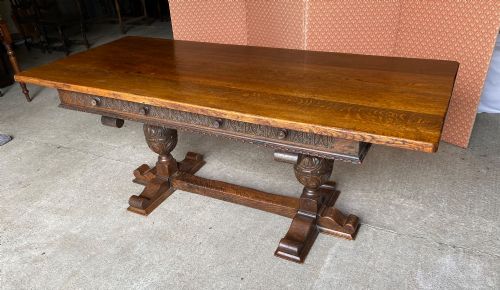
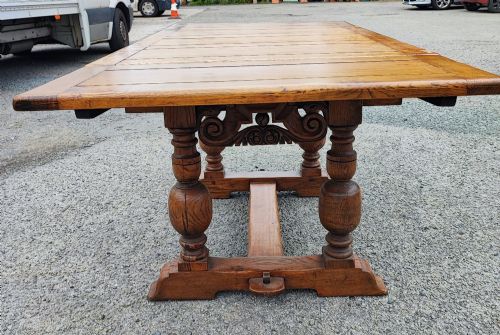
- A long, narrow dining surface traditionally used in communal halls and supported by substantial trestle legs or robust four-leg underframes. These pieces often feature stretcher rails connecting the lower legs for added stability.
- Draw leaf table
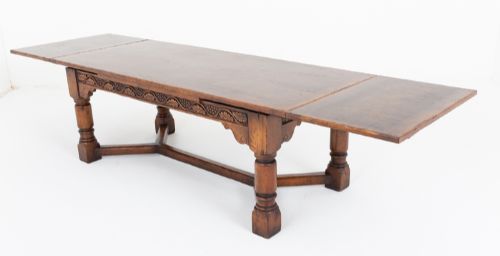
- An extending dining surface equipped with two sliding leaves hidden beneath the main top that pull out to lengthen the board. This mechanism allows the table to expand without removing the primary surface.
- Barley twist
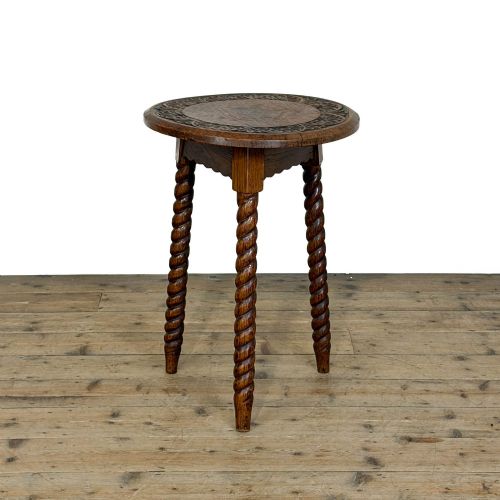
- A turned decorative woodwork pattern resembling a spiral rope or screw thread. This motif appears frequently on table legs and stretcher supports during the seventeenth century and subsequent revival eras.
- Dresser base
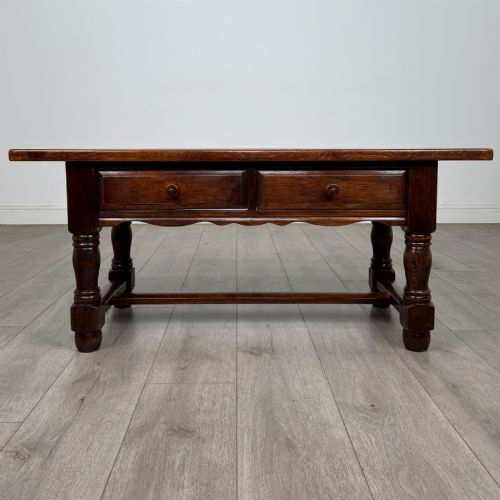
- A low cabinet featuring drawers and sometimes cupboards beneath a flat top surface, frequently utilised as a sideboard or serving table. The form combines storage capacity with a sturdy display top.
Jacobean Carved Table: Frequently Asked Questions
How do I date a carved oak table?
Examine the construction marks, timber movement, and tool traces visible on the underside and interior joints. Hand-cut peg holes and irregular adze marks suggest older periods, whereas uniform machine cuts point towards later revival manufacture.
Compare the specific carving style against known regional motifs from the seventeenth century and nineteenth-century revivals. Subtle differences in proportion and hardware fixings help distinguish original period pieces from later interpretations.
Can I use a refectory table daily?
Solid oak surfaces withstand regular family use provided they receive proper care against moisture and sudden temperature changes. Use protective mats for hot dishes and wipe spills promptly to preserve the wax finish.
Allow the timber to acclimate to indoor heating environments to prevent excessive splitting along the grain. Regular waxing maintains the moisture barrier and nourishes the aged wood fibres.
What is a draw leaf mechanism?
A draw leaf mechanism employs two auxiliary panels stored directly beneath the main tabletop that slide outward on runners. This design doubles the usable length of the dining surface with minimal effort.
Keep the internal runners clean and lightly waxed to ensure smooth operation over time. Avoid forcing the leaves if seasonal humidity causes the timber to swell.
Why choose a revival piece?
Revival items constructed during the Victorian and Edwardian eras offer the heavy aesthetic of early furniture with greater structural stability. These pieces often incorporate period timber proportions suited to modern room dimensions.
Skilled cabinetmakers of the later nineteenth century replicated ancient joinery techniques with exceptional precision. This provides an accessible alternative for interiors requiring period character without the fragility of ancient surfaces.