



Italian Wood Mirror
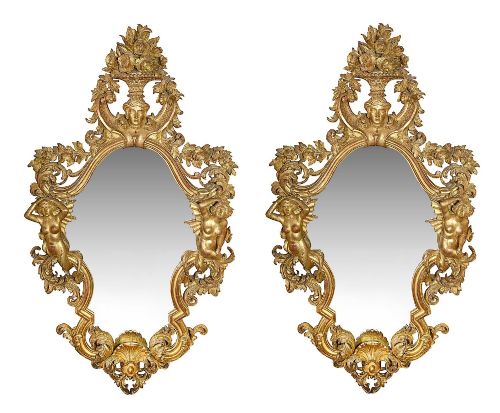
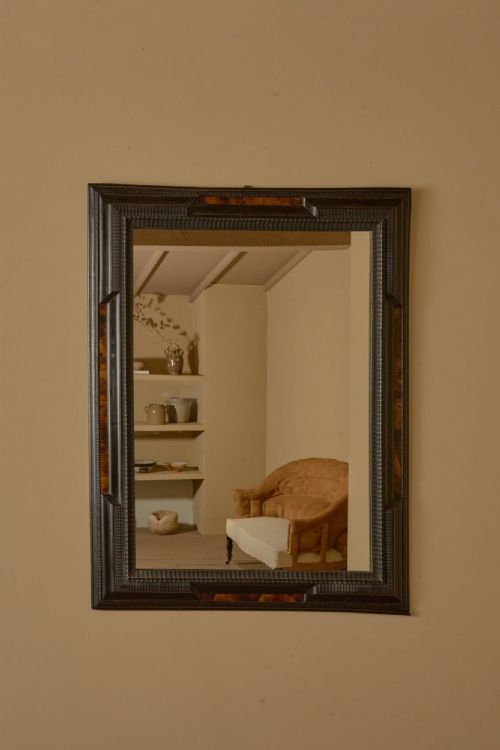
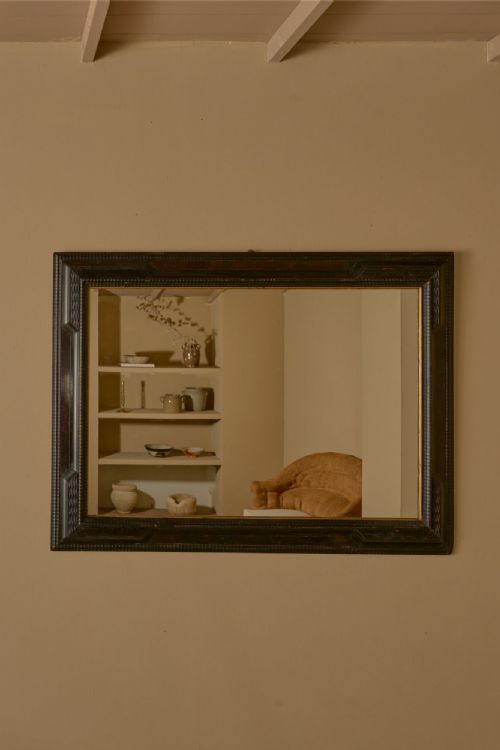
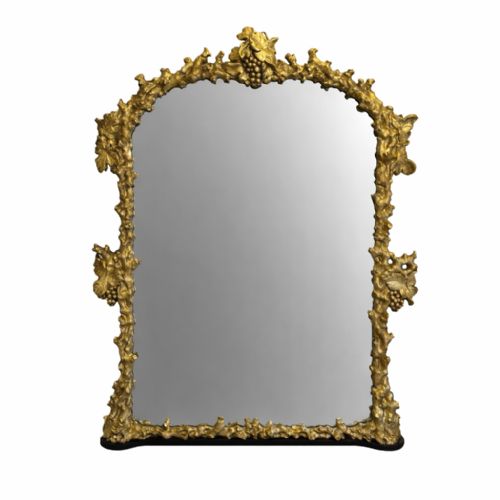
An italian wood mirror brings carved gilding, painted polychromy and dramatic Rococo or Baroque curves directly into an interior.
Italian Wood Mirror
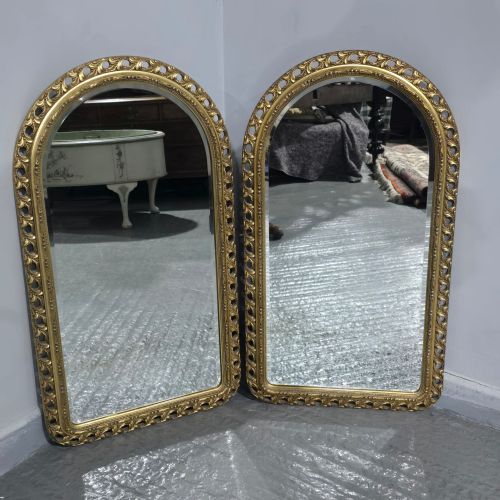
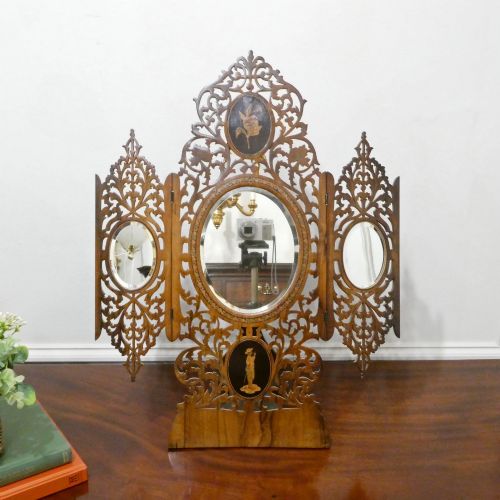
An italian wood mirror encompasses a diverse selection of wall mirrors, girandoles, overmantles, and dressing table mirrors shaped by distinct regional traditions such as Florentine and Venetian craftsmanship. Pieces range from grand 18th century cartouche forms with original gilding to 19th century revival styles and early 20th century interpretations.
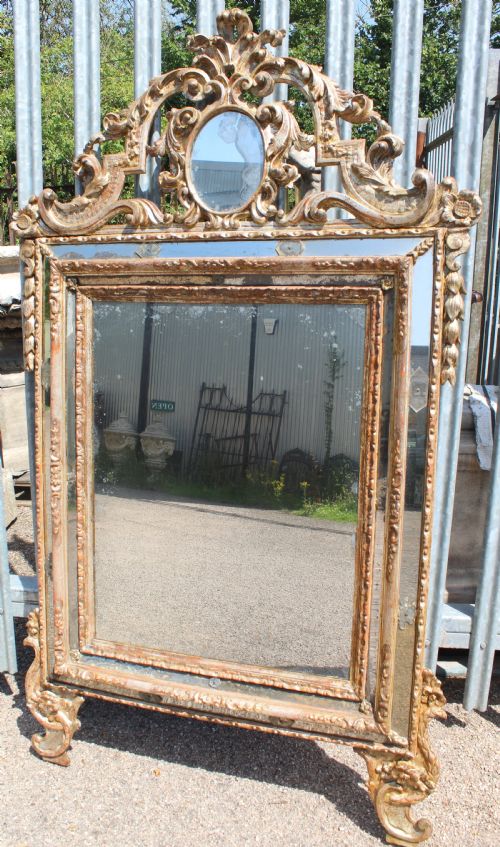
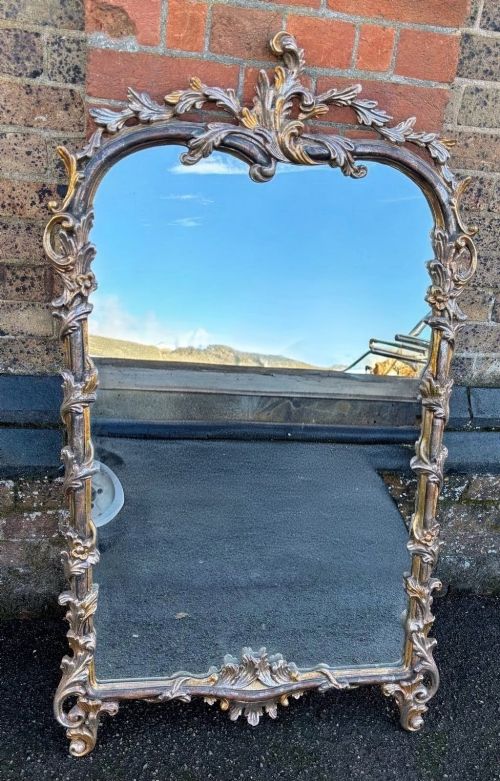
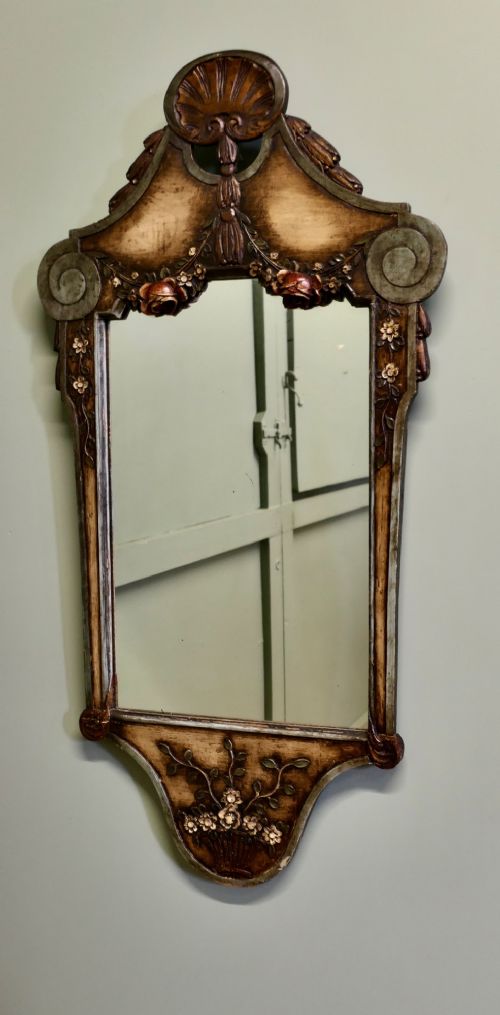
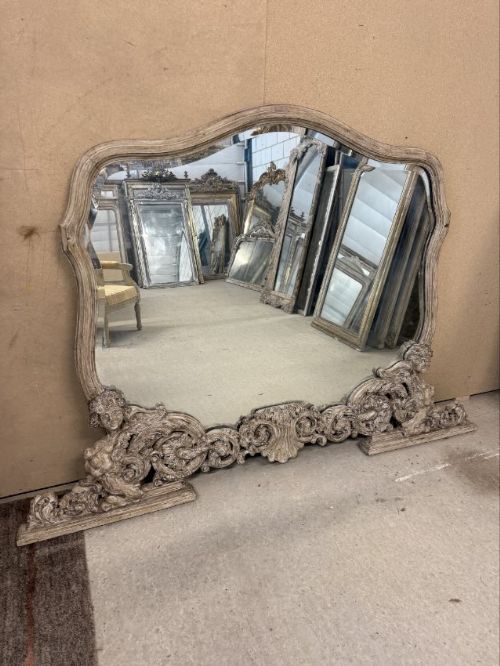
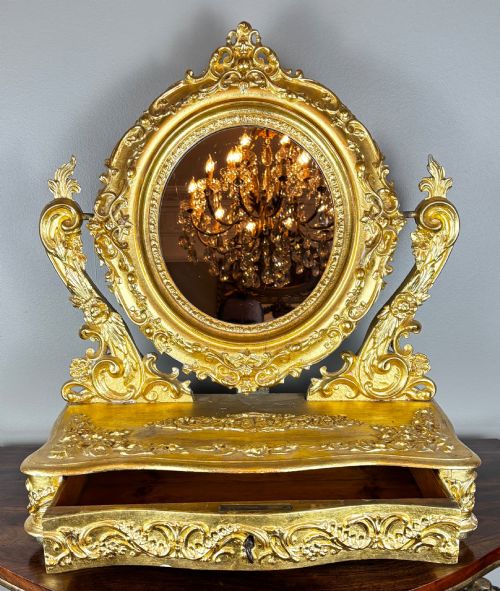
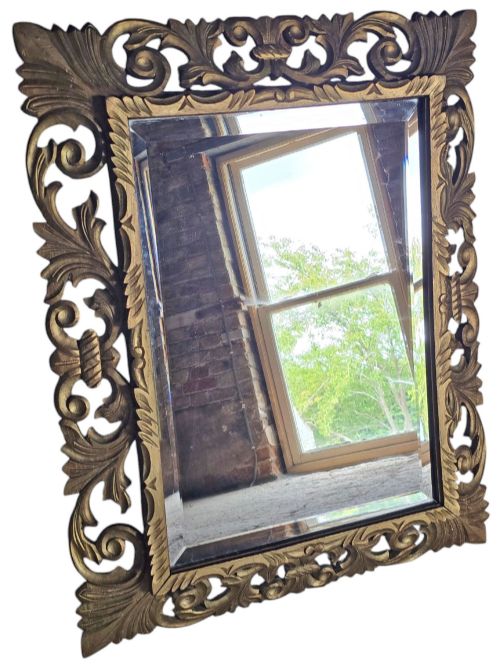
The most common examples encountered in this selection are Florentine giltwood wall mirrors and Venetian carved frames displaying elaborate rococo scrolls, acanthus leaf motifs, and intricate openwork crestings. Alongside these decorative wall pieces, collectors also find cheval mirrors, console tables, and painted polychrome table mirrors showing regional decorative finishes.
Materials and construction
Makers utilised timber substrates including walnut, limewood, and soft woods, carving the foundational structure by hand before applying layers of gesso to smooth the surface and prepare it for detailed ornamentation. This preparation allowed carvers to achieve deep relief work and sharp edges on floral scrolls and architectural mouldings.
Surfaces were finished with applied gold leaf, silver leaf, or gesso paint, often burnished to create a luminous metallic sheen that caught the candlelight in period interiors. Where colour was desired, artisans employed hand-painted polychrome pigments, ebonised treatments, or faux tortoiseshell effects over the wooden base.
Italian Wood Mirror Retail Price Guide 2026
Typical asking prices for italian wood mirror among the pieces listed under this phrase on Sellingantiques today, from the lower quarter to the upper quarter. They describe what is for sale here now, not the wider market.
Listings span centuries of production, recording pieces from the 18th century through the Victorian era up to the 1930s.
Assessing quality and craftsmanship
The distinction between standard examples and finer works rests in the depth and crispness of the hand carving, where superior pieces exhibit undercut foliage and well-defined asymmetric cartouches rather than shallow, mechanically uniform press-moulded decoration. The proportion and balance of the frame, particularly in complex rococo and baroque revival designs, dictate visual harmony.
Surface preservation also separates ordinary items from exceptional survivals, with original gilding, untouched patination, and early foxed mirror plates carrying greater historical integrity than later restorations or heavy regilding campaigns.
The Italian Wood Mirror Glossary
- Giltwood
- Wood carved and coated with gold leaf over a prepared gesso ground. This finish provides a bright reflective quality characteristic of formal European mirrors.
- Gesso
- A plaster mixture applied to wood frames to create a smooth surface for carving and gilding. It holds fine detail and sharp contours.
- Girandole
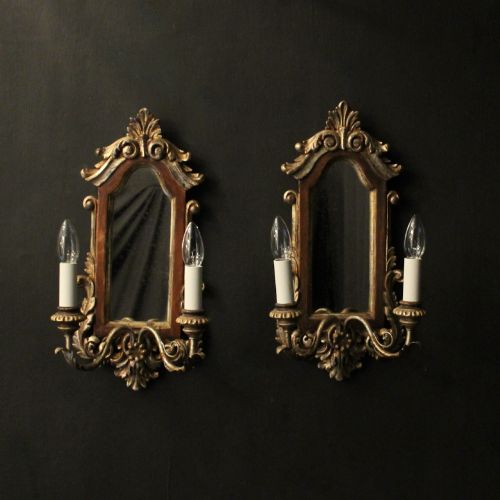
- A decorative wall mirror featuring attached candle sconces. The mirrored glass reflects the candle flame to amplify light in a room.
- Cartouche
- An ornamental frame resembling a scroll or shield with a centred field. These asymmetrical shapes define Rococo design.
- Polychrome
- Decorated in multiple colours using paint or pigment. Venetian and Florentine pieces frequently employ this technique to depict naturalistic floral details.
- Overmantle
- A large mirror designed to hang specifically above a fireplace mantel. These pieces often span horizontal proportions to anchor the hearth.
Italian Wood Mirror: Frequently Asked Questions
How do I date an antique italian wood mirror?
Dating relies on examining the construction of the wooden frame, the composition of the gesso, and the characteristics of the mirror plate itself. Hand-beveled edges, mercury silvering, and oxidized backing often point to earlier manufacturing periods.
Stylistic cues such as 18th-century cartouche symmetry versus 19th-century revival exuberance also help determine the age of the piece.
Where should I hang a large giltwood mirror?
These mirrors function effectively as focal points above console tables, mantelpieces, or main living room walls where they can reflect natural light and open up the space.
Due to their weight and carved decoration, they require secure wall fixings anchored directly into structural masonry or studs.
What is the difference between Florentine and Venetian mirrors?
Florentine mirrors typically feature dense, deeply carved giltwood frames with elaborate acanthus leaves, scrollwork, and rich openwork crests. They lean heavily into ornate architectural statements.
Venetian mirrors often incorporate painted polychrome finishes, Murano glass elements, or smoother cartouche outlines influenced by lagoon aesthetics.
Are the mirror plates original?
Many older frames retain their original antique glass, which frequently exhibits foxing, minor pitting, and light cloudiness caused by age. These imperfections are standard characteristics of period glass and confirm the age of the item.
Some pieces may have received replacement plates during their history to maintain clear reflectivity.