



Italian Wood Cabinets
These Italian wood cabinets bring centuries of regional craftsmanship and rich walnut timber into a room.
Italian Wood Cabinets
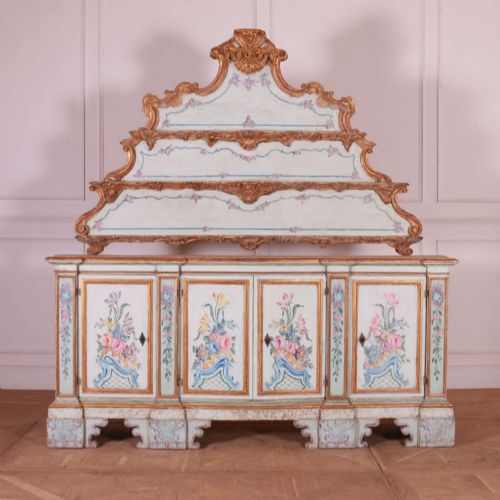
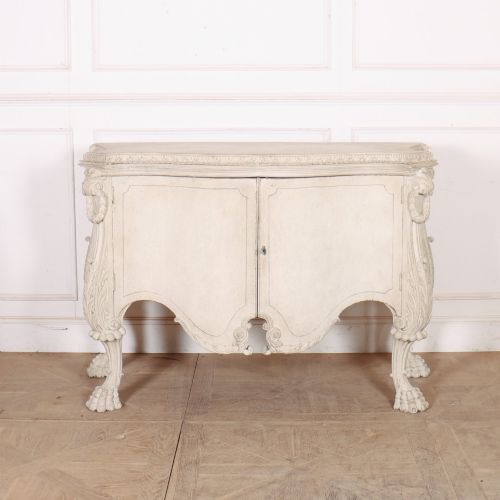
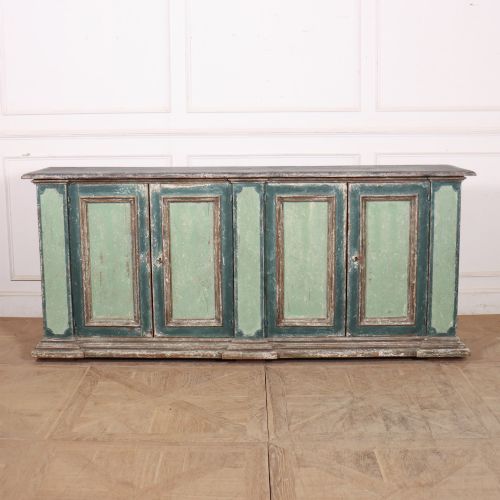
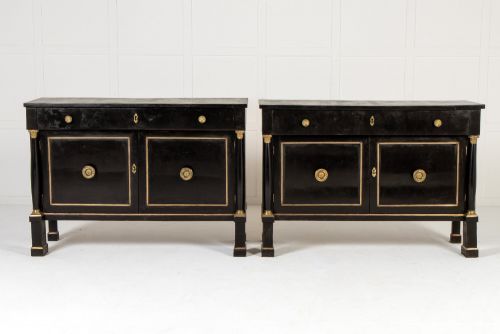
When you search for italian wood cabinets, you encounter a diverse range of storage forms spanning from the seventeenth century through the mid-twentieth century. The selection encompasses sideboards, side cabinets, painted buffets, and architectural tabernacles rooted in regional workshops.
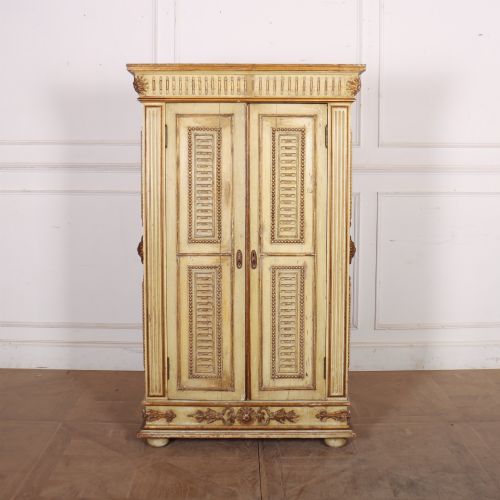
You are most likely to meet walnut side cabinets and painted cupboards originating from Venetian and provincial traditions. These pieces combine practical storage with decorative presence, utilising marquetry, carving, and polychrome finishes.
The typology extends from small bedside tables and travelling bureaux to large exhibition pieces and glazed bookcases. Each item reflects the stylistic shifts of its period, moving between Baroque, Rococo, and Neoclassical vocabularies.
How they were made
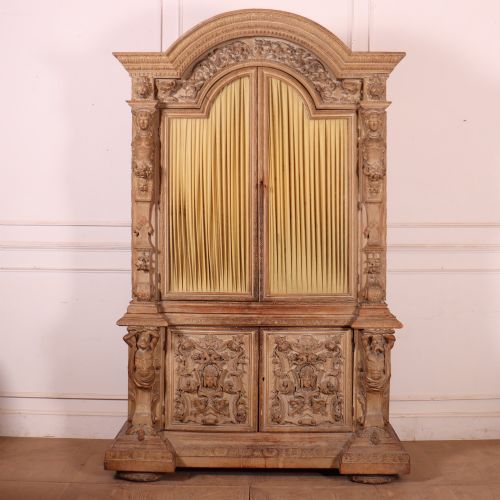
Cabinetmakers relied heavily on solid walnut, employing carved relief and linear grain patterns to define the structure. Secondary timbers and decorative veneers such as kingwood and mahogany appear alongside applied brass hardware and iron mounts.
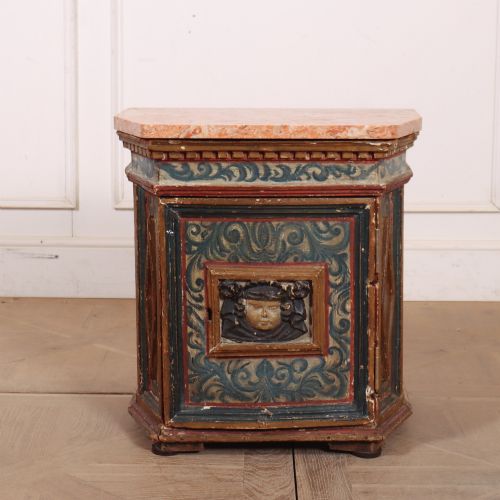
Painted finishes form a major category, utilising gesso, polychrome pigments, and giltwood highlights on wooden carcases. Artisans also integrated carved details, marble tops, and marquetry inlays to elevate the surface design.
Italian Wood Cabinets Retail Price Guide 2026
Typical asking prices for italian wood cabinets among the pieces listed under this phrase on Sellingantiques today, from the lower quarter to the upper quarter. They describe what is for sale here now, not the wider market.
Listings span from the 17th century to the 1960s, featuring walnut, painted wood, marble, and giltwood across various sideboard and cabinet forms.
What varies in quality
The distinction between standard utility storage and exceptional artistic production rests on the depth of the hand-carving and the precision of the joinery. Master cabinetmakers achieved fluid serpentine lines and balanced proportions that lesser workshop pieces lack.
The integrity of the original surface finish dictates much of the standing of an antique piece. Retained polychrome paint, undisturbed patination on walnut, and authentic brass hardware elevate the desirability above items with compromised or modernised surfaces.
The Italian Wood Cabinets Glossary
- Marquetry
- Inlaid wood veneers assembled to create pictorial or geometric patterns on the surface of a cabinet. This technique requires meticulous cutting and fitting of different timber species.
- Giltwood
- Timber that has been coated with a thin layer of gold leaf or powder over a prepared ground. It provides a brilliant metallic sheen often seen on carved mouldings and decorative frames.
- Serpentine
- A curved line or front configuration featuring a convex centre flanked by concave sides. It adds visual movement and sophistication to case furniture.
- Tabernacle
- An architectural structure or cabinet designed in the manner of a miniature temple or altar. These pieces often feature columns, pediments, and elaborate interior compartments.
- Polychrome
- Painted in several colours, frequently applied to gesso or wood surfaces to create decorative motifs. This finish is characteristic of Venetian and provincial furniture.
Italian Wood Cabinets: Frequently Asked Questions
What defines an Italian wood cabinet?
These pieces are defined by their regional stylistic heritage, often originating from Venetian or provincial workshops across several centuries.
They combine functional storage with decorative elements like walnut carving, painted surfaces, and marble tops.
How were these cabinets used historically?
They served multiple domestic functions ranging from storing household linens and tableware to displaying precious objects and serving food.
Larger case pieces and bureaus also provided dedicated spaces for writing and organising correspondence in grand residences.
How do I live with an antique cabinet?
Place the piece away from direct sunlight and strong heat sources to protect the wooden structure and painted surfaces from drying out.
Allow for adequate clearance in the room so that doors and drop-front desks can open fully without obstruction.
How can I tell periods apart?
Earlier pieces from the seventeenth and eighteenth centuries often display heavier architectural mouldings, Baroque carving, or intricate walnut marquetry.
Later nineteenth- and twentieth-century examples frequently adopt revived historical styles, lighter proportions, or regional painted finishes.