


Italian Walnut Chest
An italian walnut chest brings centuries of continental craftsmanship into a room, offering both practical storage and striking historic presence.
Italian Walnut Chest
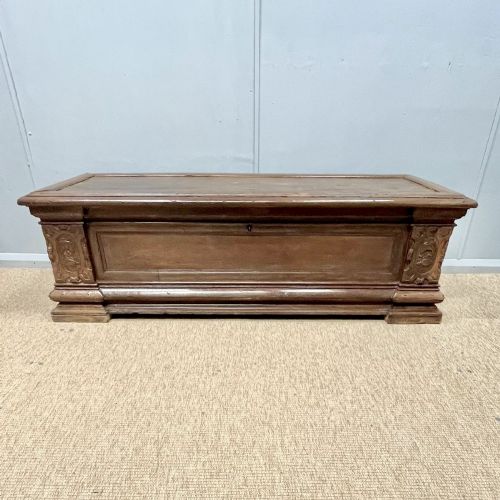
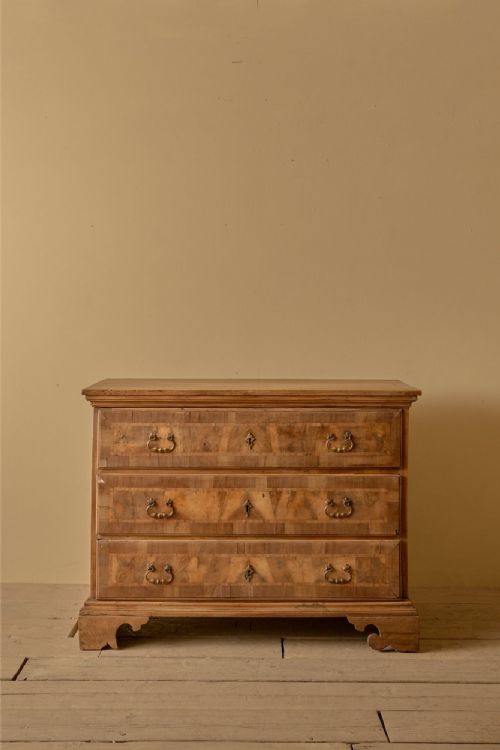
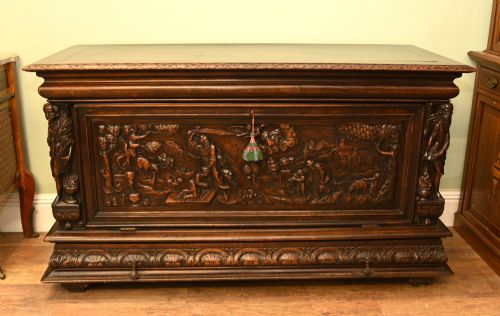
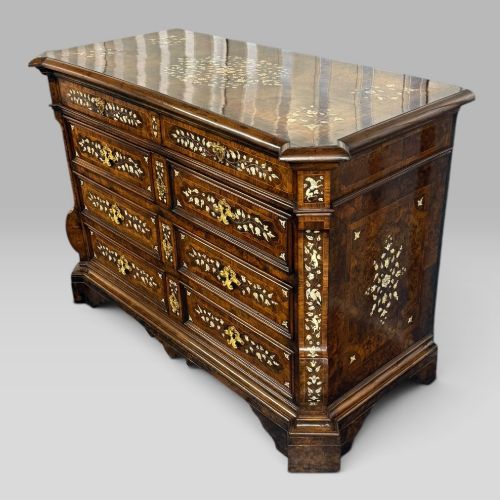
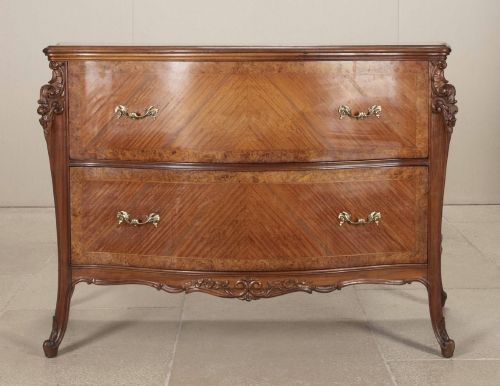
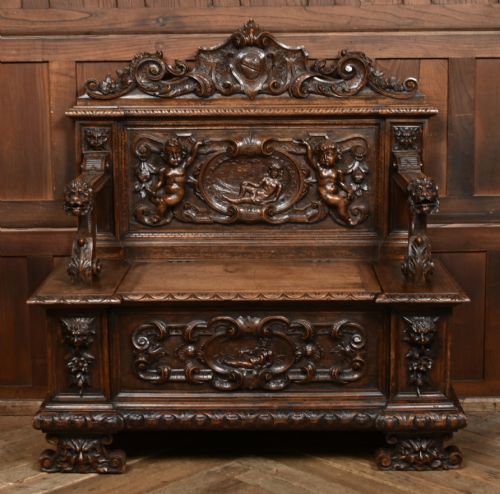
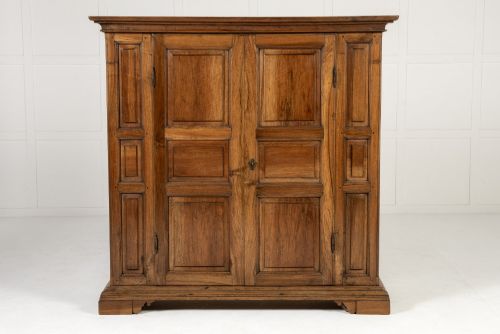
An italian walnut chest encompasses a diverse group of historic furniture forms spanning from the seventeenth century through the nineteenth century. Buyers searching this phrase encounter substantial storage pieces including commodes, serpentine chests of drawers, coffers, and cassapanca benches.
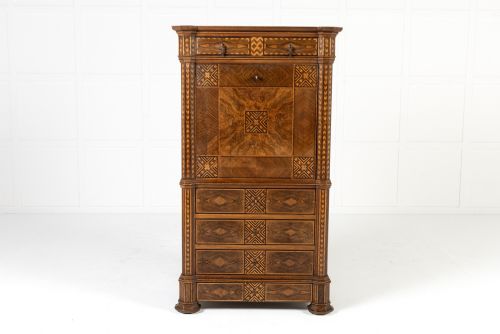
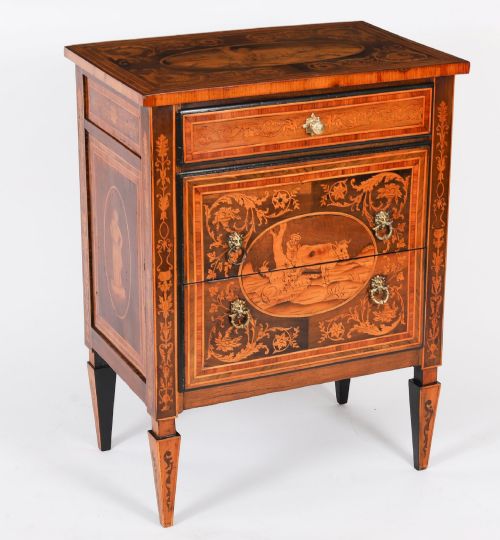
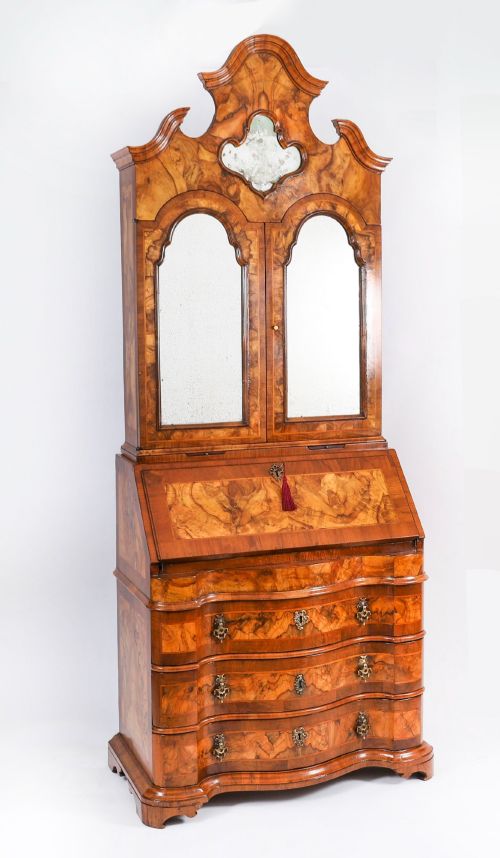
The selections available here range from austere seventeenth-century cassones to decorative eighteenth-century Neoclassical and Baroque commodes. Alongside these primary storage forms, the inventory includes smaller bedside cabinets, secretaire cabinets, and table caskets.
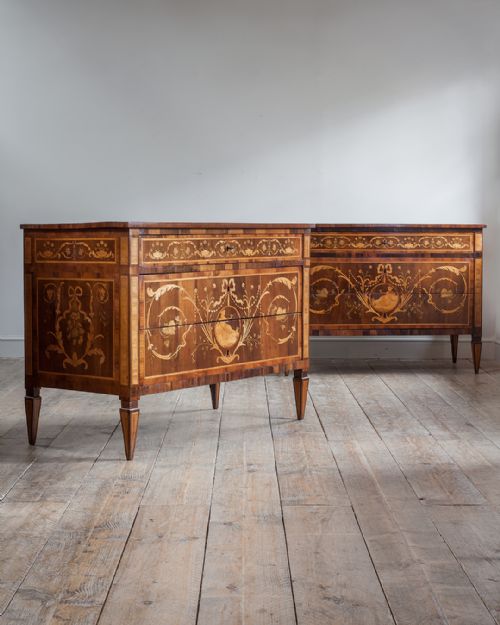
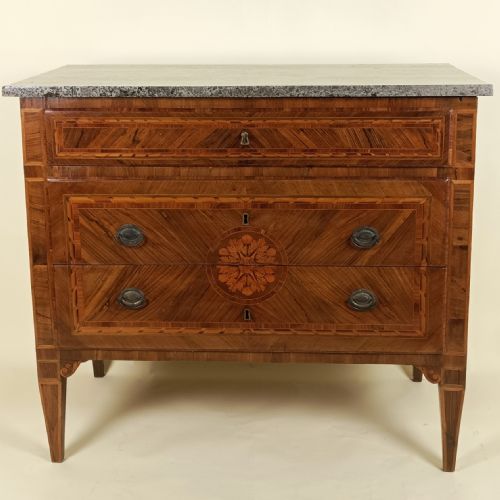
Continental workshops produced these items across various regions, creating distinct regional characteristics such as the geometric marquetry of Lombardy or the serpentine fronts favoured by Venetian makers. Pieces often incorporate secret drawers, figural medallions, or intricate parquetry alongside the primary walnut timber.
How they were made
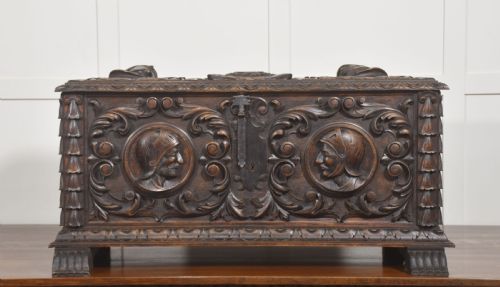
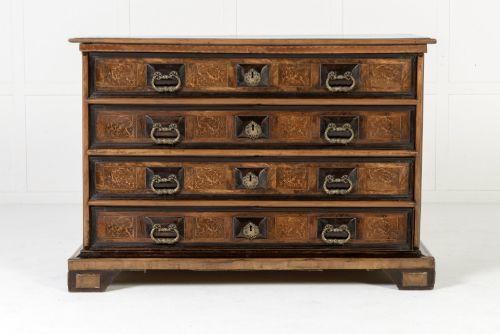
Cabinetmakers utilised solid walnut and burr walnut veneers over secondary timbers, frequently enhancing the surfaces with intricate marquetry and inlay work using fruitwood, satinwood, kingwood, and ebony. Bone inlay and giltwood details occasionally appear on sixteenth and seventeenth-century cassones and cabinets.
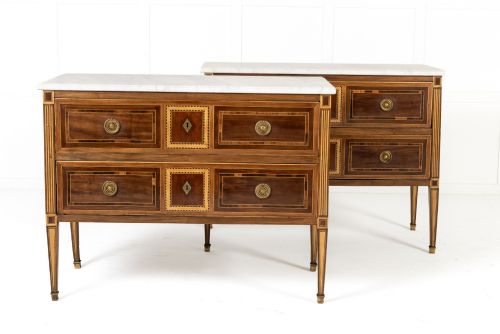
Structural hardware relied upon hand-forged iron and brass for hinges, escutcheons, and drawer pulls, while marble tops feature on specific commodes and bedside chests. Carving techniques ranged from deep figural reliefs on Renaissance coffers to subtle geometric banding on Neoclassical chests of drawers.
Italian Walnut Chest Retail Price Guide 2026
Typical asking prices for italian walnut chest among the pieces listed under this phrase on Sellingantiques today, from the lower quarter to the upper quarter. They describe what is for sale here now, not the wider market.
The inventory records Italian Neoclassical, Baroque, and Renaissance revival styles alongside nineteenth-century commodes.
What varies in quality
The standard of an italian walnut chest depends heavily on the crispness of the hand-carving and the complexity of the wood selection, such as figured burr veneers and contrasting fruitwood marquetry. Finer examples display meticulous alignment in geometric patterns and harmonious grain matching across multiple drawers.
Construction methods and the survival of original mounts, brass hardware, and marble tops distinguish exceptional workshop production from simpler regional pieces. The sophistication of the internal joinery, including secret compartments and dovetailed drawer boxes, marks the division between standard utility items and high-status commissions.
Grand Ducal Workshops
The Italian Walnut Chest Glossary
- Commode
- A low chest of drawers or cabinet developed in seventeenth-century France and widely adopted in Italian workshops. These pieces typically feature serpentine or bombe profiles and multiple storage drawers.
- Cassone
- A traditional Italian storage chest or coffer, often heavily carved or decorated with gesso and giltwood. Historically used for holding bridal trousseaux in wealthy households.
- Marquetry
- The art of applying decorative pieces of veneer to a structure to form geometric patterns or pictorial designs. Makers utilised various contrasting timbers such as fruitwood, ebony, and walnut to achieve tonal depth.
- Bombe
- A furniture shape characterised by convex curves and bulging outward sides. This silhouette requires advanced cabinetmaking skill to shape the walnut timber successfully.
- Cassapanca
- An Italian wooden bench combining a long seat with a storage coffer beneath, often featuring a carved back and armrests. These combination pieces functioned as both seating and linen storage.
Italian Walnut Chest: Frequently Asked Questions
What rooms suit an italian walnut chest?
These substantial storage pieces fit well in bedrooms, hallways, or living spaces where their historic timber grain adds warmth. Their varied proportions allow them to function as bedside tables, primary drawer units, or decorative focal points.
Larger coffers and commodes anchor an interior scheme effectively, while smaller bedside cabinets provide functional surface space alongside a bed. Their architectural presence complements both traditional period properties and modern neutral interiors.
How do I distinguish eighteenth-century chests from nineteenth-century revivals?
Eighteenth-century examples generally exhibit the organic wear, timber shrinkage, and hand-cut joinery characteristic of active period usage. Construction details like secondary wood choices and hand-forged iron fixings provide clues to the true age of the carcass.
Nineteenth-century Renaissance revival pieces often feature heavier, more symmetrical machine-assisted carving and standardised hardware. Examining the interior drawer construction and veneer application helps confirm whether a piece dates to the original baroque or neoclassical eras or later nineteenth-century revivals.
How were antique coffers used historically?
Historic coffers served primarily as secure storage chests for valuable textiles, clothing, and household documents before fitted wardrobes became common. Wealthy families utilised decorated cassones to transport and display bridal dowries during wedding processions.
Over subsequent centuries, these robust wooden boxes transitioned into general household storage and seating furniture. Their heavy lids and sturdy construction made them practical everyday furnishings in domestic interiors.
What is the difference between a commode and a standard chest?
A commode typically refers to a low, decorative chest of drawers standing on relatively short legs, often featuring serpentine or bombe silhouettes. They originated as high-status French and Italian furniture forms designed for formal rooms rather than private bedchambers.
Standard chests of drawers generally present a more upright, rectangular profile with less decorative veneer work. Italian commodes frequently showcase complex marquetry, contrasting fruitwoods, and occasionally marble tops that set them apart from standard utility chests.