



Italian Wall Brackets
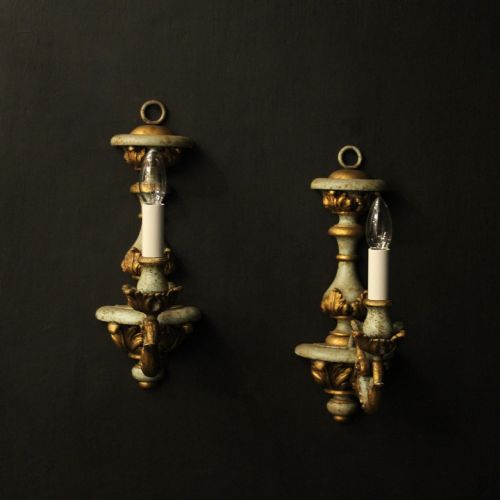
Italian wall brackets bring dynamic Italian craftsmanship and gilded warmth to empty walls.
Italian Wall Brackets
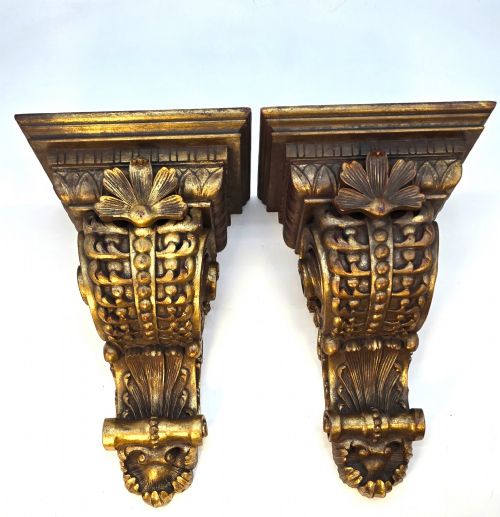
Italian wall brackets encompass carved shelves, console tables, and light fittings designed to mount directly onto vertical surfaces. When searching for Italian wall brackets, buyers encounter various forms including architectural wall sconces, corner shelves, and small side tables intended for display.
The pieces on this page span from the seventeenth century through to the 1930s, featuring nineteenth-century and early twentieth-century examples prominently. Styles range from Florentine and Italian Rococo to Baroque Revival and Neoclassical designs.
Makers and workshops across Italy produced these items as decorative architectural supports and lighting fixtures. Pairs appear frequently alongside single items, offering symmetrical options for interior placement.
How they were made
Carved wood, giltwood, and gesso form the primary structural and decorative basis for these pieces. Craftsmen applied gold leaf and silver leaf over gesso to create rich, reflective surfaces that caught candlelight and daylight.
Polychrome finishes and inlaid olive wood appear on specific regional items, particularly Sorrento pieces. Iron and brass also feature in metal wall lights and wrought iron shelves.
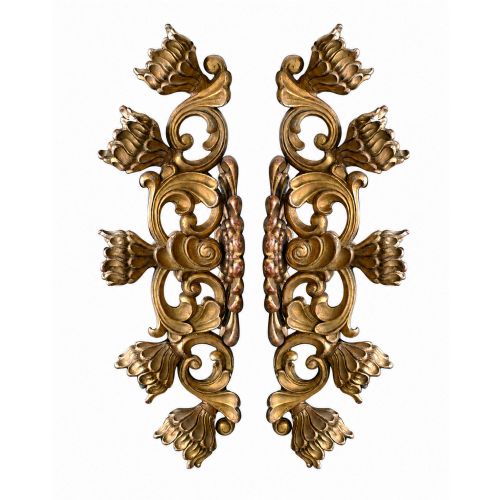
Master carvers shaped timber into intricate scrollwork, cherubs, and shell forms before applying gilding or paint. This combination of joinery, carving, and surface decoration defined Italian workshops.
One notable nineteenth-century piece carries the hand of Master Carver Luigi Frullini, depicting the devil himself.
What varies in quality
Depth and precision of the hand-carving separate standard decorative items from exceptional examples. Master carvers achieved fluid, naturalistic movement in foliage, cherubs, and architectural scrolls that lesser workshops could not replicate.
The application and preservation of gold leaf or silver leaf over gesso dictate the richness of the surface. Original gilding showing age and subtle burnishing carries more integrity than heavy, later overpainting.
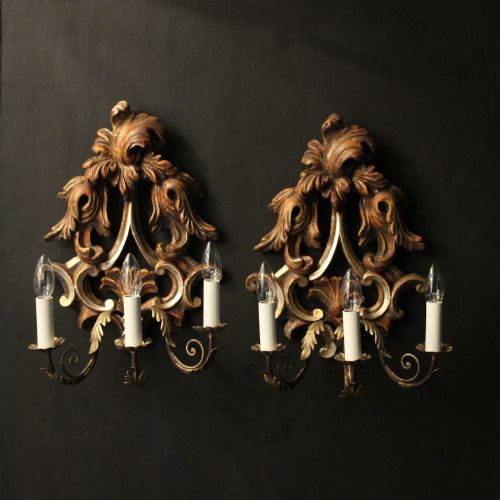
Structural complexity, such as multi-arm lighting branches integrated into carved wooden backplates, indicates ambitious workshop production. The integration of polychrome detailing and inlay work further distinguishes finer pieces.
Luigi Frullini
The Italian Wall Brackets Glossary
- Giltwood
- Wood that has been covered with a thin layer of gold leaf. This technique provides a luminous, durable finish widely used in Italian furniture and decorative brackets.
- Gesso
- A plaster-like mixture applied to wood as a base for gilding or painting. It allows carvers to create sharp, smooth details before applying gold leaf.
- Toleware
- Enamelled or lacquered metalware used in lighting components. It appears alongside carved wood in mixed-media wall sconces.
- Sorrento work
- Wood marquetry and inlay work originating from Sorrento. Pieces often feature intricate geometric or floral patterns in contrasting natural woods.
- Appliqué
- An ornamental wall fitting or sconce designed to hold candles or lights. The term frequently applies to decorative giltwood branch fixtures.
Italian Wall Brackets: Frequently Asked Questions
What are Italian wall brackets used for?
These pieces function as decorative architectural shelves for displaying small objects or as wall lights designed to hold candles or electrical fittings. They project from vertical surfaces to add architectural depth and illumination to a room.
Historically, they served both practical lighting purposes and decorative display functions in grand interiors, salons, and hallways.
How do I date an Italian wall bracket?
Dating relies on stylistic indicators, construction methods, and the wear of the gesso and giltwood surfaces. Seventeenth and eighteenth-century pieces display heavier Baroque or Rococo carving depths, while early twentieth-century items often show cleaner revival techniques.
Examining the wood types, backing preparation, and metal fixing points helps determine whether a piece originates from the nineteenth century or the interwar period.
Are Italian wall brackets sold in pairs?
Many listings feature matching pairs designed for symmetrical placement on either side of a mirror, fireplace, or doorway. Single pieces also appear, often representing surviving components of larger original sets.
Pairs hold particular appeal for balanced interior decoration, reflecting how these items were originally commissioned for formal rooms.
What materials are used in these brackets?
Giltwood, carved wood, and gesso dominate the construction of these decorative wall fixtures. Metal elements such as brass, iron, and silver leaf frequently appear on lighting sconces and shelf supports.
Regional pieces may incorporate olive wood inlay, polychrome paint finishes, and toleware components to achieve distinctive visual effects.
How do I live with antique wall brackets?
Mounting these brackets securely into solid walls is essential due to the weight of carved wood and gesso. Placing them away from direct heat sources helps preserve the stability of the timber and the underlying gesso layers.
Dusting gently with a soft, dry cloth maintains the surface without disturbing fragile areas of gold leaf or original polychrome paint.