



Italian Rococo Commode
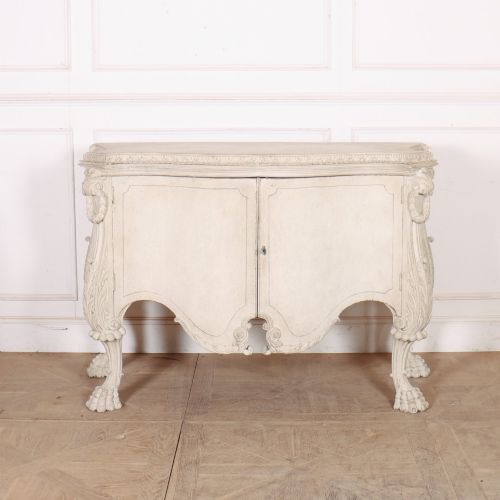
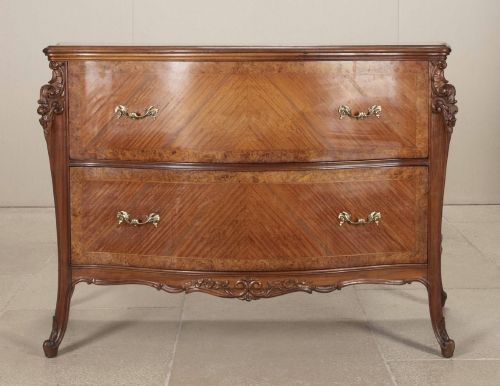
An italian rococo commode brings sculptural curves and rich painted or burr walnut surfaces into a room, offering both storage and dramatic Continental flair.
Italian Rococo Commode
When searching for an italian rococo commode, collectors encounter a dramatic range of serpentine chests, bombe forms, and smaller bedside cupboards reflecting 18th-century origins and later revivals. The selection spans from mid-18th-century walnut originals to 19th-century revival pieces, Venetian painted iterations decorated with scenes, and later giltwood or satinwood adaptations.
Most pieces met on this page lean heavily into the curving serpentine or bombe profiles characteristic of Venetian and broader Italian workshops. Alongside full-sized chests of drawers, buyers frequently find bedside tables, side cabinets, and even bureau bookcases sharing the same exuberant aesthetic.
Materials and Construction
Cabinetmakers relied on substantial timber carcases of walnut, burr walnut, olive-wood, and fruitwood, often enhanced by intricate marquetry or kingwood inlays. These woods provided the necessary stability for shaping deep, swelling curves.
Surfaces frequently received elaborate painted decoration featuring Venetian scenes, or were crowned with shaped marble tops and detailed with brass hardware and giltwood carving.
Italian Rococo Commode Retail Price Guide 2026
Typical asking prices for italian rococo commode among the pieces listed under this phrase on Sellingantiques today, from the lower quarter to the upper quarter. They describe what is for sale here now, not the wider market.
The available furniture forms extend beyond standard chests to include bedside cupboards, bureau bookcases, and marble-topped side cabinets.
Assessing Quality and Execution
The distinction between standard production and superior craftsmanship rests in the fluidity of the carved outline and the precision of the timber matching. Finer examples display harmonious grain patterns across curved drawer fronts and crisply executed hand-carved details rather than stiff, mechanical repetition.
Painted finishes demonstrate quality through the depth of the narrative scenes and the subtlety of the ageing process on the decorated wood. Superior hardware, integrated marble slabs, and robust interior drawer construction further separate exceptional items from simpler regional pieces.
The Italian Rococo Commode Glossary
- Bombe
- A swelling, outward-curving chest profile characteristic of advanced cabinetmaking. This bulging shape requires specialised joinery to maintain structural integrity.
- Serpentine
- A front contour that curves outward in the centre and inward at the sides. It creates a gentle, flowing movement across the face of the furniture.
- Giltwood
- Timber carved and coated with a thin layer of gold leaf or metallic paint. It accentuates the ornate scrollwork found on revival furniture.
- Marquetry
- The art of applying small pieces of veneer to a structure to form decorative patterns. Craftsmen utilised contrasting timbers like satinwood and walnut to achieve pictorial depth.
Italian Rococo Commode: Frequently Asked Questions
How do I date an Italian commode?
Dating relies on examining the underlying timbers, construction methods in the drawers, and the style of any painted decoration. Mid-18th-century examples display period-specific hand tool marks and native hardwoods like olive and walnut.
Later 19th-century revival pieces often incorporate machine-cut elements or softer secondary woods while closely copying earlier Venetian and continental motifs.
Are these commodes suitable for everyday use?
These chests function well as living room focal points or bedroom storage when handled with reasonable care. Their deep drawers provide practical space for linens or clothing.
Marble tops offer durable surfaces for lamps and display objects, though painted finishes require protection from moisture and direct heat.
Where should I place a bombe commode?
A bombe commode works best against a clear wall where its prominent, swelling sides can be fully appreciated. Hallways, living rooms, and large bedrooms provide enough surrounding space to showcase the silhouette.
Avoid tight corners that obscure the curving profiles characteristic of Venetian design.
What is the difference between walnut and painted versions?
Walnut and burr walnut versions highlight the natural grain and rich figuring of the timber through polished surfaces. They emphasise warmth and tactile wooden textures.
Painted versions, frequently featuring Venetian scenes, rely on decorative artistry and colour to create visual drama.