


Italian Revival Furniture
Italian revival furniture brings the dramatic scale and deep carving of historic southern workshops directly into formal rooms.
Italian Revival Furniture
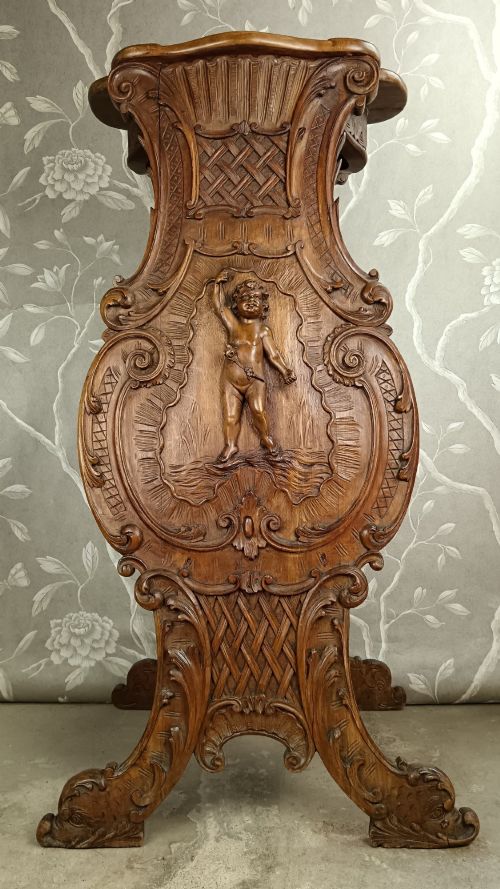
Italian revival furniture encompasses grand seating, heavy storage cabinets, and decorative tables produced across the nineteenth and early twentieth centuries. These pieces draw heavily on Renaissance, Baroque, and Venetian motifs, translating historic architectural forms into domestic furnishings.
You are most likely to meet walnut hall benches, carved armchairs, and console tables among current selections. These items range from mid nineteenth century giltwood consoles with marble tops down to simpler occasional tables and oak chairs.
The aesthetic leans towards monumental presence, utilising dark timbers and sculptural relief work. Collectors seek these items to anchor a room with distinct historic weight and classical proportion.
How they were made
Makers relied primarily on solid walnut, oak, and fruitwoods as structural bases for heavy carving and panel assembly. Timber selection favoured dense, mature woods capable of holding deep relief without splitting.
Surface enrichment involved skilled hand carving, intricate marquetry, and occasional pietra dura inlay panels. Gilding and brass hardware frequently supplemented the woodwork, adding textural contrast to console tables and cabinets.
Periods represented span from eighteen hundred through to nineteen thirty, with the majority originating in the nineteenth century.
What varies in quality
The depth and crispness of the hand carving dictate the aesthetic standing of each piece. Superior examples display sharp undercut foliage and expressive figural work, whereas lesser items rely on shallow, mechanical stamping.
Material selection and structural integrity further divide standard production from exceptional exhibition pieces. Heavy marble tops, fine marquetry patterns, and solid secondary timbers denote higher workshop standards.
White, Allom and Co·Adriano Brambilla
The Italian Revival Furniture Glossary
- Cassapanca
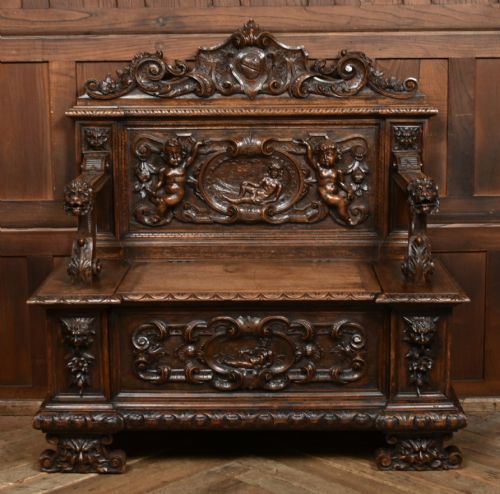
- A traditional Italian bench featuring a hinged seat and a decorated backrest, often serving as both seating and storage. These substantial pieces frequently anchor a hallway or grand landing.
- Pietra Dura
- An artistic technique using cut and fitted polished coloured stones to create geometric or pictorial designs. This painstaking mosaic work appears on tabletops and cabinet doors.
- Savonarola chair
- A folding armchair constructed from multiple intersecting curved wooden slats, named after the fifteenth century Dominican friar. This X-framed design collapses for transport.
- Giltwood
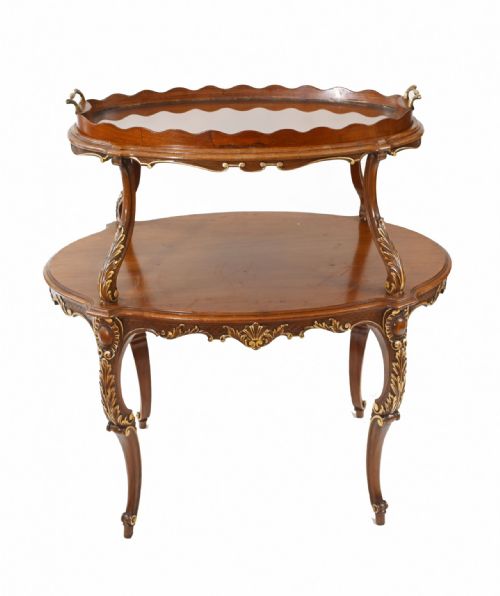
- Timber coated with gold leaf or a gold coloured finish to create a brilliant decorative surface. This treatment highlights carved mouldings on mirrors and console tables.
- Console table
- A wall mounted or heavily bracketed table designed to stand against a vertical surface, frequently paired with a marble top. These pieces served as display surfaces in formal reception rooms.
Italian Revival Furniture: Frequently Asked Questions
How do I identify Italian Renaissance revival pieces?
Look for heavy walnut construction, deep relief carving depicting grotesque masks, scrolls, and classical architectural motifs. These elements emulate sixteenth century civic furniture.
Proportions remain imposing, and forms typically include cassapanecas, high backed hall chairs, and monumental cabinets.
Where should I place a console table?
Console tables suit entrance halls, drawing rooms, or dining spaces where their decorative marble tops and carved bases receive prominence. They often stand beneath large mirrors or paintings.
Ensure the wall can support the weight of bracketed designs or pair them with appropriate floor clearances.
Are these items suitable for everyday use?
Solid walnut and oak construction ensures these items withstand daily domestic activity when handled with reasonable care. Hall benches and writing cabinets function well in modern interiors.
Avoid placing delicate giltwood or marquetry surfaces in direct sunlight or areas of high humidity.
What distinguishes pietra dura work?
Pietra dura involves assembling precisely cut coloured hardstones into smooth pictorial panels without visible grout lines. This technique creates permanent stone paintings.
Cabinets and tabletops featuring this inlay represent high workshop investment and skilled lapidary craftsmanship.