



Italian Marble Side Table
An italian marble side table combines native stone with carved wood or gilt metal, bringing substance and decorative presence to a room.
Italian Marble Side Table
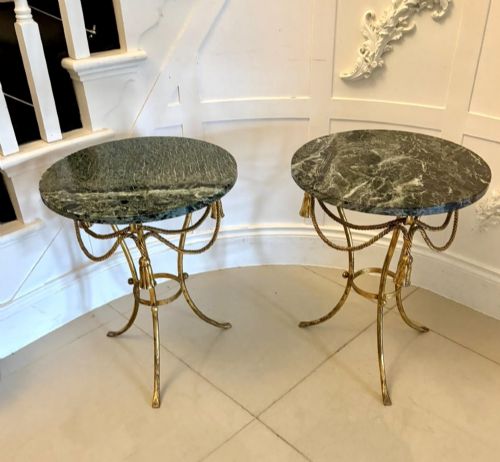
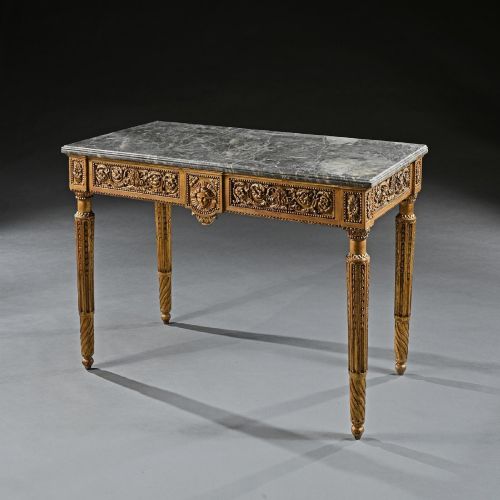
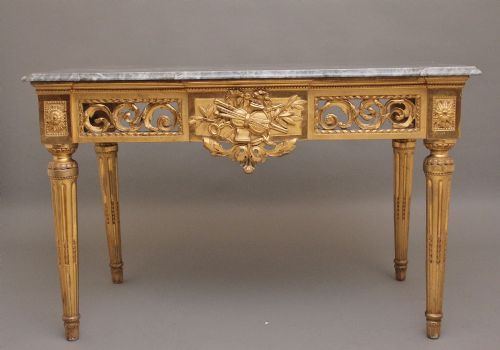
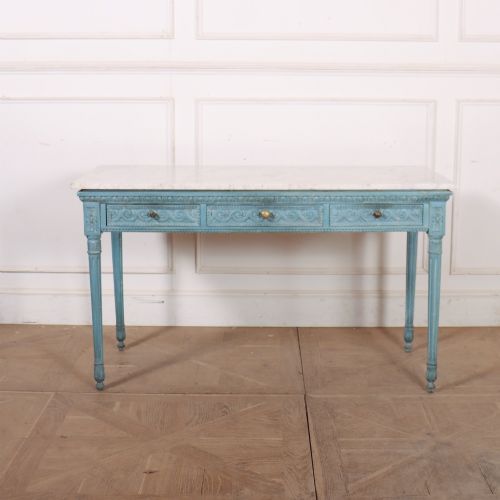
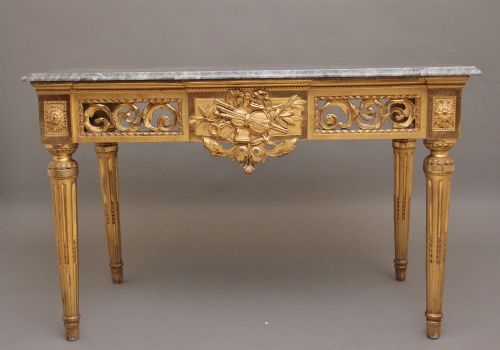
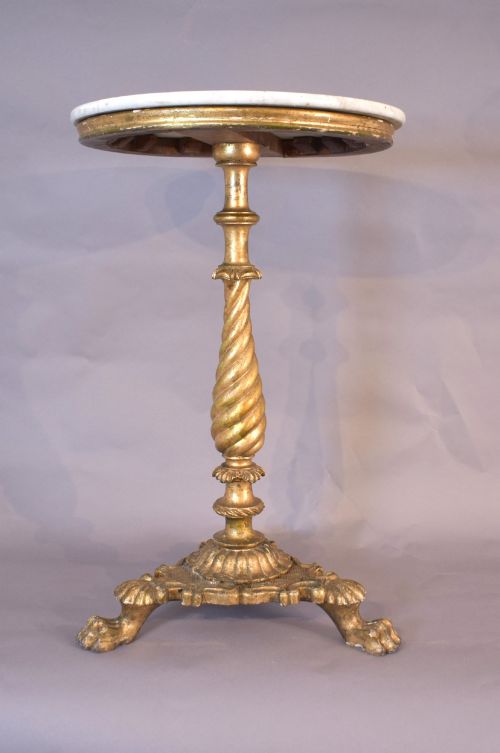
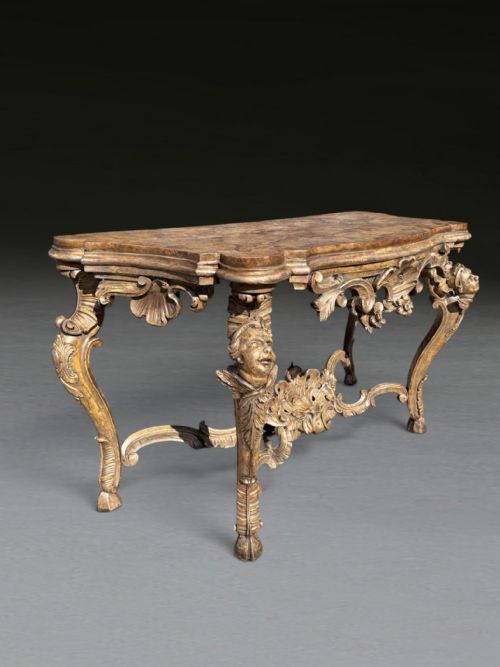
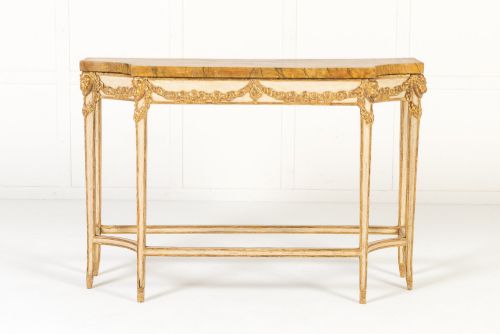
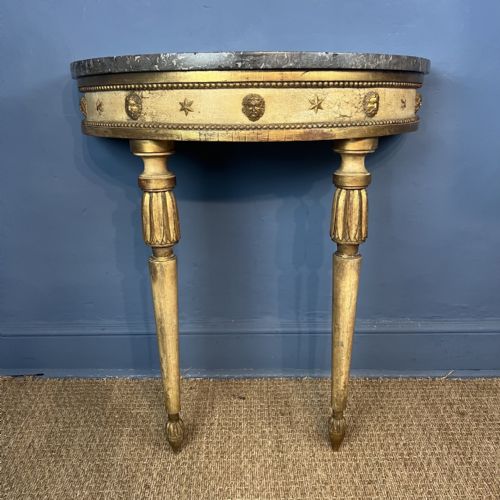
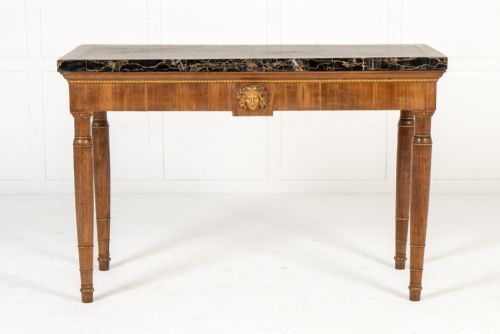
An italian marble side table appears in several forms across this selection, most commonly as console tables, occasional pieces, and smaller bedside stands. These items span periods from the eighteenth century through the early twentieth century, reflecting shifting domestic uses over generations.
The materials paired with the stone include giltwood, walnut, mahogany, and painted finishes, often following baroque, neoclassical, or rococo revival designs. Buyers encounter console tables built for walls alongside smaller lamp tables and bedside nightstands fitted with heavy stone surfaces.
How they were made
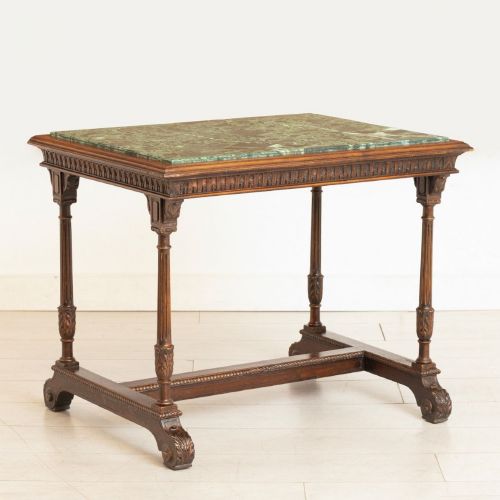
Makers shaped structural supports from timbers such as walnut, mahogany, and lime wood, or constructed frames in gesso and giltwood. Artisans carved these woods with ornamental details, including scrolls, lion's paw supports, and parcel gilt highlights.
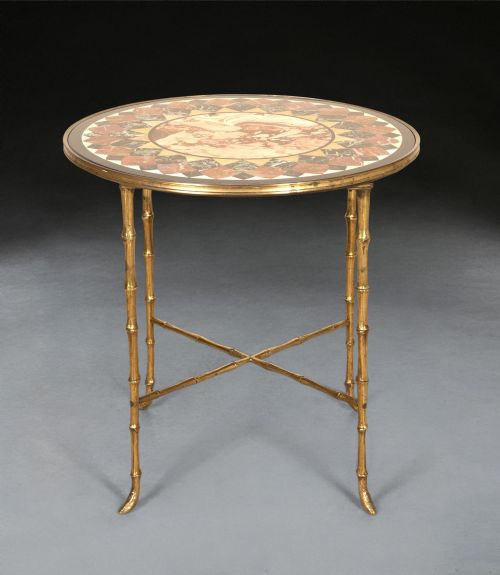
Slab tops of marble, breccia, verde marble, or alabaster were cut and polished to fit the wooden or metal bases. Specialised techniques like pietra dura and specimen marble arrangements incorporated multiple coloured stones into geometric or pictorial tabletops.
The listings span from the eighteenth century to the 1930s, featuring timber and stone materials including walnut, mahogany, alabaster, and giltwood.
What varies in quality
Depth and precision of the wood carving dictate the distinction between standard production and exceptional examples. Hand-carved giltwood and detailed figural supports show sharper definition and greater sculptural skill than simpler turned legs.
The selection and working of the stone itself mark differences in grade. Polished specimen marble tops and complex multi-coloured stone assemblies require advanced lapidary skill compared to plain single-slab marble surfaces.
The Italian Marble Side Table Glossary
- Console table
- A table designed to stand against a wall, frequently secured to it and supported by two front legs or brackets. These pieces often feature elaborate carved giltwood frames.
- Pietra dura
- An inlay technique using cut and fitted polished coloured stones to create images or geometric patterns. This method appears on tabletops and decorative panels.
- Giltwood
- Wood that has been coated with a thin layer of gold leaf or powder. It provides a reflective, ornate surface typical of baroque and neoclassical furniture.
- Specimen marble
- A tabletop composed of various types of marble and mineral specimens arranged in geometric patterns. These compositions display the range of natural stone colours available to the maker.
- Breccia marble
- A composite stone made of broken rock fragments embedded in a fine-grained matrix. It yields a variegated, mottled surface pattern popular in eighteenth and nineteenth-century furniture tops.
Italian Marble Side Table: Frequently Asked Questions
Where should I place an italian marble side table?
Console variants suit entryways or hallway walls where they provide a surface for lamps and decorative objects. Smaller occasional and bedside tables fit living rooms or bedrooms next to seating and sleeping quarters.
The weight of the stone requires a stable floor surface. Placing them away from direct heat sources protects both the timber frames and the polished stone tops.
How do I clean italian marble?
Wipe surfaces using a soft cloth dampened with warm water and mild, non-acidic soap. Avoid abrasive cleaners or vinegar, which etch and dull the polished stone.
Dry the marble thoroughly after wiping to prevent water spots. Using coasters under glasses protects the stone from rings and staining.
How do I date an italian marble side table?
Examine the construction methods of the wooden frame, tool marks, and fixings. Eighteenth-century examples often feature hand-cut joinery and heavy giltwood carving, while nineteenth-century pieces may display revival styles like baroque or rococo.
Materials also offer clues, as specific types of paint, gilt, and stone cutting techniques align with distinct periods. Comparing the decorative vocabulary to known historical styles confirms the era of manufacture.
Are these tables sturdy enough for daily use?
Most pieces are structurally sound for supporting lamps, books, and decorative objects. However, console tables often rely on wall fixings for total stability because of their heavy stone tops.
Care must be taken when moving them due to the combined weight of the marble and the carved base. Lifting rather than dragging prevents stress on the joints and legs.