




Italian Marble Centre Table
An italian marble centre table brings substantial architectural presence into a room, offering a heavy stone surface supported by carved wood or gilt metal.
Italian Marble Centre Table
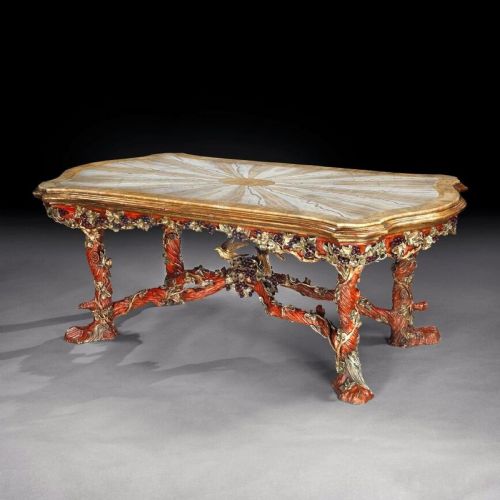
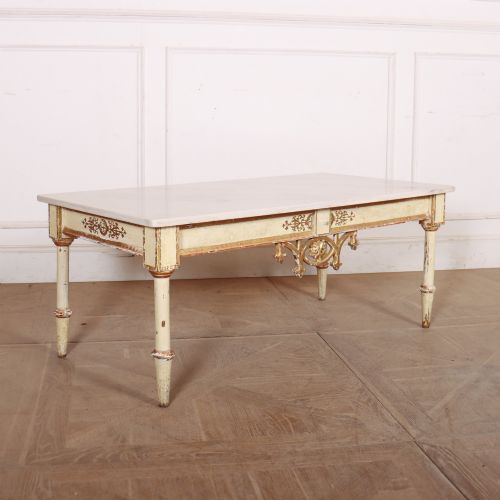
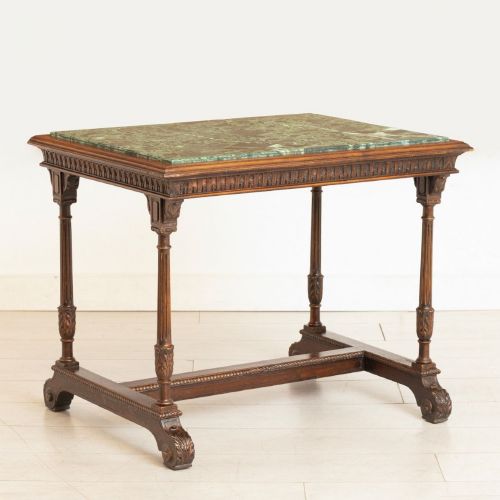
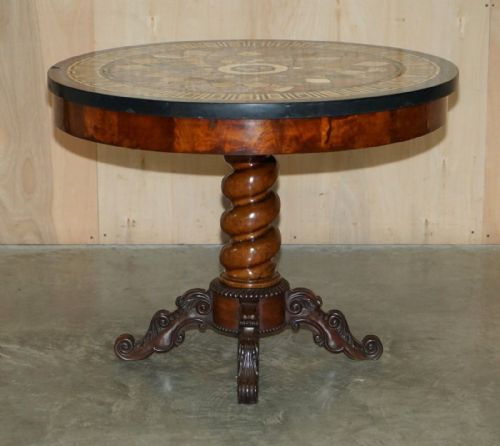
An italian marble centre table forms a striking centrepiece within a room, designed to stand freestanding rather than pushed against a wall. The pieces seen here span from the eighteenth century to the mid-twentieth century, encompassing both grand architectural forms and lower coffee table formats.
Most examples combine a heavy stone surface with an elaborate wooden or gilt base. The selection ranges from nineteenth-century walnut and mahogany structures to lighter Venetian and painted wood interpretations.
Makers and workshops utilised various styles including Italian Rococo Revival, Neoclassical, Baroque, and Florentine Renaissance Revival. These diverse influences mean buyers encounter everything from austere circular marble slabs to richly decorated specimen stone tops.
What varies in quality
Quality reveals itself in the complexity of the stone work and the depth of the carving on the base. Tables featuring inlaid specimen marbles or meticulous pietra dura bird motifs demonstrate superior craftsmanship compared to plain solid stone slabs.
The execution of the wooden frame similarly dictates the tier of the piece. Deeply carved walnut or giltwood bases with detailed figures and foliage separate standard production from exceptional workshop creations.
Italian Marble Centre Table Retail Price Guide 2026
Typical asking prices for italian marble centre table among the pieces listed under this phrase on Sellingantiques today, from the lower quarter to the upper quarter. They describe what is for sale here now, not the wider market.
Some tables incorporate gilt metal dolphins supporting the heavy marble top.
Amleto Bertoni·B Battioli
The Italian Marble Centre Table Glossary
- Pietra dura
- An artistic technique using cut and fitted polished coloured stones to create geometric or pictorial images. This meticulous mosaic method appears frequently on high-end nineteenth-century table tops.
- Scagliola
- A composite substance made from selenite, glue, and pigments, mimicking the appearance of genuine marble and inlaid stone. Artisans used this technique to achieve complex multi-coloured designs without carving solid hardstones.
- Specimen marble
- A table top assembled from numerous small geometric or irregular pieces of different decorative marbles. Collectors prize these arrangements for their kaleidoscopic variety of geological colours.
- Giltwood
- Timber that has been coated with a thin layer of gold leaf or gesso and gold paint. This treatment gives the carved wooden bases a shimmering metallic appearance suited to formal reception rooms.
- Grand Tour
- A cultural journey undertaken by wealthy young Europeans visiting historical sites, often resulting in the acquisition of decorative art and stone tables. Pieces associated with this tradition frequently showcase classical architectural motifs.
Italian Marble Centre Table: Frequently Asked Questions
Where should I place an italian marble centre table?
These tables work best as freestanding focal points in the middle of a spacious room or large hallway, allowing light to catch the stone surface from multiple angles.
Because the stone tops are remarkably heavy, the floor beneath must be level and sturdy enough to support the combined weight of timber and mineral.
How do I care for the marble top?
Routine maintenance requires only a soft, damp cloth to remove dust and debris. Acidic liquids like wine or citrus juice can etch polished stone quickly, so immediate blotting is essential.
Avoid placing abrasive objects directly onto the surface to prevent scratching the polished marble or specimen inlay.
How can I tell the period of the base?
Examining the timber species and carving style offers the clearest indication of age. Eighteenth-century and nineteenth-century examples often display hand-carved walnut or giltwood with deep relief, while mid-twentieth-century pieces utilise lighter metals and simpler lines.
Tool marks and the type of fixings securing the top to the base also help differentiate traditional workshop production from later items.
Are these tables suitable for everyday use?
Many examples function well for daily living, particularly the lower coffee table formats and sturdy nineteenth-century walnut designs. Their robust construction handles normal domestic life comfortably.
Delicate specimen marble and intricate pietra dura tops demand slightly more care to protect the historic stonework from heavy impacts.