


Italian Grand Tour Urn
An italian grand tour urn brings the architecture and sculpture of antiquity into a nineteenth-century study through bronze and carved stone.
Italian Grand Tour Urn
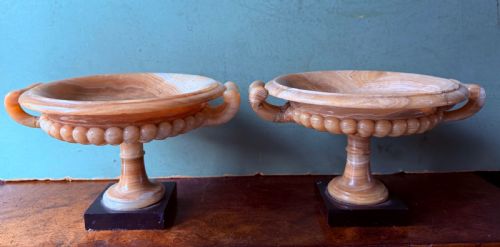
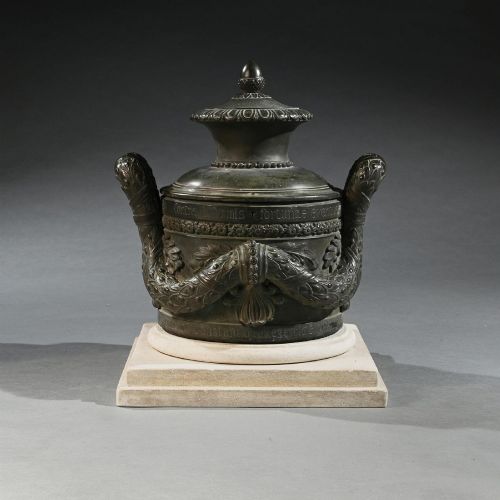
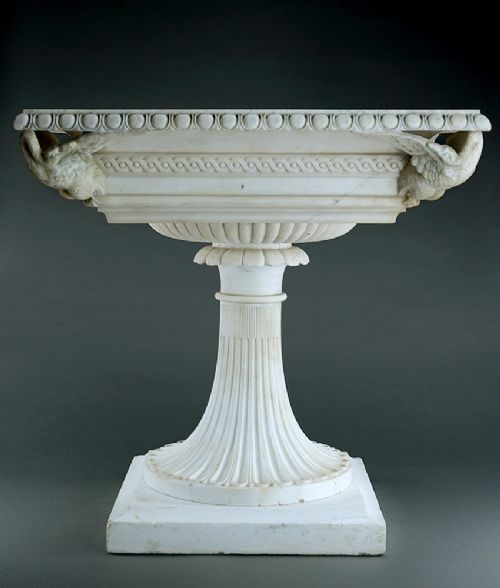
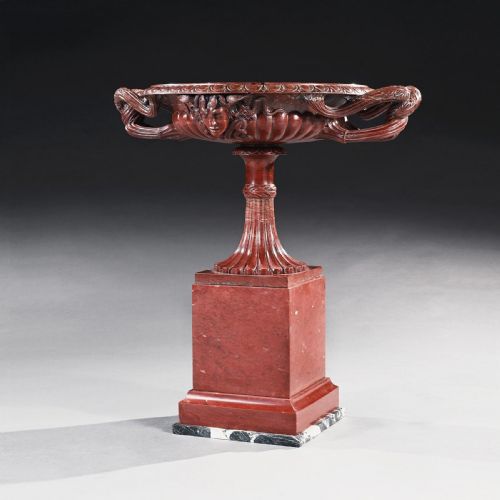
An italian grand tour urn is typically a souvenir acquired by travellers visiting classical sites during the eighteenth and nineteenth centuries. These pieces take the form of miniature vessels, campana urns, tazzas, and vases modelled after ancient Roman and Greek prototypes.
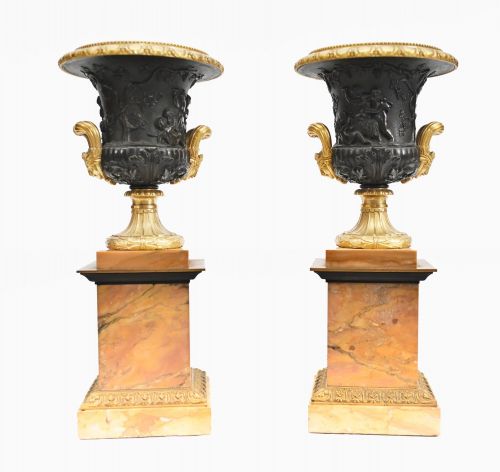
The examples seen here date predominantly from the nineteenth century, including Victorian interpretations, alongside pieces from the eighteenth century and the early twentieth century. Common physical formats include matched pairs mounted on marble bases as well as standalone vessels.
Makers such as Benedetto Boschetti are occasionally linked to larger labrum and tazza forms carved in specialised stones. The primary materials recorded across these listings are bronze and various marbles, reflecting the range of souvenirs collectors brought home.
Materials and methods
The metal objects rely on bronze casting, often finished with patination or gilding to emulate ancient metalwork. Many bronze pieces incorporate cast relief details such as cherubs, Bacchus figures, and classical handles.
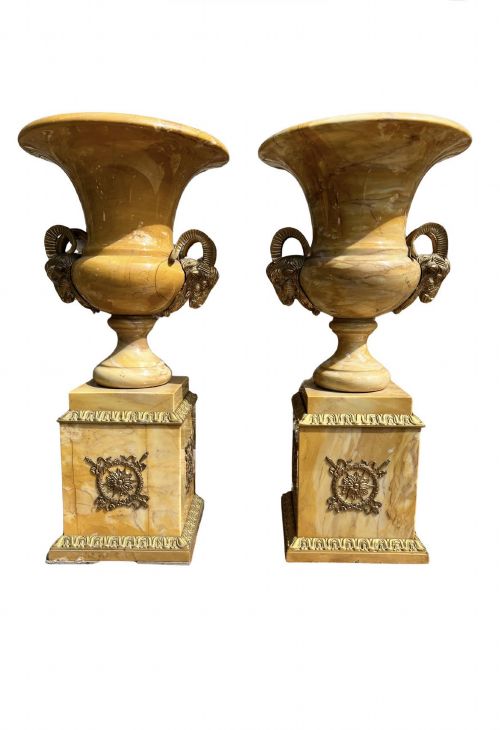
Stone pieces utilise turned and hand-carved marble, alabaster, and serpentine. Marbles such as Sienna, Rosso Antico, and Breccia Medicea provide deep colouration and distinct natural veining for tazzas and campana urns.
Victorian travellers could buy everything from miniature bronze drinking cups to entire groups of children pushing a marble cart.
Distinctions in quality
Quality rests on the crispness of the bronze casting and the precision of the stone turning. Finer examples display sharp relief modelling on figures and foliage, whereas simpler souvenirs show softer edges.
The selection of stone also dictates character, with highly-figured alabaster and richly coloured antique marbles marking out superior specimens. Matching pairs with intact original bases command stronger interest than single or mismatched items.
Benedetto Boschetti
The Italian Grand Tour Urn Glossary
- Campana urn
- An inverted bell-shaped vessel with a flared rim, widely used in classical antiquity and imitated in nineteenth-century bronze and marble. These forms often feature twin lower handles and sit on circular pedestals.
- Rosso antico
- A deep red marble prized by Italian stonemasons for replicating ancient statuary and decorative objects. Its dense grain takes a high polish.
- Alabastro egiziano
- A highly-figured variety of alabaster with distinct patterning, utilised for smaller-scale souvenir tazzas and vases. The material yields translucent qualities when cut thinly.
Italian Grand Tour Urn: Frequently Asked Questions
What is an italian grand tour urn?
These objects are miniature decorative vessels produced in Italy for foreign travellers visiting classical archaeological sites. They replicate ancient Roman and Greek forms in materials like bronze, Sienna marble, and alabaster.
Travellers displayed them in European homes as evidence of their cultural education and travels abroad.
How were these urns used originally?
Most functioned purely as decorative ornaments for mantelpieces, libraries, and cabinets of curiosity. Some variations served as posy vases, display ewers, or small planters.
Their primary purpose was commemorative, serving as physical reminders of archaeological discoveries seen on the journey.
How do I distinguish bronze from marble pieces?
Bronze examples involve metal casting, often featuring applied patinas, classical figural mounts, and handles shaped like Bacchus masks or scrolls. They range from dark patinated finishes to gilded surfaces.
Marble and alabaster pieces rely on stone turning and carving, showing natural veining in materials like Rosso Antico and Breccia Medicea.
How do I care for marble and bronze urns?
Stone pieces require gentle dusting with a dry cloth and should be kept away from moisture and harsh cleaning agents. Alabaster is particularly soft and soluble in water.
Bronze benefits from occasional light dusting to protect the patina, avoiding aggressive polishes that remove historic surface finishes.