
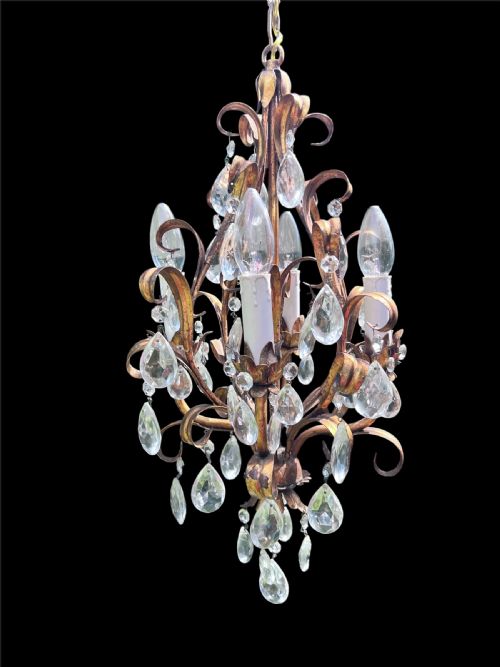


Italian Gilded Chandelier
An italian gilded chandelier brings luminous presence and historic warmth to a room through carved woodwork and sparkling glass.
Italian Gilded Chandelier
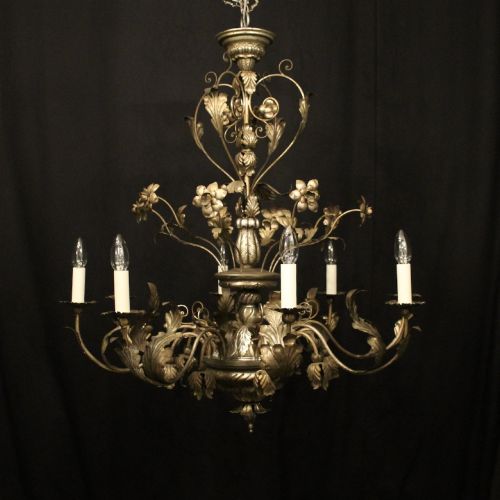
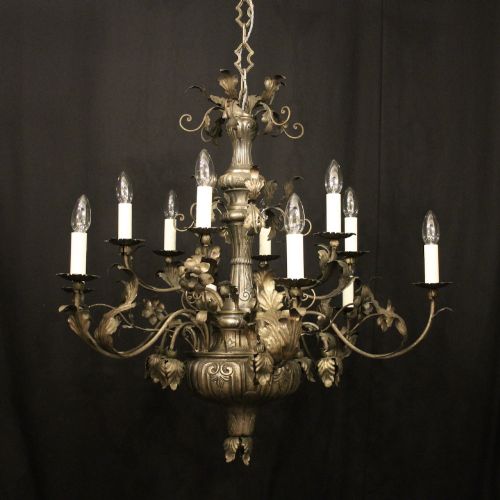
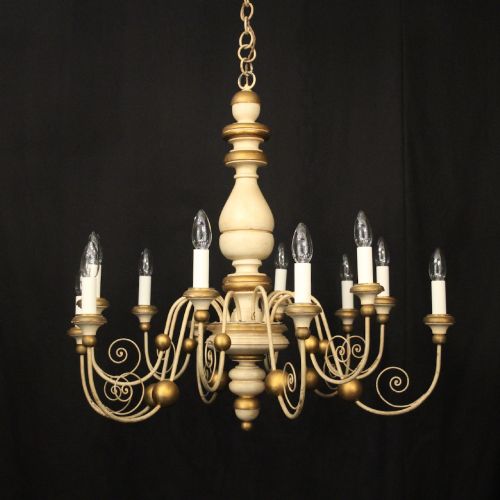
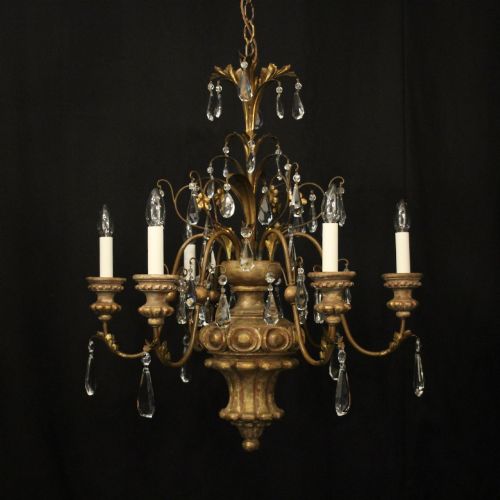
An italian gilded chandelier is a hanging lighting fixture defined by metallic leaf finishes, carved wooden frames, and glass elements originating from various periods including the eighteenth, nineteenth, and early twentieth centuries. The version you most frequently encounter on this page is the Florentine style piece, often carrying multiple light tiers, carved giltwood, and floral or leafy details.
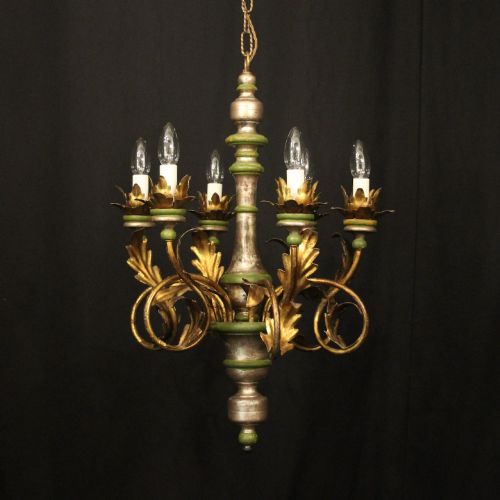
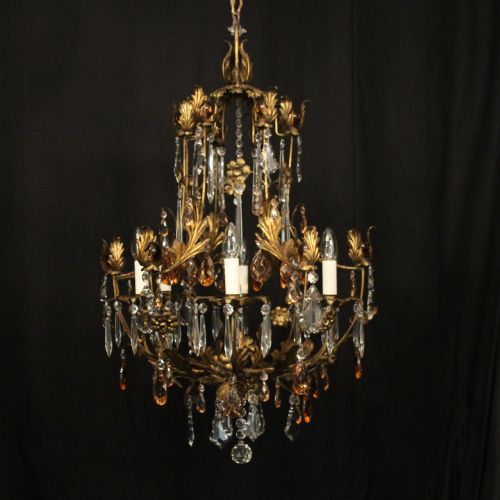
These fixtures take several forms beyond standard ceiling fittings, including hanging lanterns, wall lights, and double tiered statement pieces. Makers and workshops from regions such as Genoa and Venice contributed distinct local interpretations involving wrought iron, polychrome paint, and porcelain flowers alongside standard gilt finishes.
The aesthetic draws heavily from Baroque, Rococo, and traditional Italian design vocabularies. Scale ranges from modest three-light fixtures to monumental multi-tier installations carrying twenty-four lights or more.
Materials and construction methods
The construction of these fixtures relies on structural frameworks shaped from giltwood, wrought iron, or cast metals like bronze and brass. Artisans applied gold leaf or silver gilt to these surfaces, sometimes incorporating polychrome pigments or carved wooden foliage.
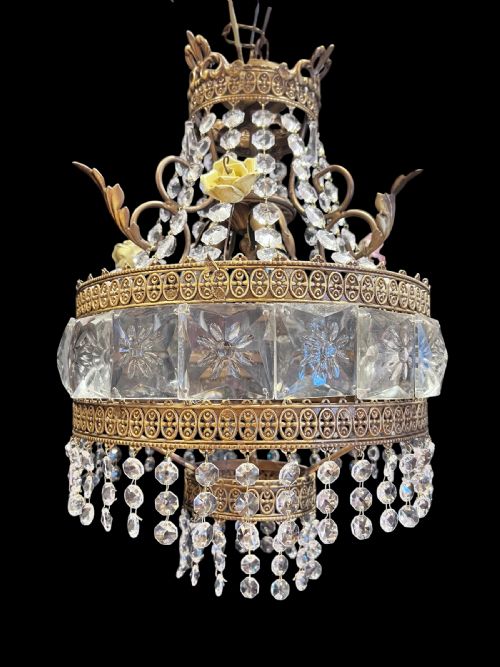
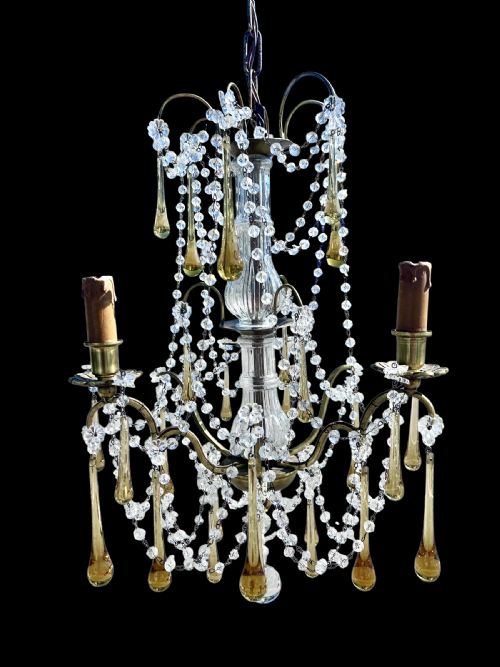
Lighting components integrate glass crystal drops, beads, and cut glass plates suspended from the metal or wooden armatures. Specific examples incorporate delicate additions like porcelain flowers or toleware elements to soften the metallic structure.
Several pieces feature delicate porcelain flowers permanently blooming among the gilt metal leaves, refusing to drop a single petal.
Distinctions in quality and execution
The standard of carving in the wooden components defines much of the visual depth, where hand-tooled leaves and scrolls display sharper definition than simpler moulded forms. The richness of the gilding itself, whether gold leaf or silver gilt applied over preparation layers, dictates how the surface catches ambient light.
The completeness and clarity of the crystal components also set individual pieces apart. Original arrangements of glass drops, beads, and polished pendants maintain a cohesive character that replacement elements sometimes lack.
The Italian Gilded Chandelier Glossary
- Giltwood
- Timber that has been coated with gold leaf or gold paint. This material forms the carved structural body of many Florentine fixtures.
- Florentine
- A design style originating from Florence characterised by ornamental carved leaves, floral motifs, and gilt finishes. These pieces frequently feature nested or multi-tiered candle arms.
- Toleware
- Enamelled and painted sheet metal used for decorative components. It provides colourful accents on specific traditional hanging fixtures.
- Birdcage
- A framework style where metal or wooden ribs curve outward to resemble an open cage enclosing the central stem and lights. This configuration allows for dense clusters of crystal drops.
- Cut glass
- Glass that has been faceted by grinding and polishing to increase light refraction. It appears across pendants and drops on nineteenth and twentieth century examples.
Italian Gilded Chandelier: Frequently Asked Questions
How do I hang a heavy antique chandelier?
These fixtures require secure anchorage directly into ceiling joists or structural supports using rated metal fixings. Due to the considerable weight of carved wood and metal frames, professional electrical and structural installation is essential.
Weight distribution must be calculated carefully, particularly for multi-tiered models carrying numerous lights and crystal drops. Ensuring the suspension chain and ceiling hook match the total mass prevents structural failure.
What is the difference between giltwood and gilded bronze?
Giltwood consists of a carved wooden base covered in a thin layer of gold leaf or metallic paint. This method creates lighter framework structures with organic, sculptural detail.
Gilded bronze, orormolu, involves metal casting finished with gold application. This material offers greater structural strength and supports intricate, rigid armatures for numerous light bulbs.
How should I clean crystal drops on a chandelier?
Cleaning involves wiping individual glass elements with a mild solution of warm water and diluted isopropyl alcohol using a soft cloth. Leaving components attached while cleaning prevents accidental damage to fragile hanging wires.
Harsh chemical cleaners should be avoided because they can strip the surrounding metal gilding or damage antique glass surfaces. Ensuring the power is completely switched off before maintenance is necessary.
Can these chandeliers be used with modern wiring?
Original electrical components on twentieth century pieces are commonly updated to meet current safety standards by qualified electricians. Rewiring allows the fixture to operate reliably while preserving the historic exterior framework.
Converting candle sockets to accept standard modern bulbs requires careful internal adaptation. Professional rewiring ensures insulation integrity without altering the visible external appearance of the metalwork.