


Carved Wooden Chandelier
A carved wooden chandelier brings warmth and historic character to a room, offering rich textures that metal fixtures simply cannot match.
Carved Wooden Chandelier
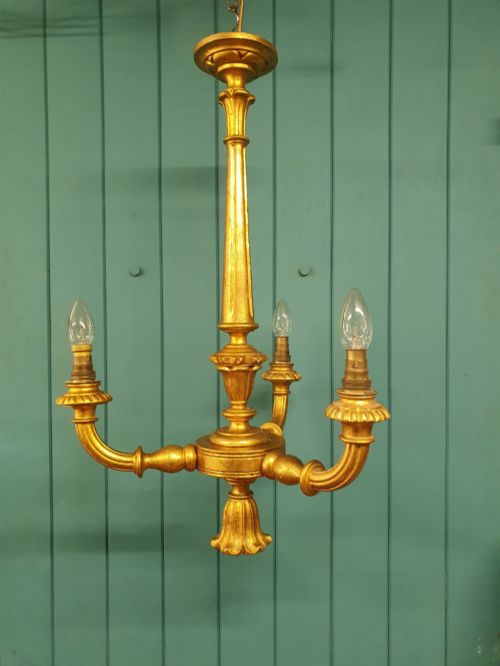
When you search for a carved wooden chandelier, you are looking at illumination shaped by hand across centuries, spanning the eighteenth century through to the nineteen-thirties. The pieces available here draw heavily from Italian Florentine workshops and French chateau aesthetics, bringing distinct regional character into British homes.
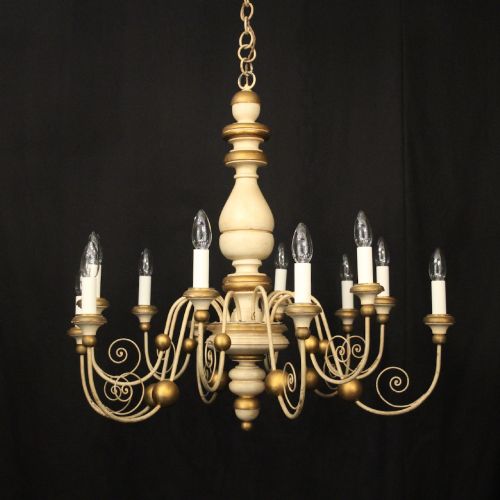
You are most likely to encounter giltwood and polychrome wood examples featuring multiple light arms, often finished in gold leaf or gesso. These range from intimate triple-light fixtures to grand twelve-light centrepieces originating from Edwardian and earlier periods.
How they were made
Makers shaped timber by hand before applying layers of gesso to create smooth surfaces ready for gilding. Gold leaf was then carefully laid over the prepared wood to catch and reflect the candlelight or early electric light.
Polychrome finishes required skilled painting directly onto the carved wood, often incorporating subtle metalwork or wrought iron elements for structural support in larger multi-light configurations.
Some Florentine chandeliers feature enough gilded scrolls to make a baroque mirror look minimalist.
What varies in quality
Quality rests in the depth and crispness of the carving, where deep undercut foliage and scrolls separate master carvers from routine workshop production. The finesse of the gilding and the preservation of original polychrome pigment dictate the visual impact of the piece.
Proportion and balance also matter greatly, as the relationship between the central wooden body and the extending arms determines whether the fixture holds a room or feels top-heavy.
The Carved Wooden Chandelier Glossary
- Giltwood
- Wood that has been coated with gold leaf or gold paint. This finish provides a bright reflective surface that enhances ambient illumination.
- Gesso
- A plaster mix applied to wood as a base for gilding or painting. It allows carvers to achieve sharp details before applying gold leaf.
- Polychrome
- Decorated in several colours. This technique brings painted floral or architectural motifs to the wooden surface.
- Florentine
- A style originating from Florence characterised by ornate carved scrolls and rich gilding. It frequently appears in eighteenth and nineteenth-century lighting.
Carved Wooden Chandelier: Frequently Asked Questions
How do I clean a carved wooden chandelier?
Dust the fixture gently with a soft, dry brush to protect the delicate giltwood or polychrome surface.
Avoid liquid cleaners or harsh chemicals, which can strip the gold leaf or damage the historic wood beneath.
How do I date a wooden chandelier?
Examine the tool marks, the composition of the gesso, and the style of the carving to determine the era.
Eighteenth-century pieces show hand-cut joinery and aged patination, whereas nineteen-thirties revivals often employ slightly different preparation layers.
Where should I hang a large chandelier?
Hang these fixtures in rooms with sufficient ceiling height to allow the multi-light arms to be appreciated fully.
They work particularly well above dining tables or in grand hallways where their historic presence can anchor the space.