




Italian Commode Chest
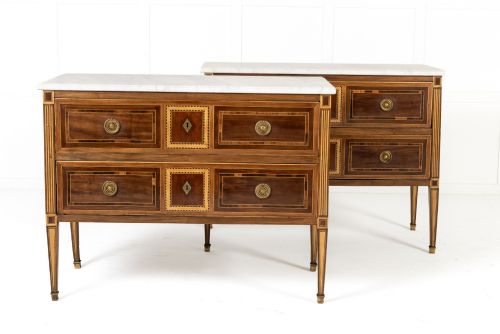
An italian commode chest brings continental presence into a room, offering deep drawer storage topped with polished marble or rich figured timbers.
Italian Commode Chest
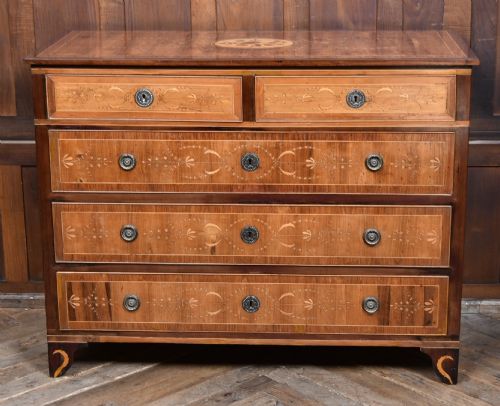
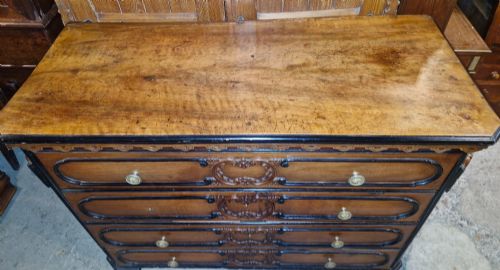
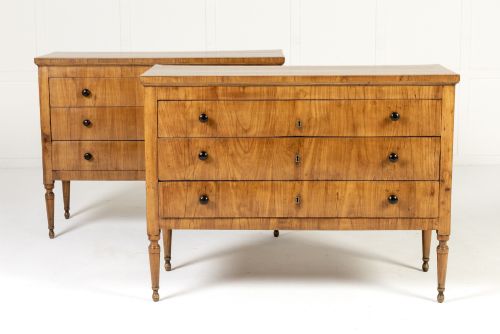
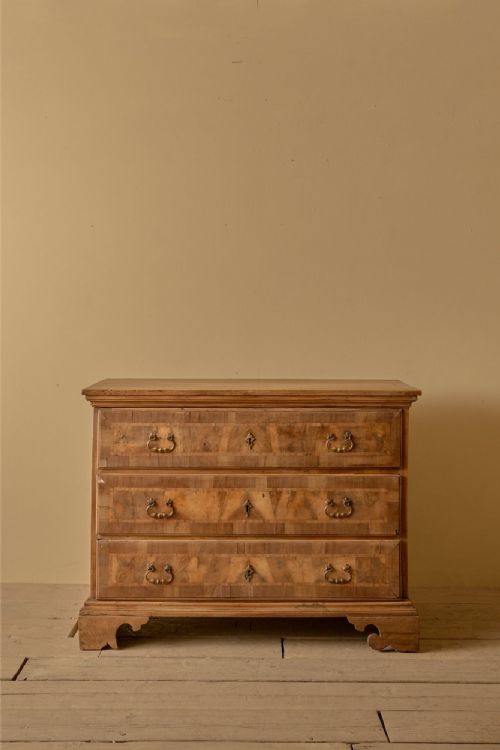
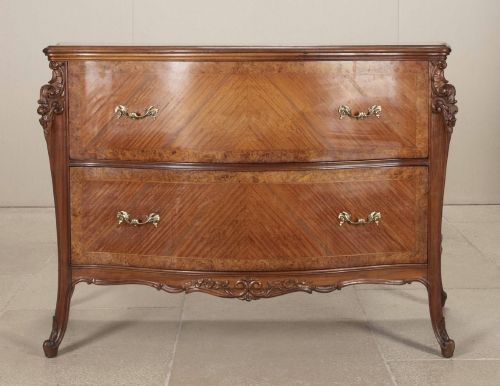
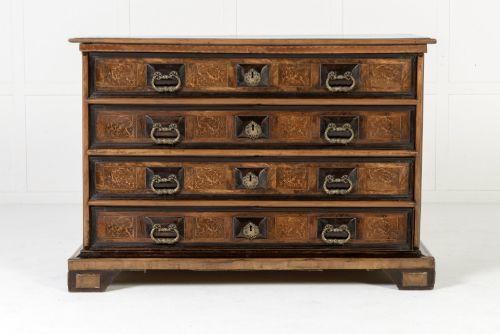
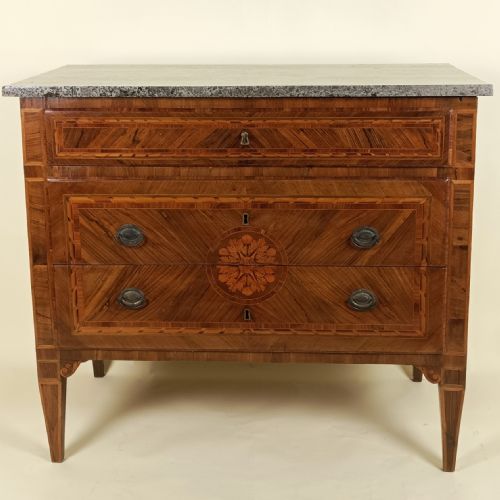
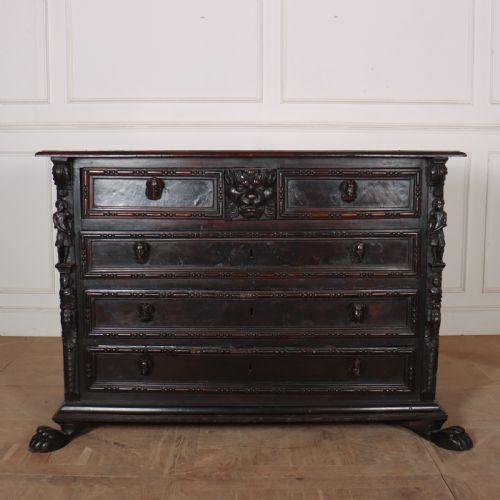
An italian commode chest is a substantial low storage unit designed with multiple drawers, appearing most frequently in walnut, fruitwood, and painted finishes across this selection. These pieces originate from various periods including the eighteenth and nineteenth centuries, taking forms such as serpentine fronts, bombe shapes, and upright chests of drawers.
Buyers encounter styles ranging from Italian Baroque and Rococo to Neoclassical designs, alongside later revival pieces and bedside chests. Walnut and painted wood dominate the listings, frequently paired with inlaid details, marble tops, or giltwood accents.
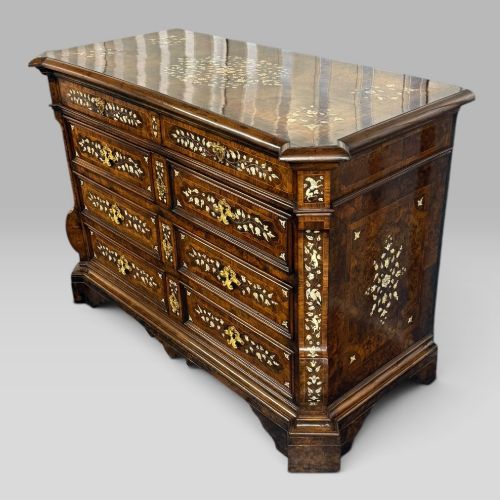
Regional variations span from North Italian workshops to Venetian outputs, incorporating marquetry and secret drawers into domestic furniture. The selection balances full-scale storage commodes with smaller bedside tables and side cabinets.
How They Were Made
Cabinet makers constructed these bodies using solid timbers like walnut, cherrywood, and fruitwood, often applying burr walnut, satinwood, kingwood, and olive-wood veneers across the surfaces. Inlaid marquetry and detailed carving define the decorative execution, particularly on Neoclassical and Rococo examples.
Surface treatments involve hand-applied paint, giltwood detailing, and polished marble slabs fitted to the tops of the chests. Structural forms utilise curved serpentine lines and bombastic swelling proportions executed by skilled joiners.
Italian Commode Chest Retail Price Guide 2026
Typical asking prices for italian commode chest among the pieces listed under this phrase on Sellingantiques today, from the lower quarter to the upper quarter. They describe what is for sale here now, not the wider market.
Periods represented span from the seventeenth-century Baroque era through the eighteenth and nineteenth centuries into twentieth-century revival pieces.
What Varies in Quality
The sophistication of the timber figure and the precision of the marquetry inlay set individual pieces apart. Selected burr walnut and multi-wood veneers demand superior cabinet-making skill to match grain patterns across curved drawer fronts.
Original painted surfaces and integrated marble tops contribute distinct character compared to later decorative interventions. The complexity of the structural form, from simple straight-front chests to pronounced bombe outlines, reflects the ambition of the original workshop.
Grand Ducal Workshops
The Italian Commode Chest Glossary
- Commode
- A low chest of drawers or cabinet designed for domestic storage. This term originates from French and describes continental furniture pieces.
- Bombe
- A swelling, outward-curving chest profile that swells on the front and sides. This exuberant shape is characteristic of Rococo and continental cabinet-making.
- Serpentine
- A curved furniture front shaped in a wave line with a convex centre flanked by concave ends. This contour adds movement to timber and painted chests.
- Marquetry
- Decorative veneer work forming pictures or geometric patterns using various coloured woods. Craftsmen cut and fitted thin pieces of timber into a background panel.
- Giltwood
- Timber carved and coated with gold leaf or metallic paint to create a lustrous finish. This technique highlights decorative carvings on frames and mounts.
Italian Commode Chest: Frequently Asked Questions
Where did they put an italian commode chest?
These chests served primarily as principal storage furniture in bedrooms, grand reception rooms, and hallways of elite residences. Their decorative tops and polished drawer fronts suited prominent display spaces.
Today, buyers place them in living rooms, hallways, and spacious bedrooms where their timber grain and marble surfaces act as focal points.
How do I clean a marble top?
Marble surfaces require gentle wiping with a damp cloth and mild neutral soap to preserve the polished stone. Acidic substances like lemon juice or wine must be avoided to prevent etching.
Regular dusting keeps the stone clear, while specialised marble wax protects the finish from moisture rings and daily wear.
Are these chests good for clothes storage?
The deep drawer configurations provide ample space for folded garments, linens, and personal accessories. Their generous proportions accommodate everyday domestic utility.
Historic drawer interiors benefit from natural drawer liners to protect delicate textiles from rough timber surfaces.
How do I spot a later revival piece?
Revival items often exhibit cleaner interior timber milling and standardised construction methods compared to eighteenth-century joinery. Stylistic cues draw heavily on earlier Baroque or Rococo motifs executed with nineteenth or twentieth-century tools.
Examining the secondary woods inside the drawer boxes and the wear patterns helps distinguish period originals from later interpretations.