

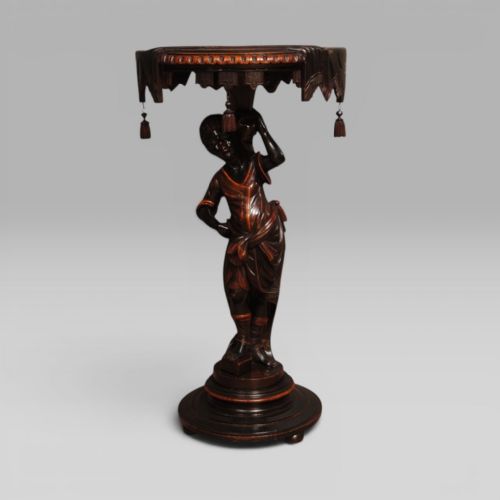


Italian Carved Wooden Torchere
An italian carved wooden torchere brings theatrical lighting and dramatic figurative presence into a room, combining rich historical craftsmanship with functional display.
Italian Carved Wooden Torchere
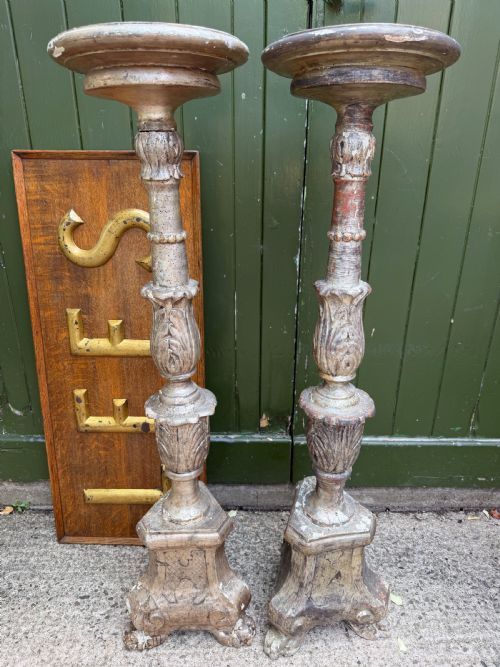
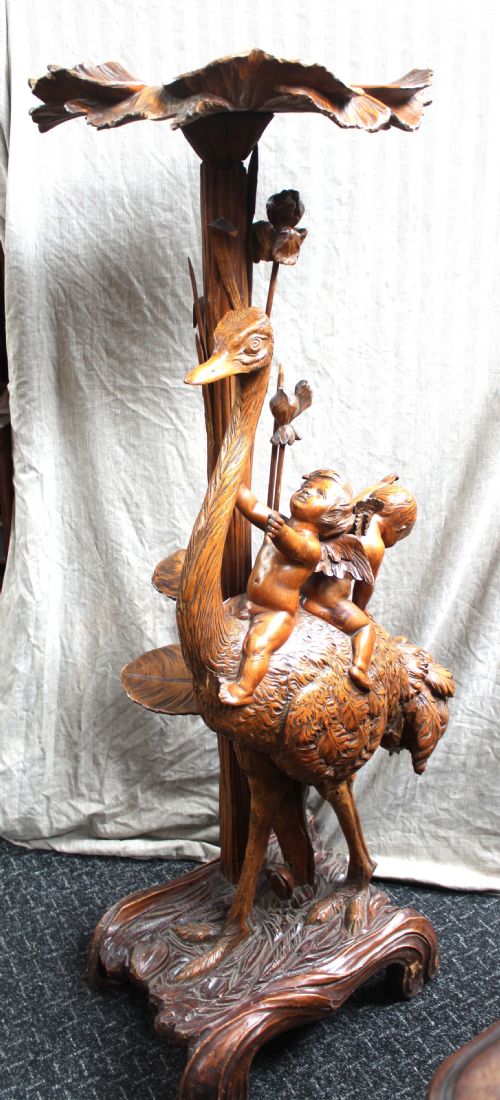
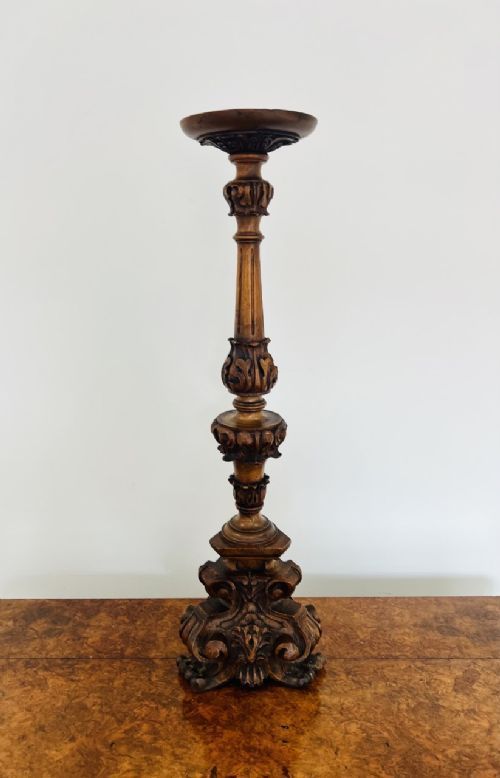
An italian carved wooden torchere stands as a decorative pedestal or candle stand, designed to elevate lamps, sculptures, or floral arrangements. These pieces emerge predominantly in 18th century and 19th century iterations, reflecting regional styles from Venetian Baroque to Baroque Revival.
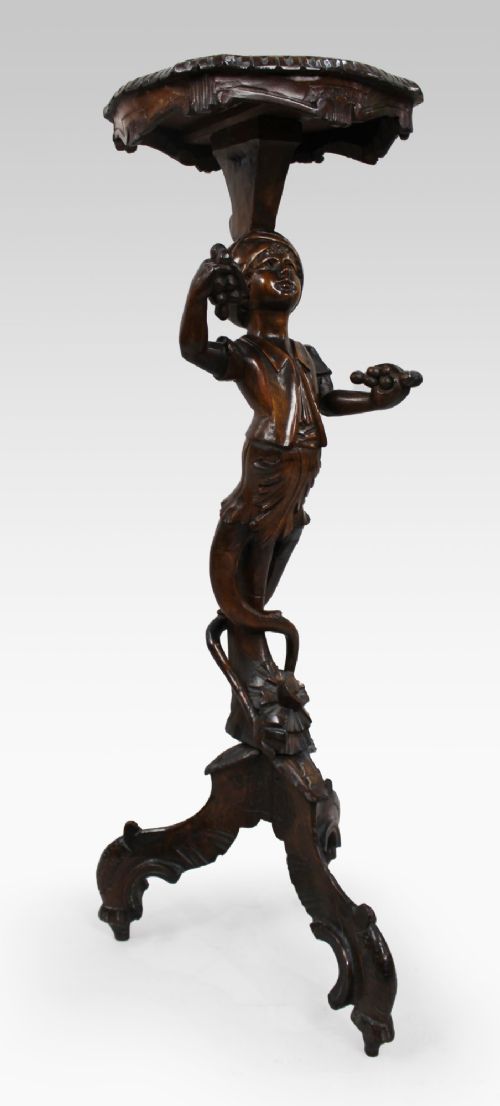
Buyers will frequently encounter figural stands depicting gondoliers or attendants, often referred to as blackamoor figures, alongside triform pedestals and classical columnar forms. Materials range from walnut and pinewood to elaborate surfaces adorned with gold leaf, gesso, and polychrome paint.
Materials and construction methods
Master craftsmen shaped these stands from solid timber bases of walnut, pinewood, and other carved woods, building up complex three-dimensional forms through meticulous hand carving. Structural integrity relied on traditional joinery methods suited to supporting elevated weight.
Surfaces were frequently prepared with a layer of gesso before receiving applications of gold leaf, parcel-gilt, or silvering to catch the candlelight. Polychrome paint and original pigments were layered on top to create lifelike garments and intricate decorative patterns on figurative bases.
Listings span from the 18th century through the early 20th century, encompassing Venetian Baroque, Rococo, and Renaissance Revival aesthetics.
Distinctions in craftsmanship and condition
Structural stability and the survival of delicate appendages, fingers, and carved scrollwork distinguish superior survivals from heavily restored or replaced elements. Pieces retaining their original triform bases or matching pairs demonstrate greater historical completeness.
The Italian Carved Wooden Torchere Glossary
- Torchere
- A tall ornamental stand originally designed to carry a torch or candle, later evolving into a pedestal for lamps and decorative objects. These items typically feature slender shafts supported by tripod or triform bases.
- Giltwood
- Timber that has been coated with a thin layer of gold leaf or gold paint over a prepared gesso ground. This finish provides a luminous quality that reflects ambient light in a room.
- Triform
- Having three sides or three feet, a common configuration for the base of a torchere or pedestal to ensure stability. This geometric layout often incorporates curving cabriole legs or scrolled feet.
- Parcel-gilt
- Partially gilded, where gold leaf is applied only to specific decorative highlights while leaving the underlying painted or natural wood exposed. This creates a striking contrast between metallic brilliance and matte surfaces.
Italian Carved Wooden Torchere: Frequently Asked Questions
Where should I place a torchere?
These tall stands suit corners, entrance halls, or flanking larger pieces of furniture where vertical height adds balance to a room.
Ensure the location protects delicate painted or gilded surfaces from heavy foot traffic and direct sunlight.
How do I clean a painted wooden torchere?
Dust the carved surfaces gently with a dry, soft-bristled brush or microfiber cloth to prevent dirt accumulation in recessed areas.
Avoid liquid cleaners, chemical polishes, or damp cloths, as moisture can damage fragile gesso and original polychrome paint.
Can these stands hold heavy lamps?
Most torcheres and pedestals are structurally sound enough to support standard table lamps, small sculptures, or floral arrangements.
Check the stability of the triform base and ensure the weight centres evenly over the shaft before placing heavy items on top.
How can I tell an 18th-century piece from a 19th-century copy?
Earlier examples often exhibit deeper hand chiselling, denser timbers, and natural wear patterns beneath layers of aged gilding.
Nineteenth-century revival pieces tend to utilise machine-sawn elements alongside hand carving and may show different crackling patterns in the gesso.