




Italian Carved Desk
An italian carved desk brings rich walnut and intricate figural work into a study, offering substance and historical presence.
Italian Carved Desk
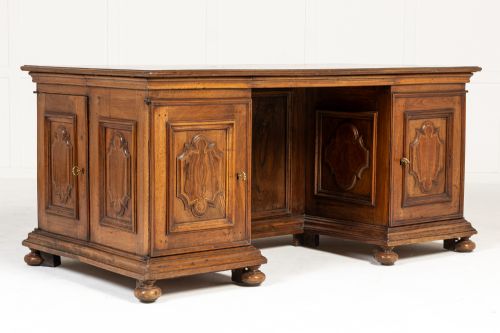
An italian carved desk sits at the intersection of serious workspace furniture and sculptural ornament, drawing on centuries of regional cabinet-making traditions. When you search for an italian carved desk, you encounter pieces that range from substantial pedestal forms in walnut to bureau bookcases and davenports shaped by skilled hands.
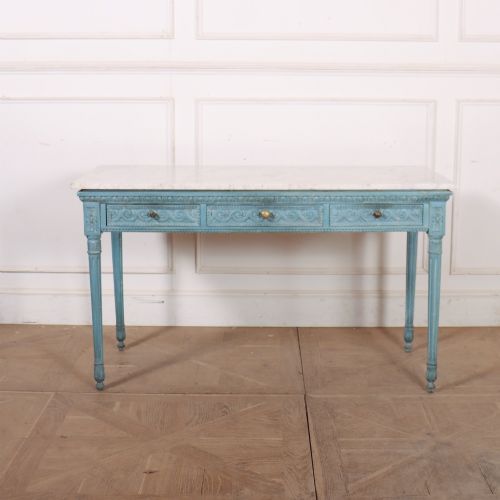
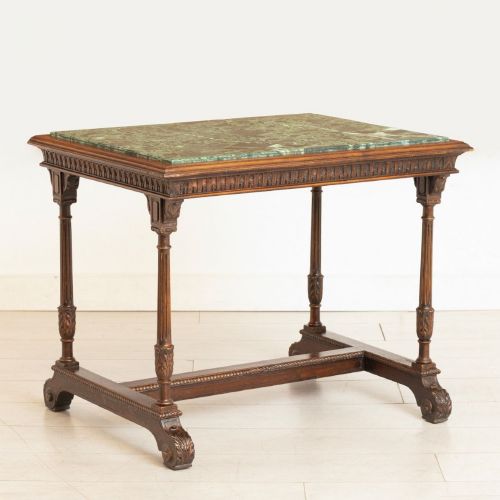
The examples gathered here span from the eighteenth century through the nineteenth century, capturing periods such as the Renaissance Revival and Neoclassical movements. Alongside standard writing surfaces, the selection includes related forms like console tables and side tables that share the same dense carving and continental character.
Materials and construction
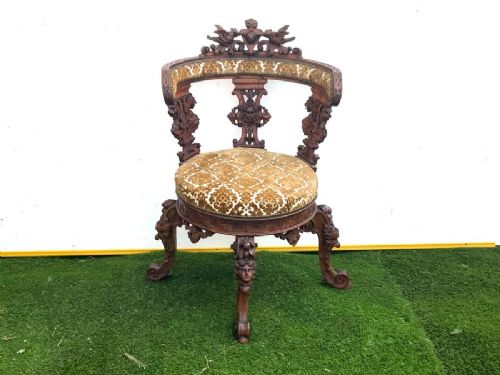
Walnut serves as the primary timber for these surfaces, chosen for its dense grain and capacity to hold deep, crisp relief carving without splintering. Cabinet-makers utilised this wood to build robust frameworks that support figural elements, winged griffins, and elaborate scrolling foliage.
Secondary materials work in tandem with the timber to establish the distinct aesthetic of the region. Giltwood and gesso add metallic brilliance to mirrors and lamps, while marble tops in Carrara and Siena varieties introduce cool, polished mineral planes that contrast against dark carved walnut.
One nineteenth-century desk comes paired with carved walnut winged griffins standing ready to guard your daily correspondence.
Judging quality in carving and timber
The distinction between ordinary and exceptional pieces rests entirely on the depth and animation of the chisel work. Top-tier examples display a three-dimensional vitality in figures, cherubs, and animal motifs, where musculature and drapery read clearly rather than appearing shallow or stiff.
Timber selection and structural integrity further define the hierarchy. High-grade walnut exhibits rich, natural figure and uniform colour, joined with construction methods that keep heavy desks stable under daily use without relying on surface disguises.
Angiolo Barbetti Firenze·Luigi Frullini
The Italian Carved Desk Glossary
- Renaissance Revival
- A nineteenth-century design movement that revived sixteenth-century Italian motifs, including heavy scrollwork, grotesque masks, and figural supports. This style dominates the carved walnut furniture found in this category.
- Davenport desk
- A compact nineteenth-century writing cabinet featuring a sloping lid on top and drawers accessed from the side. Italian interpretations incorporate rich walnut construction and intricate carved details.
- Bureau bookcase
- A two-part storage and writing piece comprising a sloped desk flap over drawers, surmounted by a glazed or panelled cabinet. The Venetian walnut variants rely on figured veneers and elaborate carving.
- Giltwood
- Timber that has been coated with a thin layer of gold leaf over a prepared gesso ground. It appears on frames, mirrors, and decorative stands across eighteenth-century Italian interiors.
Italian Carved Desk: Frequently Asked Questions
What periods do these desks cover?
The pieces span from the eighteenth century through the nineteenth century, with several examples reflecting later revivals of earlier classical and Renaissance forms.
Cabinet-makers across these decades drew on historical Italian styles, meaning nineteenth-century interpretations often echo seventeenth and eighteenth-century structural traditions.
How do I identify a Renaissance Revival desk?
Look for dense hand-carving featuring motifs like winged griffins, cherubs, scrolling foliage, and figural supports executed in dark walnut.
These desks prioritise sculptural presence, often incorporating architectural mouldings and heavy panel construction characteristic of nineteenth-century revivals.
Are these surfaces suitable for daily writing?
Most antique desks provide sturdy working areas, though their historical significance and delicate carved edges encourage careful, considered use.
Writing surfaces often feature wood panels or leather inserts depending on the specific nineteenth-century model and its original domestic function.
What woods were used besides walnut?
While walnut forms the foundation of the seating and writing furniture, mahogany also appears in specific pedestal desk variants.
Accompanying decorative elements integrate marble, giltwood, and gesso to create contrast against the primary timber structures.