

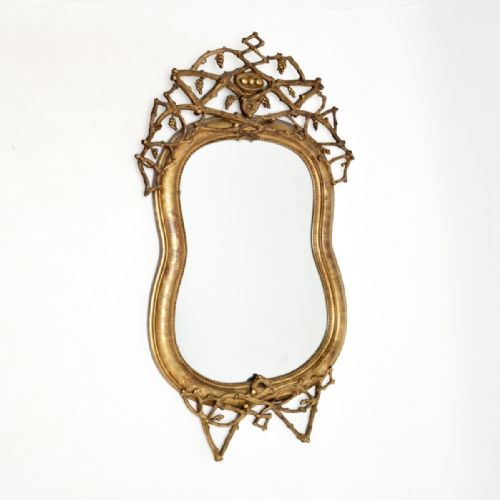

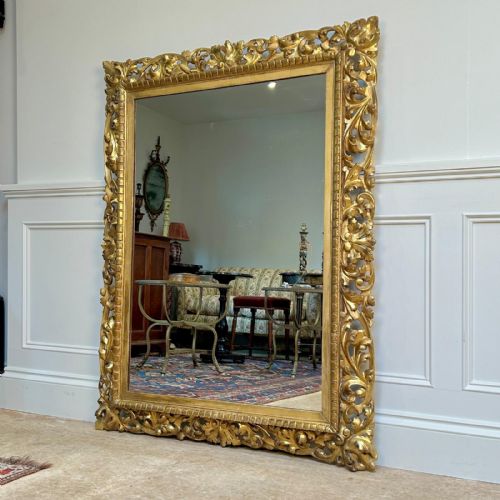


Italian Carved Accent Mirror
An italian carved accent mirror brings intense focal depth to a room through centuries of continental craftsmanship and gilded surface texture.
Italian Carved Accent Mirror
An italian carved accent mirror represents a distinct category of wall decoration spanning the eighteenth and nineteenth centuries, including items from the Victorian era up to nineteen thirty. The typical pieces encountered on this page take the form of wall mirrors and overmantle fixtures, alongside occasional console tables and pier glasses.
Regional stylistic variety dominates the selection, ranging from Venetian and Florentine Rococo designs to heavier Italian Baroque and Renaissance Revival interpretations. Buyers often find intricately carved giltwood frames featuring engraved plates, marginal mirror sections, and hand-painted details that define continental domestic interiors of the period.
Materials and construction methods
Makers built these frames primarily from carved wood, applying layers of gesso to smooth the surface before finishing the work with gold leaf, silver-leaf, or paint. The application of giltwood and gesso created deep relief surfaces that caught candlelight and daylight within period chambers.
The glazing involves traditional glass and mirrored glass plates, sometimes featuring hand engraving or marginal mirror borders. Flame mahogany also appears in specific nineteenth-century composite furniture forms alongside the dominant carved wooden structures.
Listings span the eighteenth and nineteenth centuries, featuring materials such as giltwood, gesso, silver-leaf, flame mahogany, and mirrored glass across wall mirror and console table forms.
Judging the standard of execution
The depth, undercut crispness, and vitality of the wood carving separate superior examples from routine production. Master carvers achieved fluid asymmetry in Rococo forms and architectural gravity in Baroque pieces through precise hand tool work on the gesso and wood.
The integrity of the original gilt surface and the character of the glass plate heavily influence the standing of a piece. Original silver-leaf, hand-engraved plates, and intact hand-painted decorations retain historical authenticity that mechanical or later restorations lack.
The Italian Carved Accent Mirror Glossary
- Giltwood
- Wood that has been coated with thin gold leaf or gold powder over a prepared gesso ground. This finish provides the characteristic golden brilliance seen on antique frames.
- Gesso
- A plaster mix applied to wood carvings as a smooth base for gilding or painting. It allows craftsmen to sculpt fine surface details prior to leaf application.
- Pier glass
- A tall mirror designed specifically to hang on the wall space between windows. These mirrors often match console tables positioned directly beneath them.
- Marginal mirror
- A mirror plate surrounded by smaller, individually cut segments of mirrored glass around the outer border. This technique creates multifaceted light reflections.
- Baroque
- A theatrical, highly ornate European artistic style emphasising dramatic curves and bold volume. Italian interpretations from this movement employ heavy architectural moulding.
Italian Carved Accent Mirror: Frequently Asked Questions
How do I hang a heavy giltwood mirror?
These antique frames carry substantial weight due to their dense wooden construction and thick gesso layers. Secure them directly into structural wall studs using appropriate brackets.
Avoid relying solely on plaster walls or decorative picture wire for large nineteenth-century pieces.
What distinguishes Venetian mirrors from Florentine ones?
Venetian mirrors frequently incorporate engraved marginal plates and delicate glasswork elements reflecting lagoon aesthetics. Florentine examples lean heavily towards deep-relief carved giltwood foliage and ornate scrollwork.
Both regional types utilise distinctive decorative vocabularies rooted in local artisanal traditions.
Can these mirrors go in a bathroom?
High humidity and fluctuating temperatures damage historical gesso, exposed wood substrates, and delicate gold leaf finishes. Keep these fragile antiques in stable living areas or hallways.
Moisture causes the gesso to swell and compromises the historic bonding behind the gilding.