


Italian Beaded Pendant Light
An italian beaded pendant light brings warmth and old-world texture into a room, offering a distinct play of light through countless small glass elements.
Italian Beaded Pendant Light
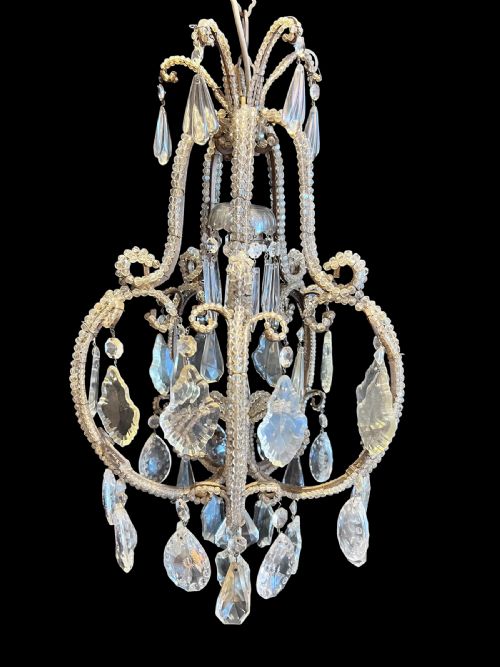
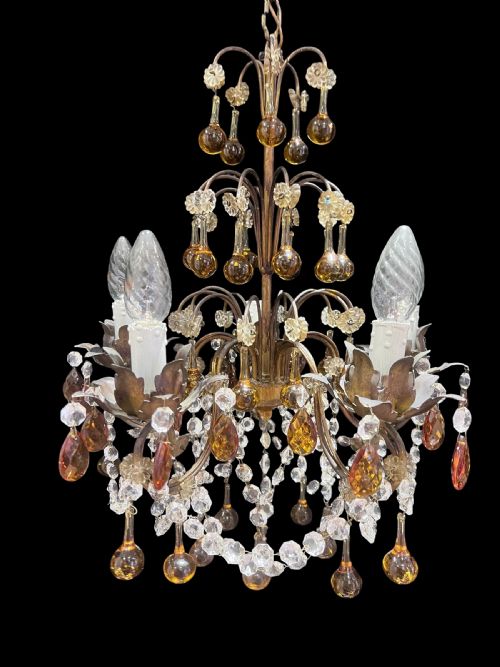
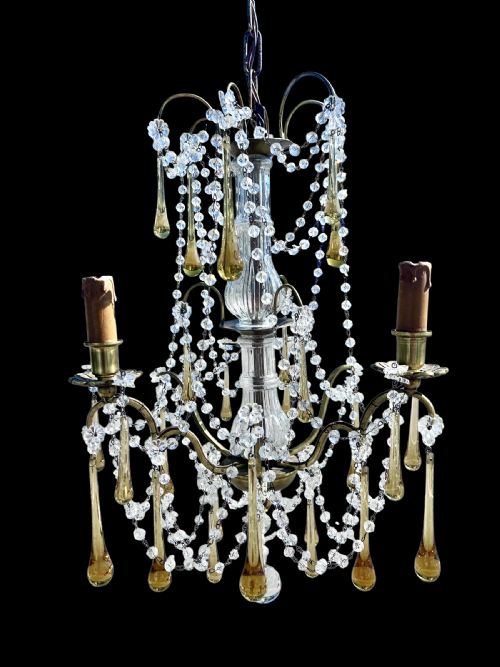
When you search for an italian beaded pendant light, you are looking at elaborate hanging light fittings originating from Italy, most commonly taking the form of antique chandeliers from the early twentieth century or the nineteenth century. These fixtures generally emerge in styles such as Florentine, Venetian, and Rococo Revival, showcasing a distinct decorative character.
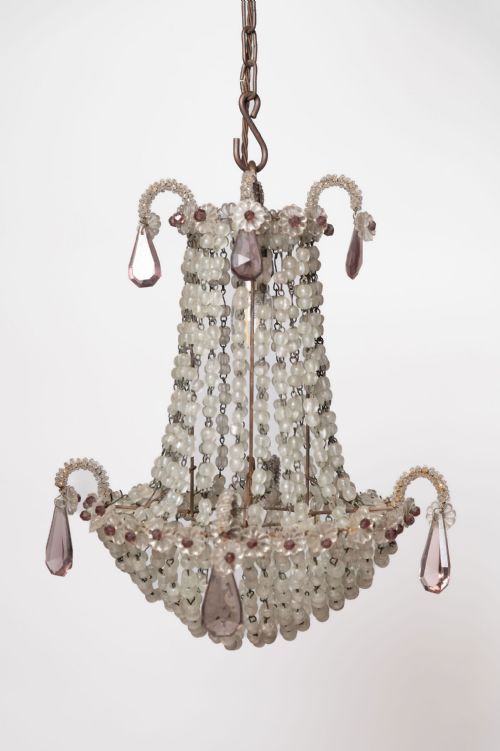
The pieces you are most likely to meet on this page span single-light pendants up to massive multi-branch chandeliers with twenty-four lights. Alongside standard bowl and drop configurations, the evidence includes notable pictorial forms such as galleon chandeliers and pod chandeliers.
Originating predominantly from Italian workshops during periods ranging from the nineteenth century to the 1930s, these light fittings rely on rich clusters of glass beads and crystals to define their visual silhouette. They suit spaces requiring a dramatic overhead focal point with historical provenance.
Materials and Construction
Makers constructed the structural framework of an italian beaded pendant light using metals such as brass, gilt metal, wrought iron, and wire to support the considerable weight of the glass components. Frames were frequently gilded or shaped into elaborate floral and scrolling motifs typical of Florentine and Rococo styles.
Suspended from these metal armatures are dense layers of glass, crystal, and beaded glass elements, sometimes fashioned into specific shapes like coloured crystal fruits including grapes, apples, and pears. The meticulous wiring and hanging of individual beads create the characteristic shimmering drape of the shade or body.
Materials across the inventory include standard glass alongside coloured crystal, gilt metal, wrought iron, brass, and wire.
Assessing Quality and Execution
Quality in an italian beaded pendant light rests primarily on the density and variety of the glass components and the substance of the underlying metal frame. Superior examples feature extensive coloured crystals and robust gilt framing rather than sparse beadwork on simple wire.
The complexity of the form further separates standard production from exceptional work, moving from basic single-light drops to intricate multi-branch fixtures or sculptural galleon and pod shapes. The refinement of the metalwork, whether hand-forged iron or intricately carved gilt metal, dictates the overall architectural presence.
The Italian Beaded Pendant Light Glossary
- Gilt metal
- Metal treated with a gold-coloured finish or gold leaf application to provide a bright, reflective surface. This treatment is common on Italian frames to enhance the sparkle of the surrounding glass.
- Florentine
- A regional Italian style characterised by ornate, organic leaf and scroll motifs, often rendered in gilt metal. It dominates the decorative vocabulary of many antique Italian light fittings.
- Galleon chandelier
- A decorative hanging light shaped to resemble a traditional sailing ship, utilising metal framework and glass beads to form the hull and rigging. These form a distinct and imaginative subset of Italian lighting.
- Pod chandelier
- A rounded, closed fixture shape resembling a seed pod, completely enveloped in cascading glass beads. This form creates a diffused, ambient glow rather than direct illumination.
- Rococo Revival
- A nineteenth-century design movement resurrecting the asymmetrical, fluid curves and shell-like ornamentation of the eighteenth century. It influences the curving, exuberant branches seen on many period chandeliers.
Italian Beaded Pendant Light: Frequently Asked Questions
How do I clean an antique glass beaded light?
Maintenance requires gentle cleaning of individual glass beads and crystals while they remain attached to the frame, using a mild cleaning solution applied with a soft cloth. Avoid harsh chemicals that might strip the gilt finish from the metal armature.
Take care not to pull on the wire or thread securing the beads, as older fastenings can become brittle over time. Regular dusting helps preserve the clarity of the crystal without risking damage to the structure.
What periods do these chandeliers come from?
The lighting fixtures listed originate primarily from the early twentieth century, specifically between 1910 and 1930, alongside examples from the nineteenth century. These dates reflect the height of ornate Italian decorative metalwork and glass production.
Designs from this span range from traditional Florentine gilt creations to whimsical figurative pieces like galleon chandeliers. Each period brings distinct characteristics in frame construction and crystal coloration.
Where should I hang a large beaded pendant?
Large multi-branch or multi-light fixtures require high ceilings and a substantial room proportion to support their visual weight and physical dimensions. Spaces like entryways, dining rooms, or drawing rooms provide the ideal volume.
Consider the weight of the piece, particularly versions featuring heavy wrought iron frames or extensive crystal fruit clusters, and ensure structural ceiling support is in place before installation.
How do I identify a Florentine style light?
Florentine pieces are easily recognised by their profusion of carved or stamped metal leaves, tendrils, and floral elements, typically finished in gold gilt. They often incorporate dense draperies of glass beads that soften the metal framework.
Unlike simpler geometric designs, Florentine lighting embraces an organic, sculptural approach where the metal mimics natural foliage, framing the sparkling crystal elements within.