




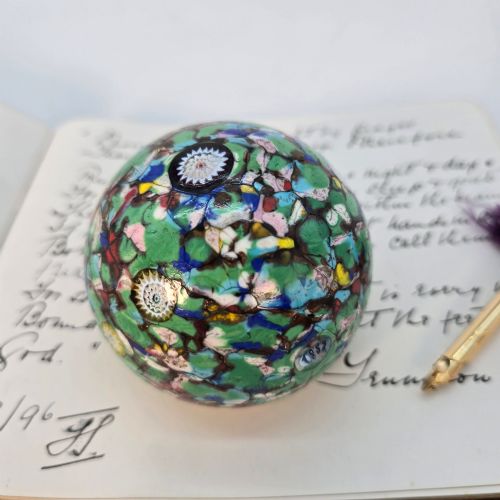


Italian Art Glass
Italian art glass brings extraordinary colour and skill into a room, capturing decades of Venetian and Murano craftsmanship in striking forms.
Italian Art Glass
When you search for italian art glass, you encounter a diverse range of decorative objects originating primarily from Murano and Venice. The selection spans distinct periods, bringing together mid-century modern design alongside earlier twentieth-century pieces.
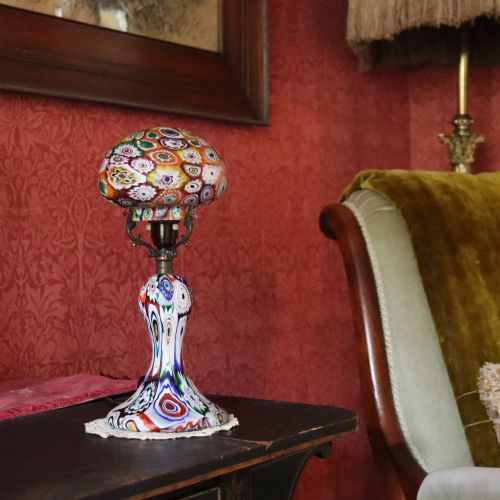
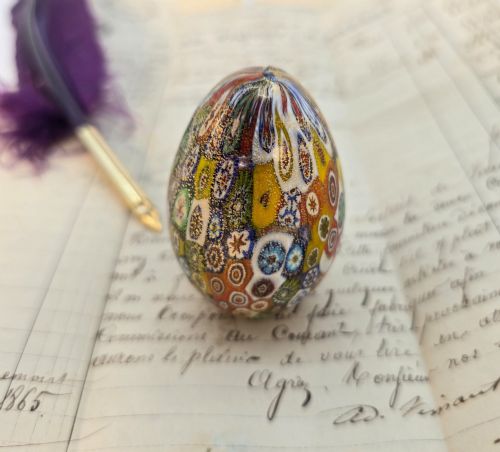
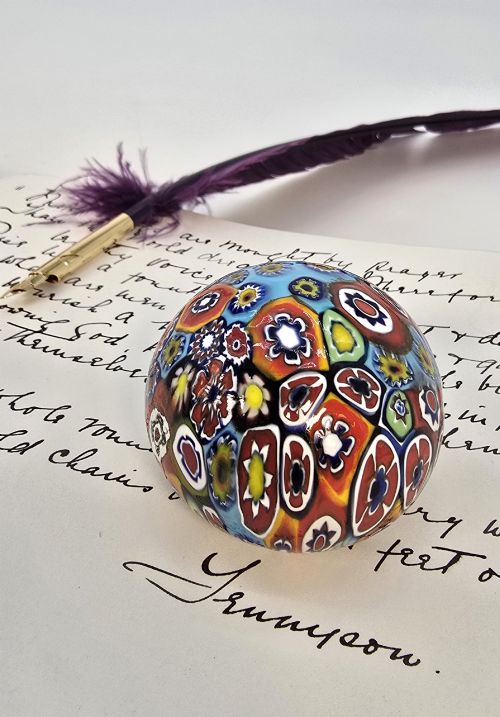
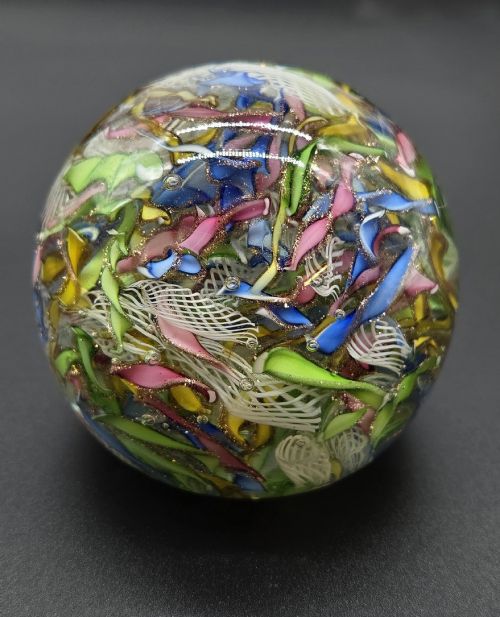
The objects take various functional and decorative forms, most frequently appearing as intricate paperweights, vibrant glass bowls, lamps, and sculptural vases. Paperweights feature dense millefiori or scrambled cane techniques, while larger vessels showcase distinct handkerchief shapes.
Originating predominantly from Italian workshops, these items demonstrate the enduring technical mastery of lagoon glassmakers. Buyers most commonly meet pieces from the nineteen-thirties and mid-century periods on this page.
How they were made
Murano glassmakers utilise centuries-old traditions, manipulating molten material by hand with specialised tools at the furnace. Craftsmen shape vessels freehand or use moulds, incorporating coloured canes and specialised glass rods to build complex patterns.
Techniques such as millefiori involve fusing cross-sections of multicoloured glass canes together within clear glass, demanding precise temperature control and swift execution. Other methods include a ritorti twisting techniques and layered casing to achieve depth of colour.
Italian Art Glass Retail Price Guide 2026
Typical asking prices for italian art glass among the pieces listed under this phrase on Sellingantiques today, from the lower quarter to the upper quarter. They describe what is for sale here now, not the wider market.
Current listings feature glass, Murano glass, and millefiori glass objects spanning the 1920s through the 1960s.
What varies in quality
The calibre of italian art glass rests upon the complexity of the design and the precision of the hot-work execution. Superior examples display clean optical clarity, balanced proportions, and well-aligned internal cane patterns without distracting surface bubbles or distortion.
Attribution to notable designers or specific Murano glasshouses elevates a piece significantly, reflecting the maker's artistic standing. The depth of colour saturation and the finesse of the finishing work further distinguish exceptional items from standard production.
Fratelli Toso·Fulvio Bianconi for Venini·AVEM
The Italian Art Glass Glossary
- Millefiori glass
- A glasswork technique producing multicoloured mosaic patterns resembling flowers, created by bundling glass rods together, fusing them with heat, and slicing the resulting cane.
- Murano glass
- Glass made on the Venetian island of Murano, renowned for centuries of continuous innovation in colour, clarity, and specialised melting techniques.
- A ritorti
- A glassmaking technique involving twisted threads or canes of coloured glass embedded within a clear vessel to create spiral optical effects.
- Paperweight
- A small, solid glass object designed to hold down loose sheets, often featuring intricate internal floral or geometric cane compositions.
Italian Art Glass: Frequently Asked Questions
What is italian art glass?
It encompasses decorative glass objects, primarily from Murano and Venice, shaped by skilled artisans using traditional furnace techniques.
These pieces range from dense paperweights to large sculptural vases and lamps, spanning periods from the early twentieth century onwards.
How do I identify Murano glass?
Look for distinctive material qualities such as vibrant colour combinations, complex internal cane work, and hand-finished polished pontil marks on the base.
Many pieces reflect specific mid-century design movements or traditional Venetian techniques that set them apart from mass-produced glassware.
How should I display glass pieces?
Place them in locations where natural light can pass through the material, highlighting the depth of colour and internal patterns.
Ensure they rest on stable surfaces away from high-traffic areas to protect delicate forms and prevent accidental knocks.
Are all items from the island of Murano?
The majority of pieces originate from Murano workshops, though the broader category includes related Venetian production and mid-century Italian design.
Checking attribution details helps clarify the specific origin and workshop behind each individual decorative object.