




Italian Architectural Landscape Painting
These Italian architectural landscape painting works capture classical ruins, canals and civic squares through the eyes of travelling artists and native painters alike.
Italian Architectural Landscape Painting
An Italian architectural landscape painting brings classical ruins, bustling canals and historic piazzas directly onto the wall. Collectors searching this phrase encounter works ranging from 17th-century compositions to mid-century views.
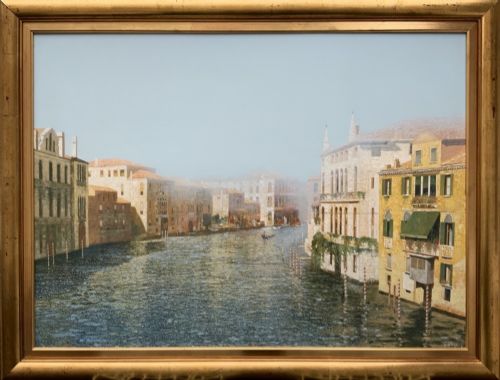
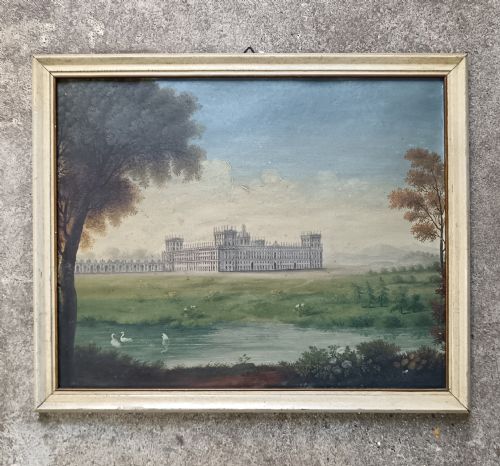
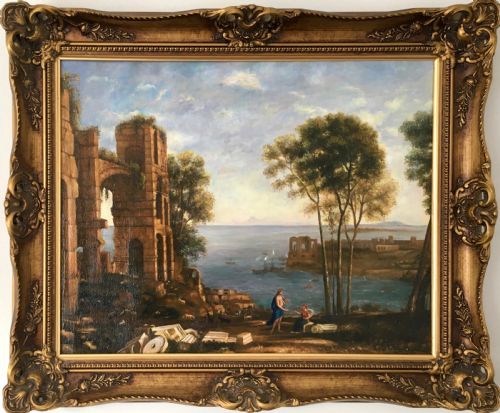
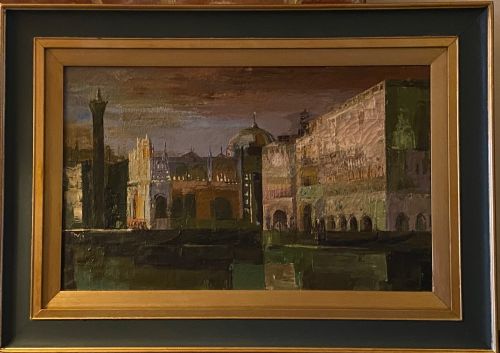
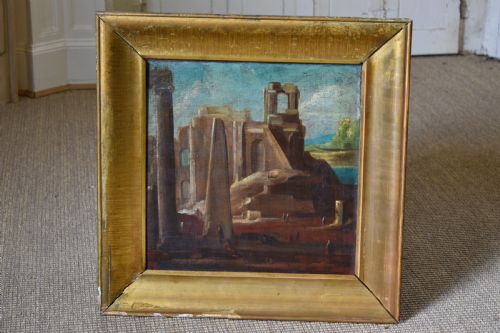
The material record on this page shows a heavy concentration of watercolours and oil paintings on canvas or paper. Subjects frequently focus on Venice, Rome and Pompeii, executed in styles spanning Grand Tour, Victorian and Edwardian fine art.
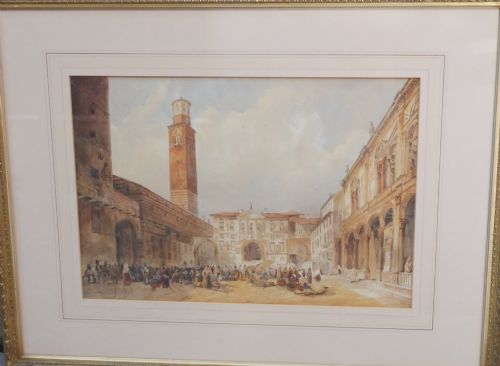
Smaller watercolours often record travel memories from specific sites such as the Forum or the Grand Canal. Larger oil paintings present grander architectural facades and marine vistas designed for formal display.
Materials and Techniques
Artists deployed oil paint on canvas to build rich texture and deep perspective in large-scale architectural scenes. Watercolours on paper offered the fluidity needed to capture bright southern light during travels across Rome and Venice.
Works on paper frequently combine pencil, ink or gouache alongside watercolour washes to define intricate masonry and classical statuary. Frames often incorporate wood and gold leaf to complement the palette of the canvas within.
Italian Architectural Landscape Painting Retail Price Guide 2026
Typical asking prices for italian architectural landscape painting among the pieces listed under this phrase on Sellingantiques today, from the lower quarter to the upper quarter. They describe what is for sale here now, not the wider market.
Several artists clearly braved the damp Venetian air with ink and pastel to catch moonlight bouncing off gondolas.
Assessing Quality
Mastery of linear perspective and the precise rendering of complex stonework distinguish superior architectural compositions from rigid or flat student efforts. The confident handling of light across classical ruins determines the visual depth of the scene.
The historical significance of the depicted subject and the established hand of a named artist elevate individual pieces. Condition remains vital, particularly the preservation of paper supports and the stability of early oil layers on canvas.
Giovanni Paolo Panini·Claude Lorrain·Hercules Brabazon Brabazon·Alfred Pollentine·Wilfred Knox
The Italian Architectural Landscape Painting Glossary
- Grand Tour
- A traditional trip through Europe undertaken by upper-class Europeans, resulting in the acquisition of local art and watercolours. These souvenirs documented classical antiquities and famous Italian cityscapes.
- Gouache
- An opaque water-based paint that provides solid areas of colour and sharp highlights on paper. Artists utilised it alongside watercolour to add opacity to architectural stonework.
- Canvas
- A heavy woven fabric stretched over a wooden frame to serve as a durable support for oil paint. It allows for heavier impasto and layered glazing.
- Neoclassical
- A style rooted in the revival of classical Greek and Roman architecture and art. Works in this aesthetic emphasise symmetry, monumental columns and solemn antiquity.
- Pastel
- A dry drawing medium composed of powdered pigment and a binder, creating velvety tones. Artists applied it to paper for atmospheric effects like moonlight over water.
Italian Architectural Landscape Painting: Frequently Asked Questions
What subjects appear most often?
Venetian canals and Roman classical ruins dominate the imagery across these works. Landmarks like the Grand Canal, the Colosseum and various piazzas recur frequently.
Artists also recorded specific sites such as Pompeii and the Spanish Steps. These views served as records of Italian travel and classical study.
How do I date these paintings?
Signatures, dates inscribed by the artist and framing styles provide the primary chronological clues. The medium itself also offers guidance, as mixed media and pastel works appear alongside traditional oils.
Period labels and paper types help narrow the decade of creation. Stylistic shifts between Victorian academic precision and mid-century expressionism further clarify the timeline.
Where were these pieces displayed?
Nineteenth-century travellers originally displayed these watercolours and oils in domestic drawing rooms as memories of their journeys. They functioned as conversation pieces celebrating classical education.
Later works found homes in contemporary galleries and private collections. Today they suit studies, hallways and living rooms seeking historic character.
Are watercolours fragile?
Works on paper require protection from direct sunlight to prevent the fading of watercolour pigments. Glazing with appropriate glass helps shield the delicate paper and pigments from atmospheric moisture.
Archival framing methods ensure the paper does not touch the glass directly. Maintaining stable indoor humidity preserves both the paper support and any underlying ink or gouache.