



Islamic Style Table
These islamic style table examples bring Moorish Revival and Mamluk Revival forms into domestic spaces through intricate geometric woodwork and metalwork.
Islamic Style Table
An islamic style table encompasses occasional furniture built in Moorish Revival, Mamluk Revival, and Syrian or Islamic Revival styles. These pieces function as side tables, lamp tables, and centre tables within domestic interiors.
The octagonal form and hexagonal kursi shape dominate the selection, frequently featuring low profiles suited for coffee or display use. Examples span from the Victorian period through the early decades of the twentieth century, including pieces associated with Liberty style design.
Regional variations span North African centre tables, Bohemian style octagonal side tables with mother-of-pearl, and Cairoware brass stands. Buyers most commonly encounter hardwood frames decorated with dense geometric inlay.
How they were made
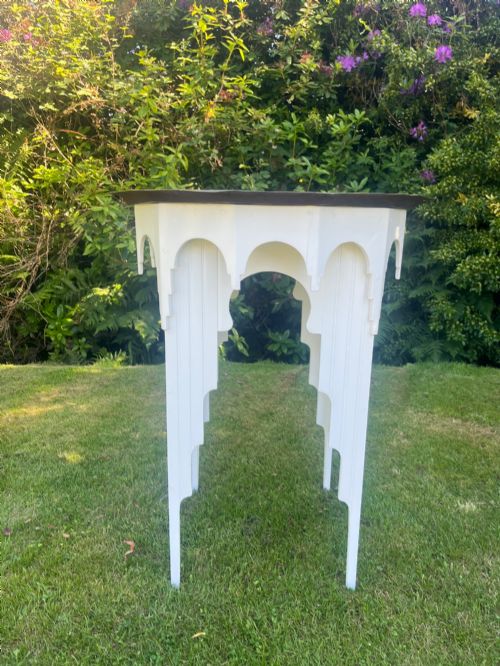
Construction relies primarily on hardwood and walnut carcasses shaped into multi-sided geometric silhouettes such as hexagons and octagons. Openwork carving defines the structural wooden frames, creating intricate pierced screens and lattice panels.
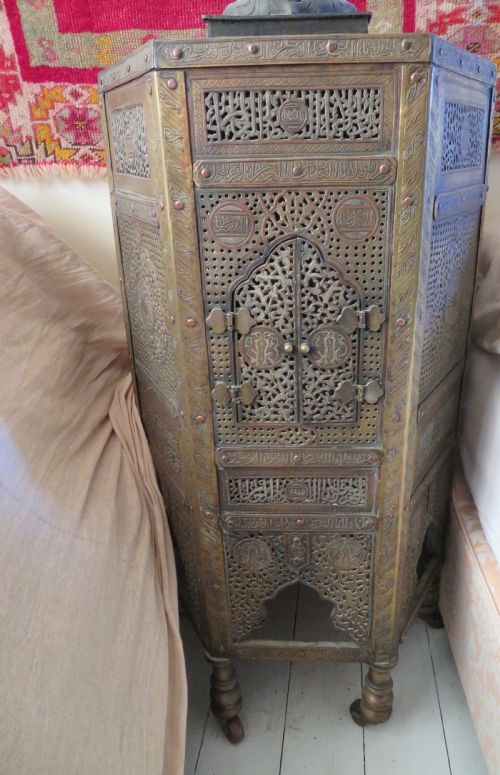
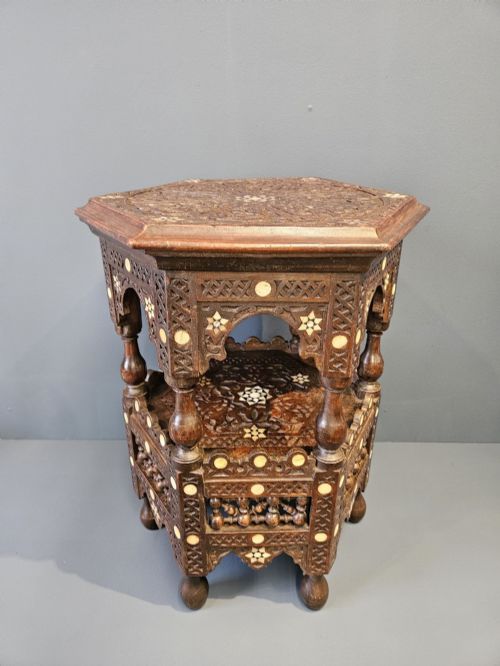
Surface decoration incorporates extensive inlay work using mother-of-pearl, bone, and white-metal alongside copper-inlaid brass elements. Cairo ware tables utilise metal inlay techniques on brass to form detailed repeating bands and calligraphic motifs.
Secondary materials include painted wood surfaces and cabinet components like small cupboards built into the hexagonal base structures. Artisans combined traditional joinery with meticulous surface ornamentation to achieve dense geometric patterning.
Islamic Style Table Retail Price Guide 2026
Typical asking prices for islamic style table among the pieces listed under this phrase on Sellingantiques today, from the lower quarter to the upper quarter. They describe what is for sale here now, not the wider market.
Some tables double as secret storage, hiding miniature cupboards behind intricate openwork panels just waiting for your house keys.
What varies in quality
The precision and density of the geometric inlay separate standard productions from finer workshop pieces. Superior examples maintain tight joints and securely seated mother-of-pearl and bone tesserae within the hardwood base.
Metalwork execution dictates the distinction between simple sheet applications and deeply chased copper-inlaid brass surfaces. The complexity of the openwork carving on panels and legs indicates the level of craftsmanship invested in the construction.
The Islamic Style Table Glossary
- Kursi
- A low box-form table or Quran stand typically hexagonal in shape and associated with Cairoware production. These pieces often feature brass construction with intricate metal inlay.
- Moorish Revival
- An architectural and decorative style drawing on North African and Spanish Islamic design traditions. It gained popularity in European furniture production during the nineteenth century.
- Cairoware
- Metalwork objects produced in Cairo, featuring brass bodies inlaid with silver, copper, and other metals in bands of Arabic inscriptions and geometric patterns. These items were widely exported to European markets.
- Mother-of-Pearl
- The iridescent inner layer of mollusc shells used extensively as thin cut segments for surface inlay in furniture. It provides bright tonal contrast against dark hardwoods.
- Hexagonal
- Having six sides and six angles, forming a standard geometric footprint for occasional tables and kursi stands in this tradition.
Islamic Style Table: Frequently Asked Questions
Where should I place an islamic style table?
These tables suit reception rooms and studies where their compact footprints and geometric silhouettes function effectively as lamp stands or side supports. Their low profiles allow them to sit comfortably beside low seating arrangements.
Because many examples feature intricate inlay on all sides, positioning them where light catches the surface enhances the decorative detail.
How do I care for inlaid wooden tables?
Maintenance requires dry dusting with a soft cloth to prevent particulate buildup within the recessed channels of the woodwork and inlay. Avoid liquid polishes and excessive moisture, which can loosen mother-of-pearl and bone tesserae.
Keeping the timber away from direct heat sources prevents the shrinkage that causes inlay elements to lift from their settings.
What is the difference between a side table and a kursi?
A side table typically follows conventional Western furniture heights with four legs and an open or enclosed lower section. A kursi is a traditional low box-form stand, often hexagonal, used for resting books or decorative objects.
Kursi examples frequently display heavier metal construction with intricate copper and silver inlay compared to standard wooden side tables.
How do I identify Moorish Revival pieces?
Identification rests on the presence of characteristic geometric lattice carving, horseshoe arches, and dense multi-material inlay. These pieces combine European furniture forms with North African and Middle Eastern decorative vocabularies.
Materials such as walnut and hardwood combined with bone and mother-of-pearl point directly to this nineteenth and early twentieth century aesthetic.