
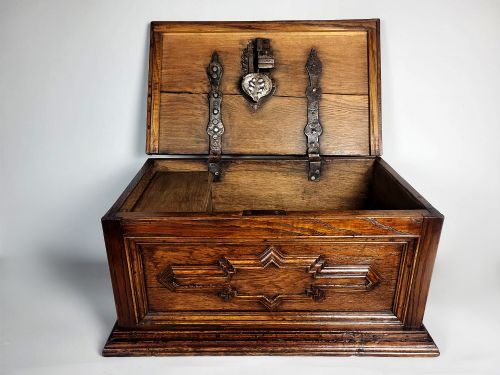
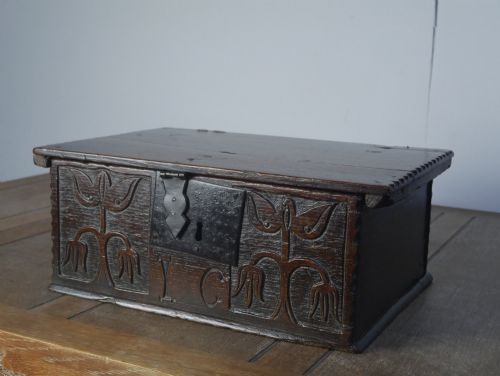

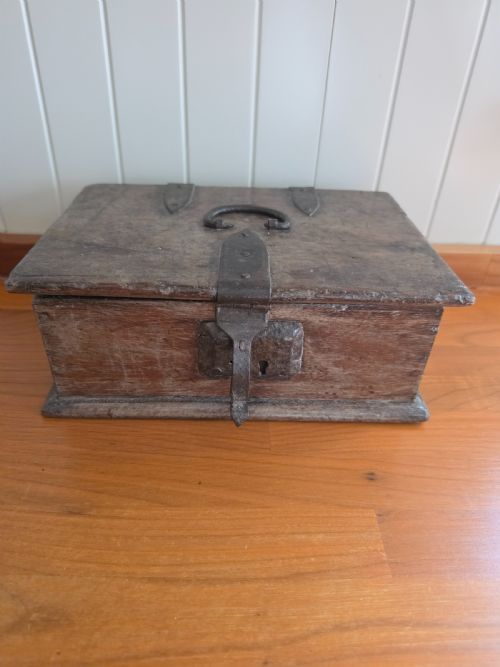
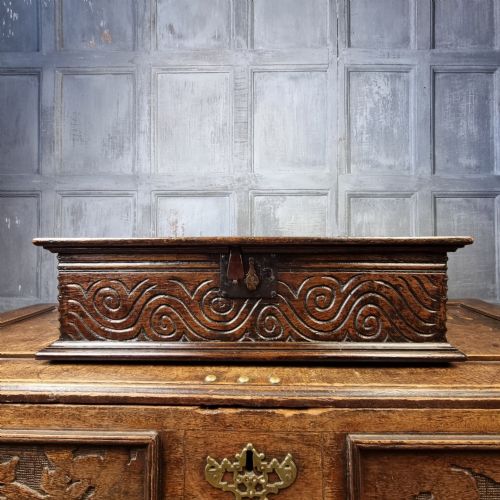
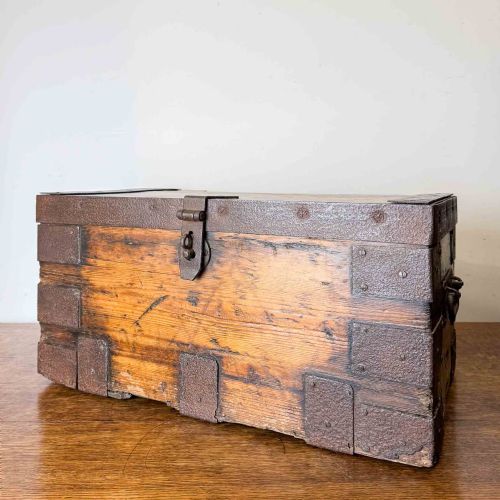


Iron Document Chest
An iron document chest is a heavy metal-secured repository designed to protect valuable papers and currency from theft and fire.

Iron Document Chest
An iron document chest combines timber or iron construction with robust metal straps, hinges, and locks to secure important records. Buyers encounter examples spanning from the sixteenth century up to the Victorian era, reflecting diverse European craftsmanship.
Forms range from simple dome-top boxes to complex fall-front deed boxes and Nuremberg caskets. Each object serves the primary domestic or commercial function of safeguarding deeds, coins, and correspondence.
Materials and construction
Construction relies on sturdy timbers such as oak, elm, pine, and walnut, often reinforced externally with heavy wrought iron bands and brackets. Blacksmiths forged straps and hinges by hand on earlier pieces, while later Victorian versions utilised cast iron and steel.
Surface treatments vary from natural waxed hardwoods to intricate hand-painted folk art finishes on Scandinavian pine. Locksmiths integrated complex internal mechanisms featuring intricate steel levers and original keys to secure the lid.
Listings feature sixteenth-century Nuremberg caskets alongside nineteenth-century Scandinavian painted pine strong boxes and Victorian cast-iron safes.
Assessing quality and authenticity
Quality rests heavily upon the originality of the locking mechanism and whether the complex steel lock remains functional with its period key. Hand-forged ironwork that shows genuine age and undisturbed patination elevates a piece above later replacements.
The integrity of the timber carcase and the survival of original decorative paint finishes determine the desirability of folk art and painted boxes. Superior examples retain their original hinges, interior compartments, and structural soundness without modern repairs.
Milners of Liverpool·George Price
The Iron Document Chest Glossary
- Strongbox
- A heavily secured container designed for storing valuables and money. These boxes typically feature reinforced metal straps and advanced locking mechanisms.
- Nuremberg casket
- A portable iron strongbox originating in Germany, renowned for intricate internal lid locks and etched decoration. These pieces date primarily from the sixteenth and seventeenth centuries.
- Bible box
- A small sloped-lid desk box originally built to hold a family bible and writing materials. Many examples survive from the seventeenth and eighteenth centuries in oak or elm.
- Deed box
- A specialised storage container made to hold legal documents and land titles. They frequently incorporate drop fronts or secure metal lids for rapid access.
- Coffre fort
- A French term for a strongbox or safe. These portable containers combine timber or iron cores with heavy exterior metal banding.
Iron Document Chest: Frequently Asked Questions
What is an iron document chest?
An iron document chest is a secure storage box built from wood or metal and reinforced with iron bands to protect important papers. These pieces range from early seventeenth-century oak strongboxes to Victorian cast-iron safes.
They were utilised in homes, offices, and merchant houses to keep currency, deeds, and letters safe from theft. The inclusion of complex locks separates them from standard domestic storage boxes.
How do I date an iron document chest?
Dating relies on examining the construction methods, wood species, hardware, and locking mechanisms. Sixteenth and seventeenth-century pieces often display hand-forged strapwork and joined oak construction.
Nineteenth-century examples frequently feature pine carcases with painted folk art decoration or cast-iron components marked by Victorian manufacturers. Comparing the hand-cut nails and hinge styles provides further clues to the period of origin.
Where were iron document chests made?
These chests originate from workshops across Britain, Germany, France, and Scandinavia. Each region utilised local materials, such as pine in Sweden and oak or elm in England.
German makers specialised in steel caskets and Nuremberg lock boxes, while British makers produced heavy cast-iron deed boxes during the Industrial Revolution.
How do I care for an antique iron chest?
Maintenance involves keeping the timber and metal away from direct heat sources and excessive moisture. Applying a light microcrystalline wax to the iron surfaces helps prevent oxidation.
Wood elements benefit from occasional feeding with a traditional wax polish to preserve the finish. The moving parts of the lock should remain clean and lightly oiled if necessary.