



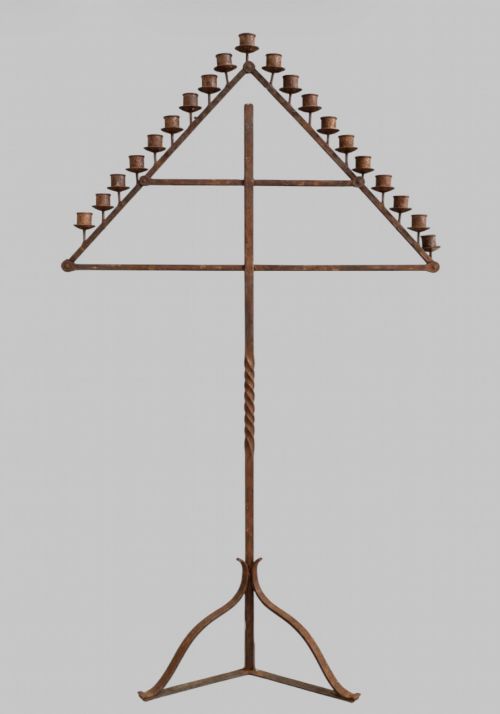


Iron Church Stand
These iron church stand pieces are heavy, metal ecclesiastical furnishings designed to hold candles, books, or music sheets during services.
Iron Church Stand
An iron church stand encompasses tall floor-standing candlesticks, pricket stands, altar lights, book rests, and music stands designed for ecclesiastical use. These objects served functional roles in religious services, holding candles to illuminate altars or supporting heavy liturgical books and scores.
The selections on this page span from the eighteenth century through to the early decades of the twentieth century. They reflect diverse regional origins, including Italian altars, Amsterdam School designs, and British Victorian workshop productions.
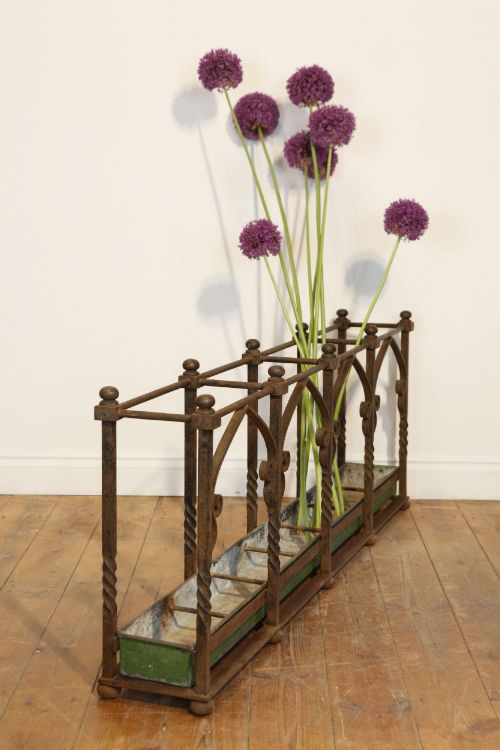
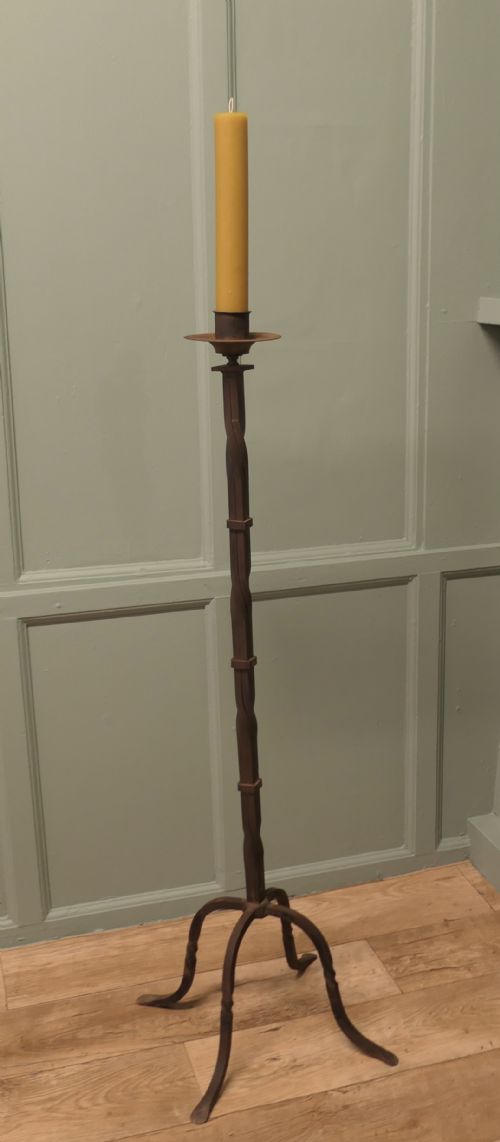
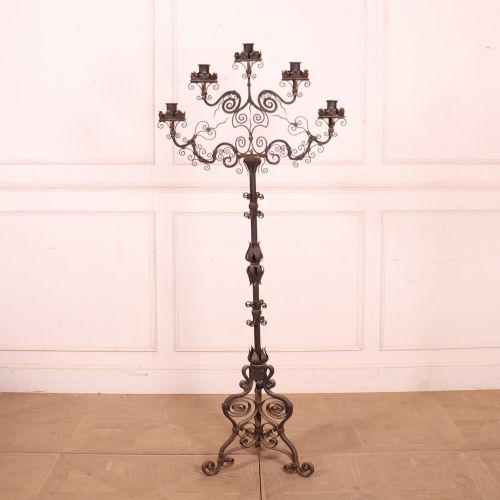
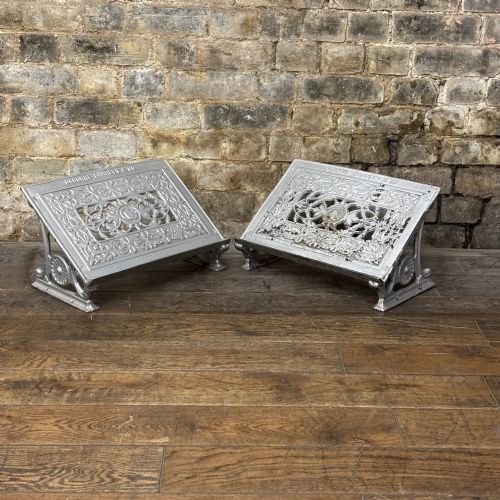
Forms vary significantly, from slender blacksmith-made wrought iron candle stick stands to substantial cast iron gas light candelabras and architectural floor candelabras. Buyers frequently encounter floor candlesticks and book rests constructed from iron combined with brass or wood elements.
How they were made
The construction relies heavily on durable metals, primarily utilising wrought iron and cast iron shaped by blacksmiths or foundry workers. Wrought iron pieces display hand-forged scrollwork and hammered textures, whereas cast iron items reveal precise mouldings and structural rigidity.
Many examples incorporate mixed media, pairing iron structures with brass fittings, gilt metal accents, or wooden components such as oak bases and book rests. These varied materials were joined to provide stability for heavy altar candles and large volumes.
Iron Church Stand Retail Price Guide 2026
Typical asking prices for iron church stand among the pieces listed under this phrase on Sellingantiques today, from the lower quarter to the upper quarter. They describe what is for sale here now, not the wider market.
A blacksmith once hammered out a candle stand so tall and dramatic it was formally catalogued as an architectural statement.
What varies in quality
Quality differences emerge in the complexity of the smithing and the structural integrity of the metalwork. Hand-forged wrought iron pieces with architectural proportions and fluid blacksmith-made details stand apart from standard foundry castings.
The integration of mixed materials also defines the tier of an object, particularly where polished brass or gilt metal details contrast against blackened iron surfaces. Amsterdam School and Continental Baroque influences introduce refined artistic intent that elevates the standard of craftsmanship.
Osborne Garrett Co
The Iron Church Stand Glossary
- Pricket candlestick
- A type of candlestick featuring a sharp metal spike on top to secure a candle, commonly found on altar stands. This form avoids the need for a socket.
- Floor candelabra
- A large multi-candle stand designed to rest directly upon the floor rather than an altar or table. These substantial pieces provide significant illumination.
- Wrought iron
- Iron that has been heated and hammered into shape by hand, resulting in visible texture and strong, pliable forms. Blacksmiths utilised this technique for architectural strength.
- Cast iron
- Iron poured into a mould to create solid, highly detailed structural components or decorative bases. This method allowed workshops to replicate complex Victorian designs.
- Amsterdam School
- An early twentieth-century architectural and design style characterised by expressive forms, traditional craftsmanship, and integration of brass and iron. Pieces from this movement display distinct sculptural qualities.
Iron Church Stand: Frequently Asked Questions
What is an iron church stand used for?
These metal stands were built to hold heavy ecclesiastical candles, altar books, or music scores during religious services and ceremonies. Their tall stature ensured light or text was positioned at a convenient height for clergy and choir members.
Today, buyers repurpose these sturdy architectural furnishings as striking floor lamps, reading lecterns, or decorative candle holders within domestic interiors.
How do I identify the period of an iron stand?
Dating relies on observing manufacturing techniques, decorative styles, and material combinations recorded across the pieces. Eighteenth and nineteenth-century examples often display hand-forged wrought iron, while later nineteenth-century items introduce cast iron and Victorian Gothic motifs.
Early twentieth-century pieces frequently exhibit Amsterdam School styling or Continental Baroque influences, combining brass and iron elements in distinct geometric or expressive forms.
Are these stands made entirely of iron?
While iron forms the primary structural material, many examples incorporate mixed media. Workshops frequently combined wrought or cast iron with brass, gilt metal, and timber components such as oak.
This combination of metals and wood added both structural weight for stability and decorative contrast to the dark iron surfaces.
How do I live with an iron church stand?
Living with these tall ecclesiastical pieces involves treating them as sculptural focal points in a room. Their dark metal surfaces pair well with natural wood, stone floors, and neutral walls.
Ensure they are placed on stable ground, especially taller floor candelabras and music stands, to prevent tipping in busy domestic environments.