


Irish Regency Dining Table
An Irish regency dining table brings Dublin cabinet-making into the principal room with grand scale and figured timber.
Irish Regency Dining Table
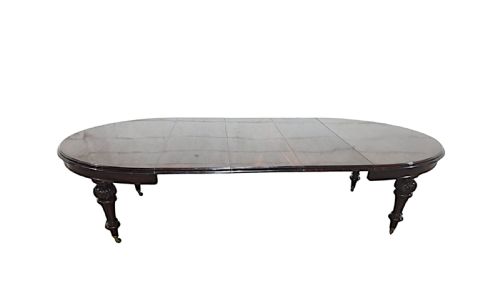
An Irish regency dining table represents the height of early nineteenth-century cabinet-making, produced in forms such as multi-pedestal dining tables, D-end tables, and folding variants. These pieces originate primarily from the nineteenth century, aligning with the Regency, George IV, and William IV periods.
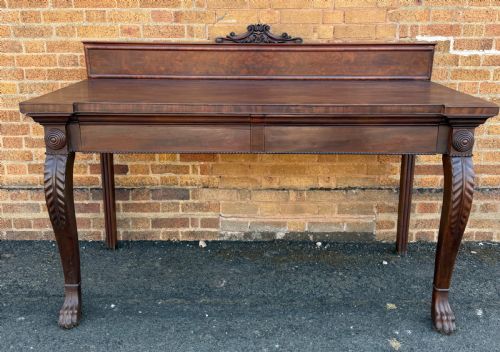
Buyers encountering this search phrase find substantial dining furniture designed for large rooms, often associated with workshops in Dublin. The selection also encompasses related serving tables, sideboards, and centre tables sharing the same regional aesthetic.
The most common formats on this page are large pedestal dining tables with multiple extra leaves, alongside D-end configurations and serving tables. Timber choices across these forms lean heavily towards mahogany, occasionally complemented by rosewood and burr elm.
How they were made
Cabinet-makers constructed these tables using solid mahogany and mahogany veneer over supportive timber framing, selecting planks for rich grain patterns. Workshops employed brass for castors, mounts, and structural fittings, particularly on pedestal bases.
Makers integrated complex mechanisms for folding leaves and extending multi-pedestal frames to accommodate multiple seating configurations. Surfaces received fine polishing to highlight the natural figure of the wood without obscuring the grain.
Available forms range from extending pedestal dining tables with multiple leaves down to compact fold-over variants and serving tables.
What varies in quality
The distinction between standard examples and the finest work lies in the selection of timber figure, such as highly figured mahogany or burr elm, and the ambition of the carved detail. Master Dublin makers applied restrained parcel-gilt and crisp carving that elevates the presence of a pedestal base.
Proportion and scale dictate the hierarchy of these pieces, where monumental multi-pedestal tables demonstrate superior architectural balance compared to simpler folding variants. The integrity of the extending mechanisms and the retention of original brass fittings further separate utilitarian pieces from premier workshop productions.
Mack Williams And Gibton·The Woodworkers Ltd Kilkenny
The Irish Regency Dining Table Glossary
- D-End Table
- A dining table whose ends are semicircular, allowing leaves to be inserted into the centre to expand the surface area. These sections often stand independently as console tables when not joined.
- Pedestal Table
- A table supported by one or more central pillars rising from a platform base with spreading legs. This design provides unobstructed legroom around the perimeter of the table.
- Parcel-Gilt
- Partially gilded ornament applied to specific carved details to create contrast against the dark mahogany timber. This technique highlights particular architectural motifs on Regency furniture.
- Veneer
- A thin layer of figured wood applied over a secondary timber base to create decorative surfaces. High-grade veneer displays dramatic grain patterns across large tabletops.
Irish Regency Dining Table: Frequently Asked Questions
How do I seat twenty guests at an Irish regency dining table?
Monumental four pedestal tables incorporate multiple extra leaves designed to extend the timber frame safely over long spans. These large formats provide the necessary length for large gatherings while maintaining structural stability.
Arranging such pieces requires measuring the dining room carefully to ensure clearance around the extended perimeter. Pedestal designs assist by removing corner legs that might otherwise impede seating positions.
What defines Dublin cabinet-making in the Regency period?
Dublin workshops during the nineteenth century produced furniture characterised by bold design, imposing scale, and high-quality mahogany. Pieces attributed to prominent city makers often display distinctive carving and flexible formats.
Regional variations distinguish these tables from contemporary English furniture through specific choices in timber selection and base architecture. Attributions often rest upon documented workshop practices from the Irish capital.
Can a D-end dining table be separated into smaller units?
Many D-end tables separate into distinct console sections when the central extension leaves are removed. This modular construction allowed Regency households to adapt their dining rooms for different functions.
Retaining the original connecting clips ensures the sections align properly when reassembled for formal meals. The semicircular ends function independently as side tables against a wall.
How should I care for a nineteenth century mahogany surface?
Maintenance involves applying appropriate wax polish periodically to nourish the timber and protect the polished finish from moisture. Avoiding direct sunlight prevents the rich red-brown mahogany tones from fading unevenly.
Using felt pads beneath serving dishes safeguards the antique veneer from thermal shock and scratching. Regular dusting with a soft cloth preserves the natural lustre of the wood grain.