


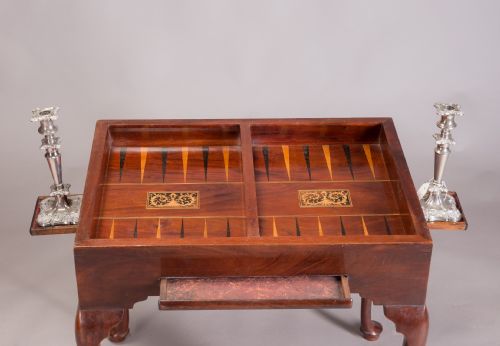

Irish Georgian Card Table
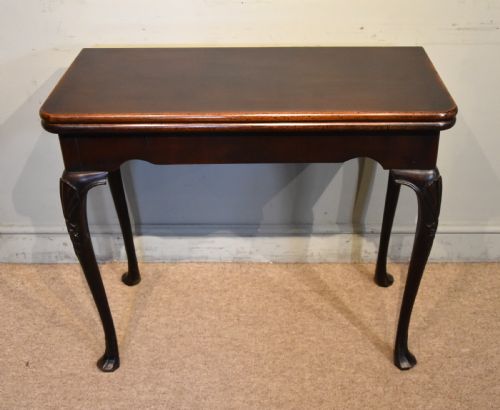
These irish georgian card table pieces are formal mahogany gaming furniture from the eighteenth and early nineteenth centuries designed for domestic card play and entertaining.
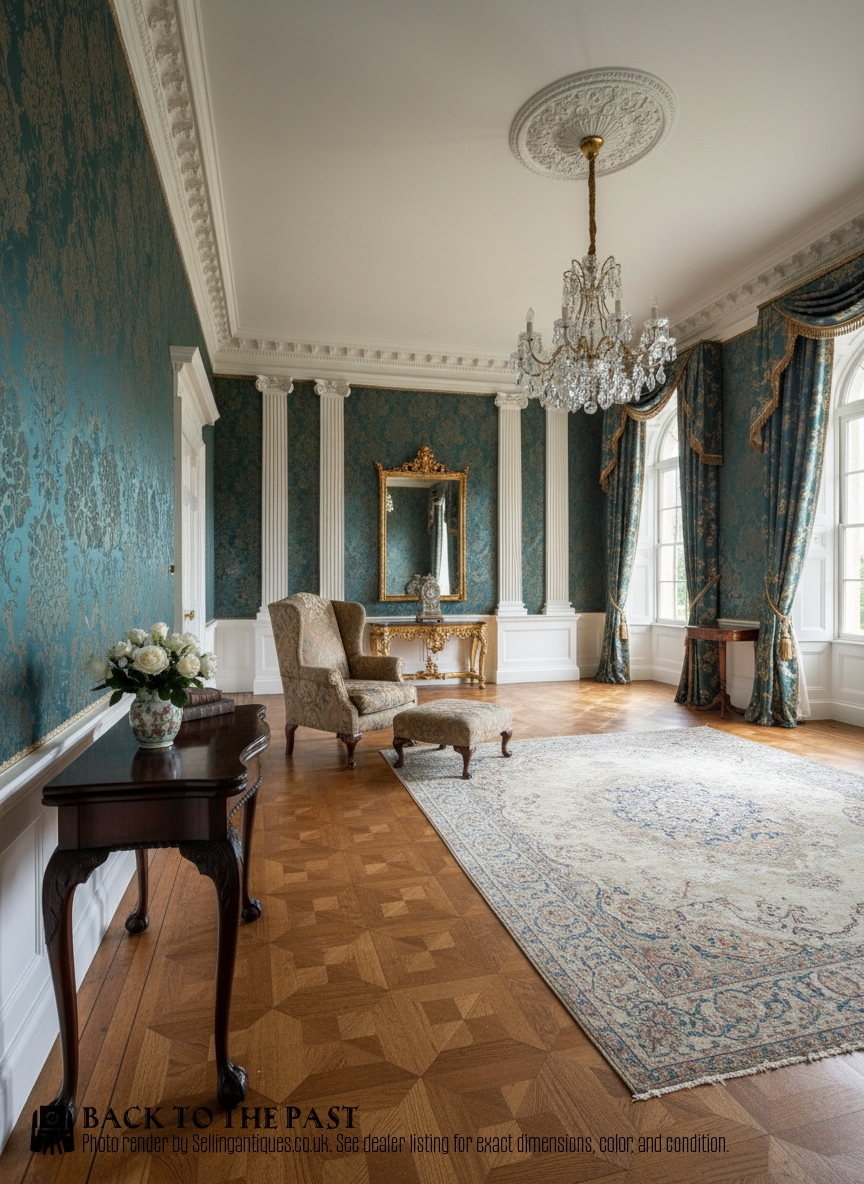
Irish Georgian Card Table
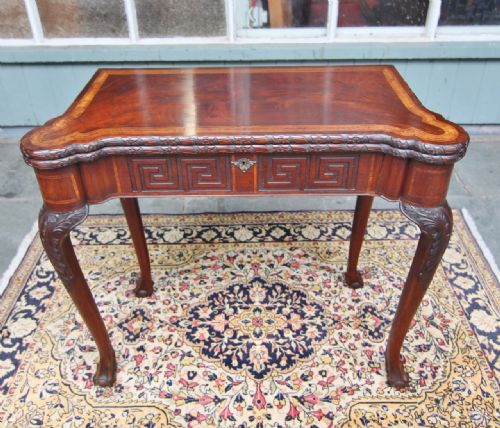
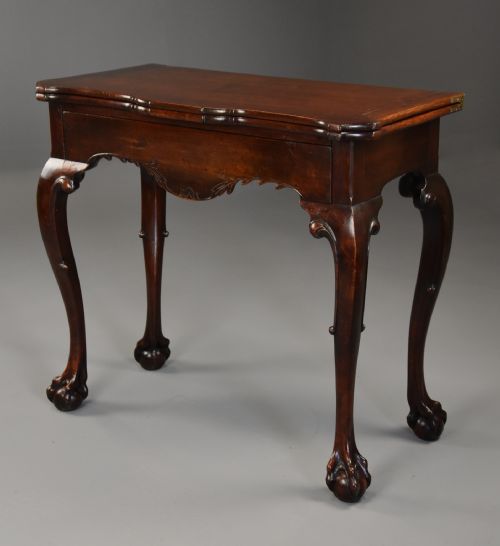
An irish georgian card table is a specialised piece of antique furniture built for domestic entertainment during the Georgian period and the eighteenth and nineteenth centuries. The pieces on this page span styles from George II and George III through to the Regency era, featuring forms such as folding card tables, games tables, and tea tables.
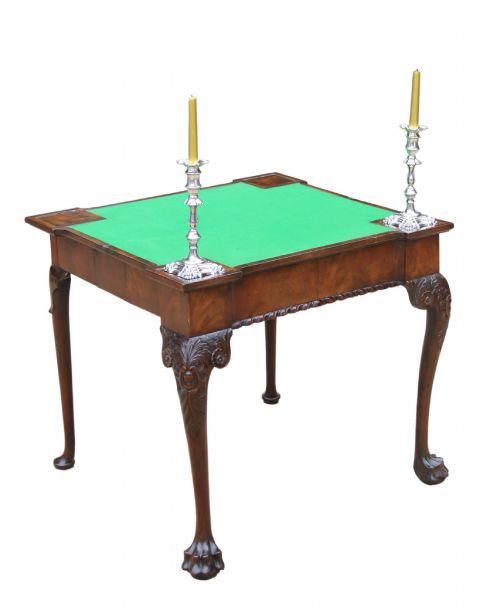
Most examples you encounter here are constructed from rich mahogany, sometimes incorporating walnut or detailed satinwood inlay. They function primarily as fold-over or turnover leaf tables, and occasionally concertina action or triple top designs that reveal a baize-lined playing surface when opened.
Makers often integrated carved details into the frame, aligning with George II and Chippendale traditions. The selection includes demi-lune shapes and rectangular tops that double as side tables when closed against a wall.
Materials and construction
Cabinetmakers built these tables predominantly using solid mahogany and American black walnut, prized for their strong grain and deep natural colour. Secondary decorative elements involved intricate boxwood, ebony, and satinwood inlay to create contrasting borders and pictorial motifs.
Mechanisms were engineered with precision, utilising concertina actions and turn-over leaf hinges to support the heavy timber tops safely. Interiors were traditionally lined with baize to provide a durable surface for card games.
An eighteenth-century walnut table includes an unexpected inlaid bird design peering out from the timber grain.
Distinctions in quality
The distinction between standard examples and superior pieces rests on the depth and crispness of the timber carving. Tables featuring elaborate carved mahogany details or unusual inlaid bird designs sit firmly at the top of the range.
Structural complexity also defines value, with concertina actions and triple top formats requiring advanced joinery compared to basic folding leaves. The richness of the patina on the walnut and mahogany surfaces further indicates the care a piece has received over the centuries.
The Irish Georgian Card Table Glossary
- Concertina action
- A table frame construction where the rear legs pull out in an accordion motion to support the opened fold-over top. This design allows all four legs to match visually whether the table is open or closed.
- Baize
- A coarse woollen woven fabric used to line the playing surface of gaming tables. It provides a soft, durable texture that cushions cards during play.
- Demi-lune
- A half-moon shape characteristic of certain card and tea table tops. When folded closed, the straight edge sits flush against the wall.
- Turn-over leaf
- A hinged table top design that rotates and unfolds to double the surface area for games. The resting leaf is supported by a swing leg or frame extension.
- Patina
- The deep, lustrous surface sheen developed on old wood through decades of handling, polishing, and natural ageing. It serves as a visual indicator of a piece's age and history.
Irish Georgian Card Table: Frequently Asked Questions
How were they used?
These tables served as dual-purpose furniture in eighteenth-century homes. They stood flat against a parlour wall as side or tea tables when not in use.
During evening gatherings, the top unfolded to reveal a baize-lined surface designated for card games such as whist or ombre.
What woods were used?
Mahogany is the primary timber found across these pieces, offering both strength and a dark, rich grain. Walnut and imported exotic hardwoods also appear in specific regional variations.
Inlays incorporate lighter contrasting timbers like boxwood and satinwood to frame the primary surfaces.
How do I date a table?
Dating relies on stylistic markers associated with specific reigns, such as the heavy carving of the George II period or the lighter inlay work of the late eighteenth century. Structural methods like concertina frames and hinge types also help establish the approximate decade of manufacture.
Comparative analysis with documented cabinet-making practices narrows down the origin further.
How do I care for baize?
Baize requires gentle maintenance to prevent dust accumulation and moth damage. Regular light vacuuming with a soft brush attachment keeps the woollen fibres clean.
Keep the timber out of direct sunlight to protect the original finish and prevent the playing surface from fading.