





Irish Coastal Art
Irish coastal art captures the shores and harbours of the island through oils, watercolours, and ink across several centuries.
Irish Coastal Art
Irish coastal art encompasses wall art and paintings depicting maritime scenes, bays, and hills across the island. When searching for irish coastal art, buyers encounter works ranging from nineteenth century watercolours to mid-century modern oil paintings.
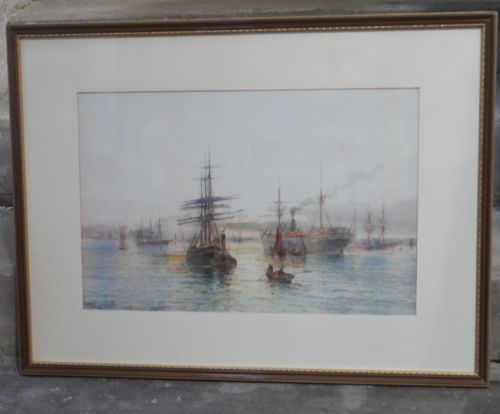
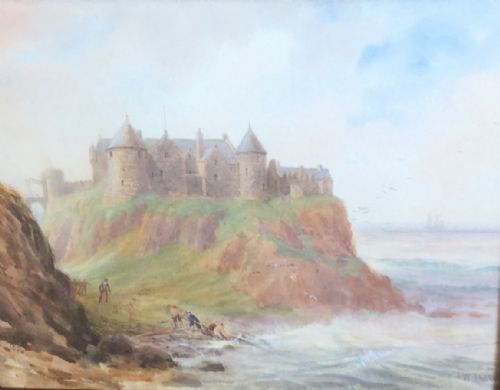
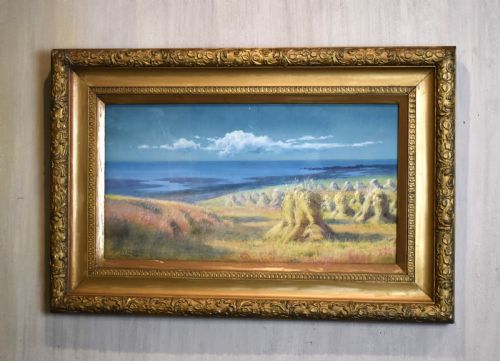
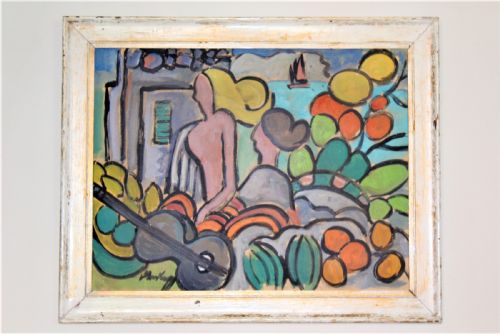
The pieces on this page include watercolours on paper and oil paintings on canvas depicting locations such as Dublin Bay, Connemara, and Dunluce Castle. Forms span from detailed topographical views to impressionist sketches of figures and boats by the shore.
Nineteenth century maritime pieces and twentieth century modernist interpretations dominate the selection available. Each work records the changing light and terrain of the Irish coastline through different periods of artistic practice.
Materials and techniques
Artists utilise oil paint on canvas and watercolour pigment on paper to render marine subjects. Gilt wood frames frequently house these paintings, preserving the paper and canvas supports.
The techniques range from precise nineteenth century watercolour washes to thick twentieth century oil applications and ink lines. Mid-century works often employ simplified brushwork characteristic of impressionist and modernist movements.
Irish Coastal Art Retail Price Guide 2026
Typical asking prices for irish coastal art among the pieces listed under this phrase on Sellingantiques today, from the lower quarter to the upper quarter. They describe what is for sale here now, not the wider market.
One map records both the Northwest Coast and the Isle of Man, perhaps for a very confused sailor.
Judging quality
Quality rests in the fidelity of the draughtsmanship and the handling of atmospheric light over water. Master works capture the movement of the sea and the specific topography of locations like Cromer or Ballyholme Bay with assurance.
The strength of the composition and the integrity of the original medium distinguish finer examples from standard decorative pieces. The relationship between the painted surface and its housing, such as period gilt wood frames, contributes to the overall standard.
Sir Thomas Newenham Dean RHA·C Caldwell·Peter Ghent·Markey Robinson·Charles McAuley·Joseph William Carey
The Irish Coastal Art Glossary
- Watercolour
- A paint consisting of colour suspended in a water-soluble vehicle, applied to paper. It allows for translucent washes that suit the depiction of coastal skies and water.
- Oil painting
- A medium made by embedding pigments in a drying oil, typically linseed, applied to canvas or wood. This technique provides rich colour depth and varied surface texture.
- Impressionism
- A style of painting that focuses on the accurate depiction of light in its changing qualities. It emerged strongly in the nineteenth and twentieth centuries.
- Gilt wood
- Wood that has been treated with a thin layer of gold leaf or gilt paint. It is commonly found on traditional frames enclosing fine art paintings.
Irish Coastal Art: Frequently Asked Questions
What periods do these pieces span?
The works stretch from the nineteenth century through the mid-twentieth century. Styles include Victorian realism, impressionism, and mid-century modernism.
Each era brings distinct approaches to framing, medium, and subject matter along the coastline.
How were these artworks created?
Artists used oil paint, watercolour pigment, and ink on supports such as paper and canvas. Many retain their original gilt wood frames.
Techniques vary from detailed topographical mapping to loose impressionist brushwork.
Where do these scenes take place?
Locations include Dublin Bay, Connemara, Ballyholme Bay, and Dunluce Castle in County Antrim. Some pieces also record neighbouring shores like the Isle of Man.
These geographies reflect the specific maritime interests of the artists involved.
How should I display coastal art?
These paintings suit domestic wall spaces where lighting highlights the texture of the oil paint or the delicacy of the watercolour. Direct sunlight should be avoided to protect paper supports and pigments.
Pairing pieces with their period frames maintains their historical context.