



Insect Brooch Pin
These insect brooch pin examples combine fine metals with enamel and gemstones, bringing intricate winged and creeping forms to life for everyday wear.
Insect Brooch Pin
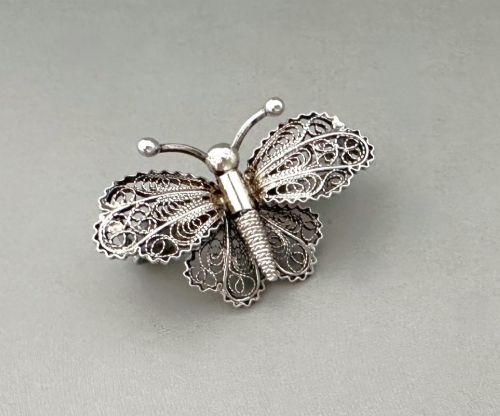
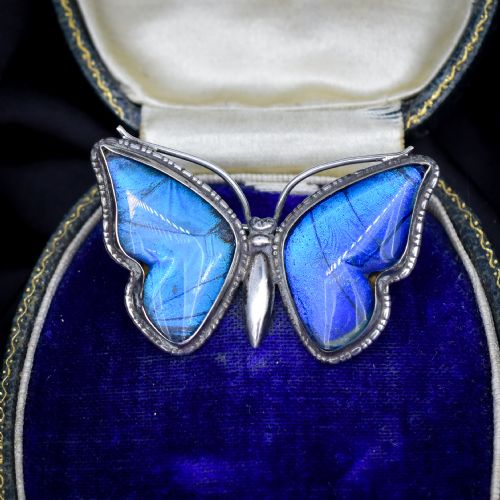
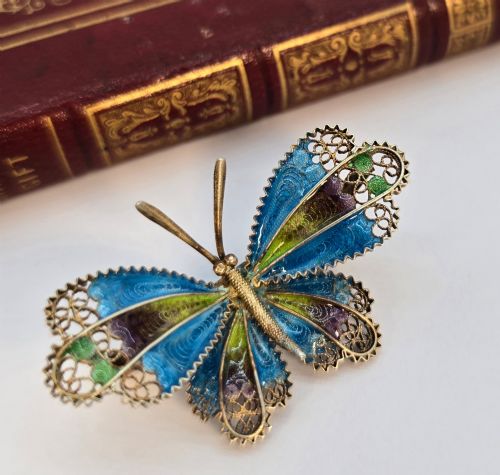
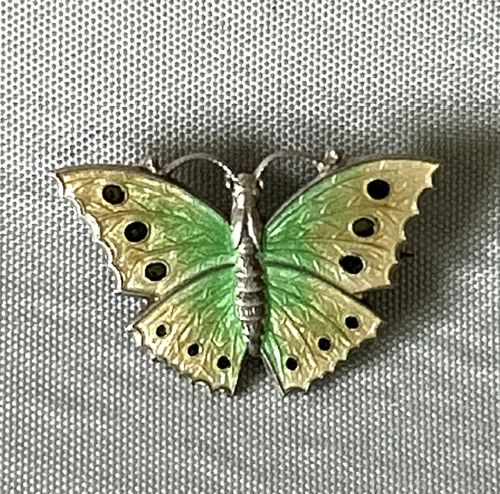
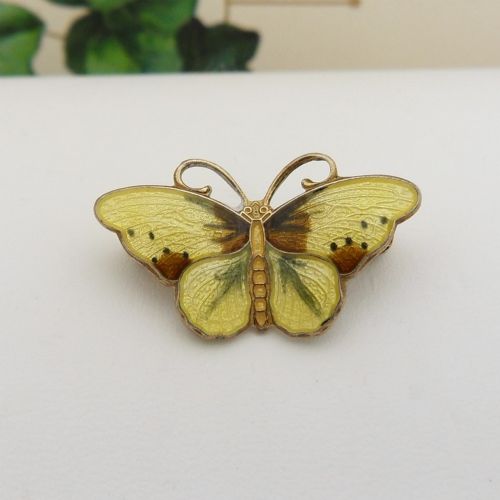
When you search for an insect brooch pin, you encounter a varied selection of winged and creeping creatures spanning multiple eras from the Victorian period through to the mid-century. The most common iteration on this page is the butterfly, often rendered in silver with vibrant enamel or butterfly wing panels.
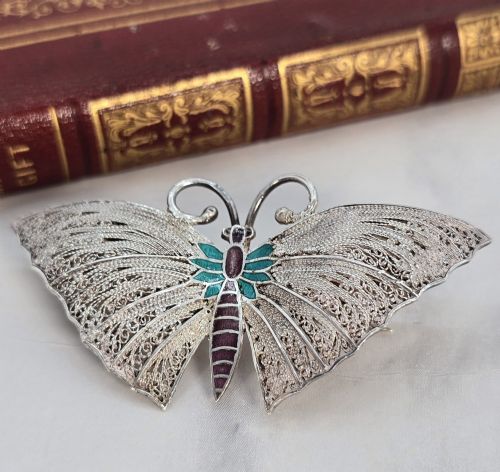
The material selection ranges widely across the periods represented, including Victorian gold and multi-gem settings, Edwardian silver and ruby pieces, and 1930s continental silver filigree. Alongside butterflies, the listings include dragonflies, beetles, frogs, lizards, scorpions, and spiders in formats varying from small bar brooches to hatpins.
Materials and construction methods
Jewellers shaped these pieces using silver, sterling silver, yellow gold, and pewter, often applying gilding or silver gilt finishes to the base metal. Structural elements incorporate fine filigree wirework, cast settings, and bar mounts designed to secure the piece safely to clothing.
Surface colour and visual texture rely heavily on vitreous enamel, guilloche enamel, and iridescent butterfly wing panels encased beneath glass. Gemstones such as diamonds, rubies, emeralds, sapphires, pearls, moonstones, green paste, and bloodstone are set into the metal bodies and wings.
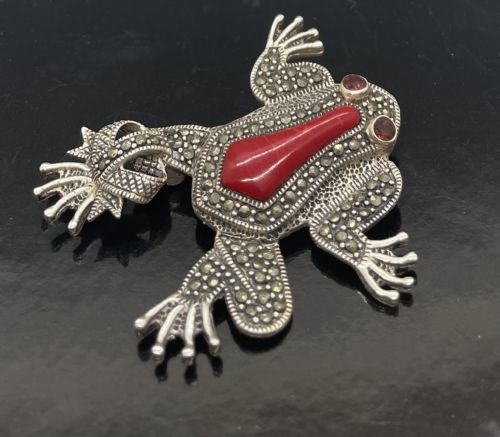
A solitary frog sits among the winged insects, keeping watch in silver and marcasite from the nineteen-sixties.
Craftsmanship and material selection
The distinction between standard examples and finer work rests on the precision of the metalwork, such as the delicacy of the silver filigree and the complexity of the enamelling. Pieces featuring precious stones like diamonds, rubies, and sapphires paired with gold or high-grade silver represent a higher tier of production.
Makers' marks and attributed designs, such as those by Norwegian or continental workshops, elevate certain pieces above unmarked mass production. The integration of natural materials like butterfly wings or genuine pearls within well-balanced compositions indicates superior workshop execution.
Hroar Prydz·Rene Lalique
The Insect Brooch Pin Glossary
- Filigree
- Fine metal wire twisted and soldered into openwork patterns. This technique appears frequently in butterfly wings and body mounts.
- Guilloche
- Enamel applied over a mechanically engraved metal background. It creates repeating geometric patterns visible beneath translucent coloured glass.
- Paste
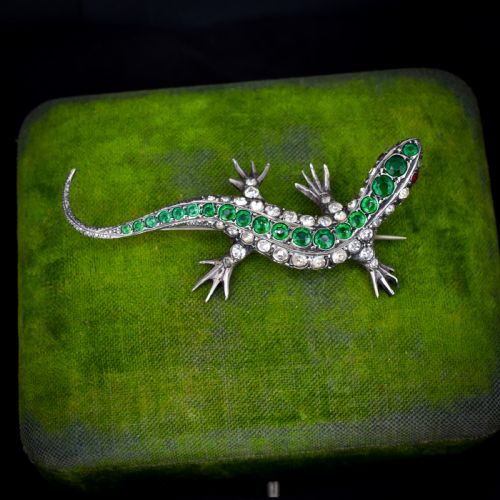
- Faceted glass used as an artificial gemstone. Victorian jewellers frequently set green or coloured paste into lizard and insect bodies.
- Silver Gilt
- Silver covered with a thin layer of gold. This treatment provides a warm golden tone while retaining a silver base.
- Hatpin
- A long pin used to secure hats to the hair. Examples include decorative insect terminals designed to sit visibly on the hat.
Insect Brooch Pin: Frequently Asked Questions
What metals are used in these pieces?
The listings show items made from silver, sterling silver, gold, silver gilt, and pewter. These metals form the structural bodies and mounts for the various enamel and gem-set designs.
Yellow gold appears in Victorian and later high-value pieces, while silver and sterling silver dominate the 1920s, 1930s, and mid-century items.
How do I identify a Victorian piece?
Victorian examples often utilise heavier gold settings combined with natural gemstones like diamonds, pearls, rubies, and topazes. Forms from this era tend towards realistic depictions of beetles, spiders, and lizards.
Later pieces from the 1920s and 1930s frequently employ silver filigree and colourful enamel, shifting the aesthetic towards stylised butterflies and dragonflies.
What is butterfly wing jewellery?
This technique involves placing iridescent Morpho butterfly wings beneath a protective layer of glass or crystal. It creates a shimmering blue or patterned effect on the wings of the brooch.
Such pieces are particularly characteristic of the 1920s Art Deco period found in the listings.
How were these brooches worn?
They were pinned to lapels, collars, hats, and heavy fabrics using integrated pin stems or bar mounts. Hatpins served the dual purpose of securing millinery while displaying the insect ornament prominently.
Today, collectors wear them similarly on jackets, scarves, and bags, or display them when not in use.