
Inlay Writing Bureau
An inlay writing bureau brings centuries of cabinet-making skill into a room, offering a fitted fall-front workspace enriched by contrasting woods.
Inlay Writing Bureau
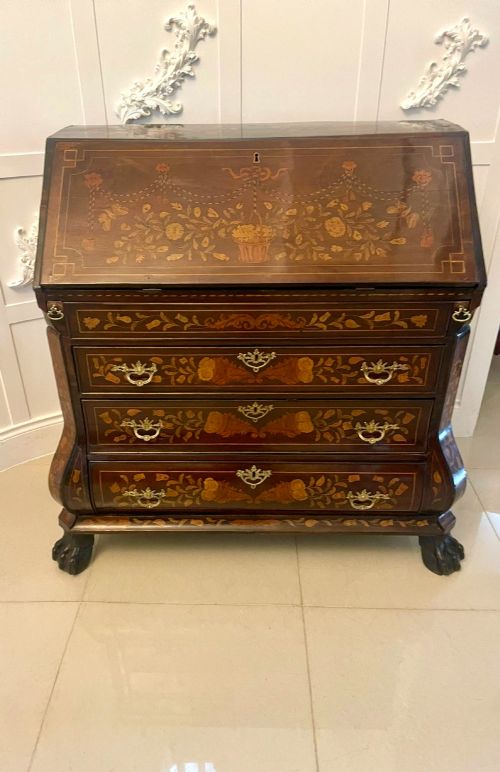
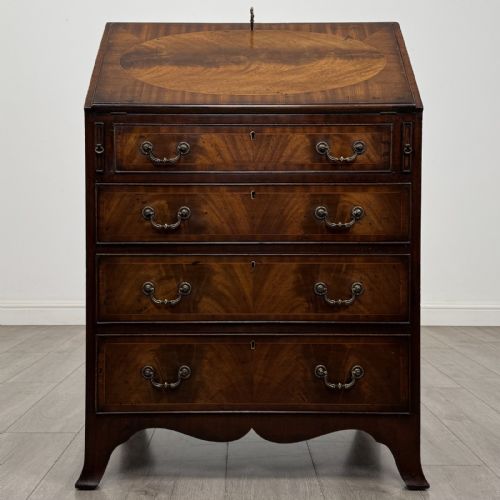
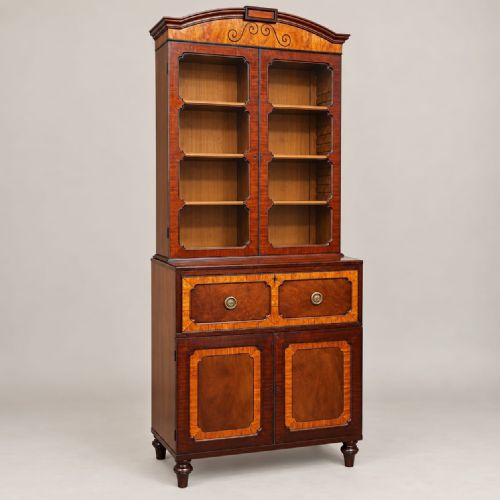
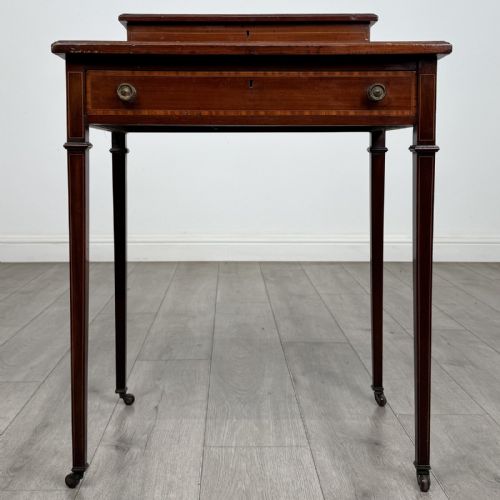
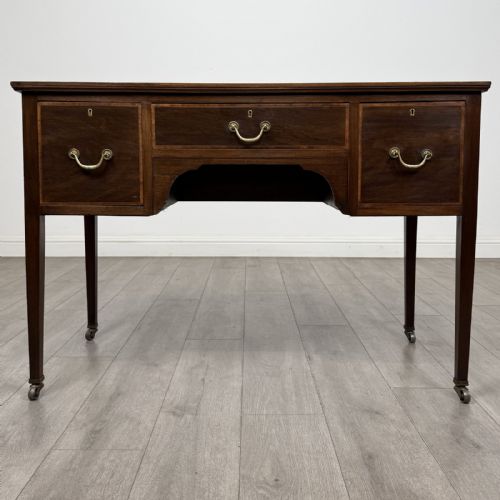
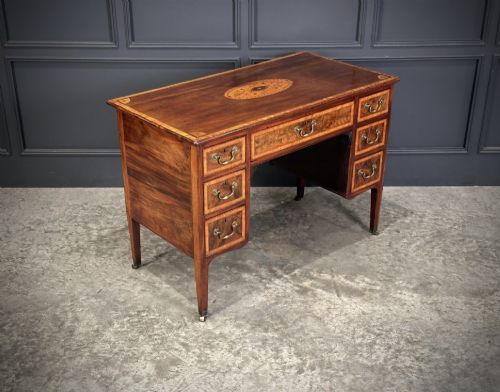
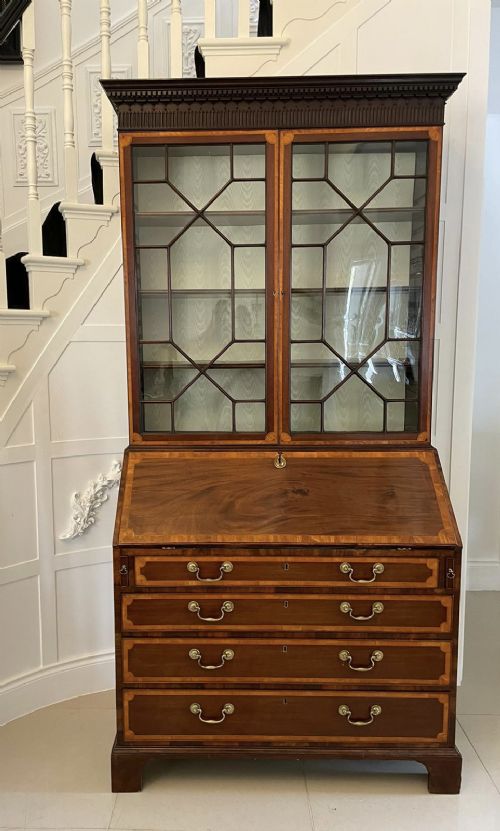
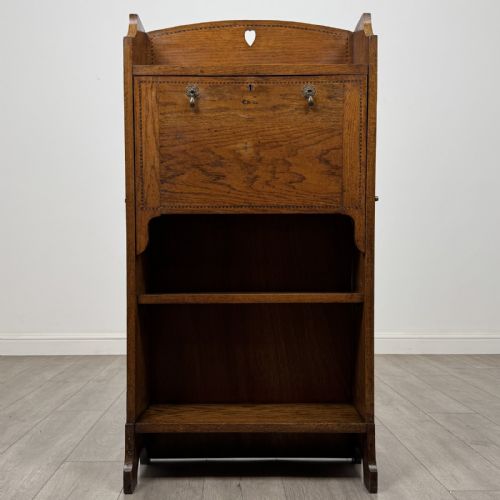
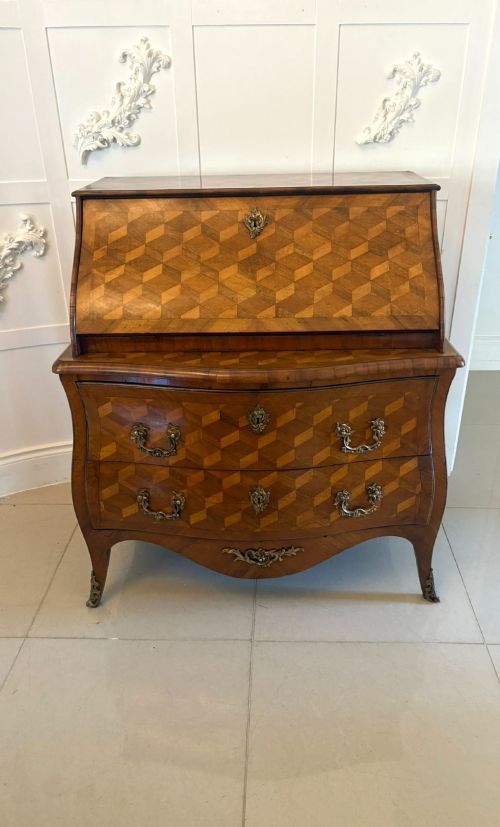
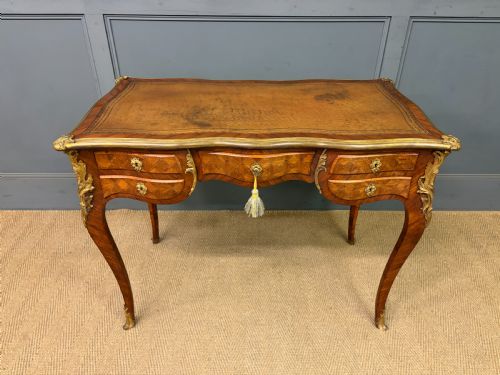
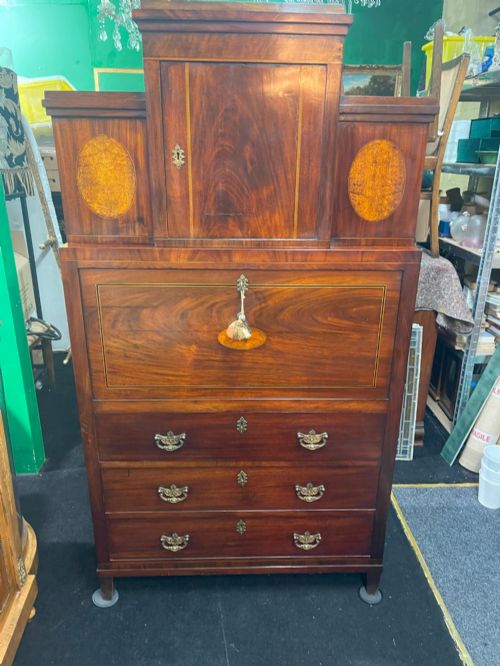
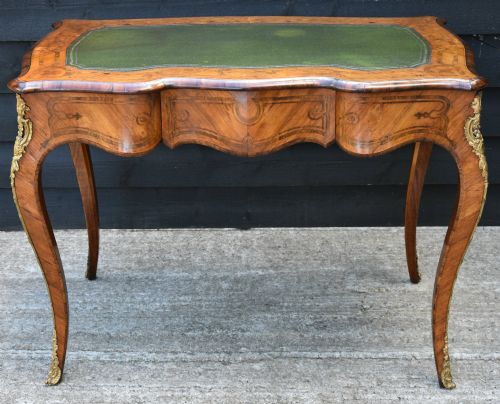
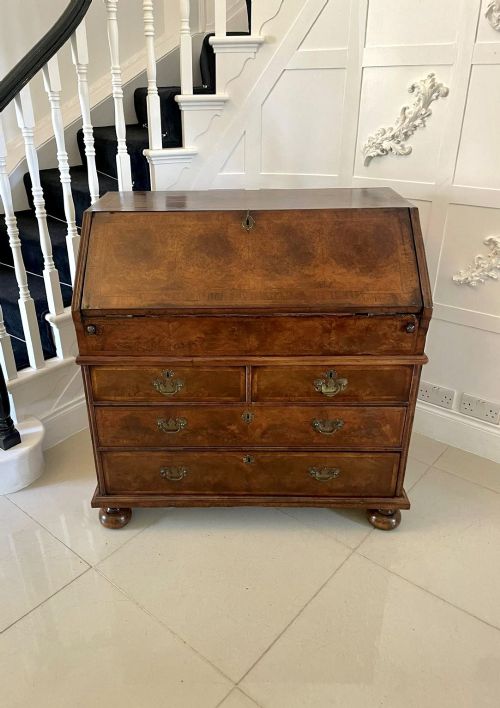
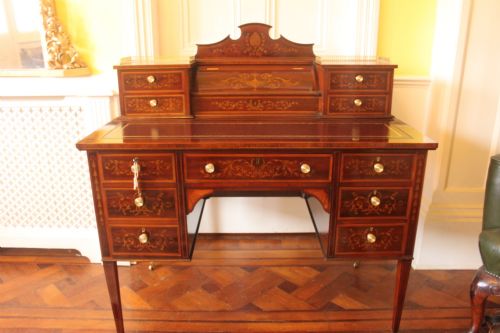
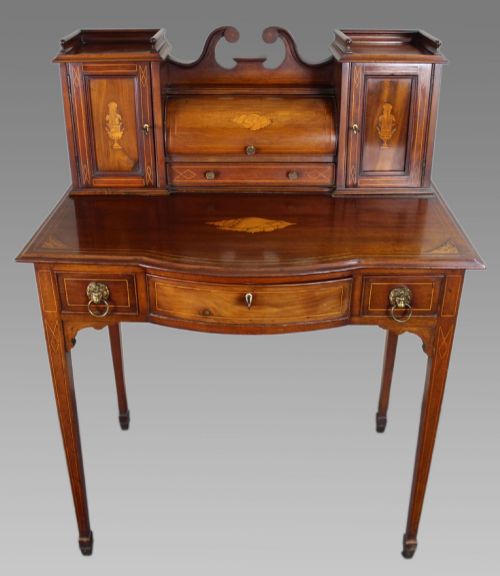
An inlay writing bureau serves as a dedicated writing station featuring a hinged fall-front or cylinder lid that opens to reveal internal compartments, small drawers and pigeonholes. The pieces seen here span the 18th century, the Regency and Victorian eras, and the Edwardian period, incorporating forms such as bureau bookcases, freestanding writing tables and bureau plat desks.
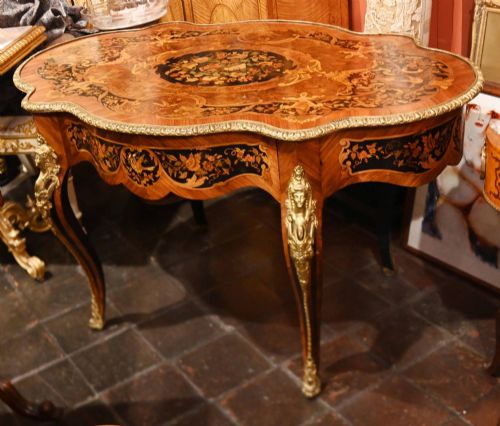
Makers and workshops construct these desks in various regional styles, ranging from English George III mahogany to Dutch floral marquetry and French Louis XV revival designs. The buyer encounters both modest Edwardian satinwood pieces and elaborate 18th-century burr walnut bombe bureaux with intricate floral patterns.
How they were made
Cabinet-makers build the carcase using structural timbers such as mahogany, walnut, rosewood, and kingwood, often applying veneers over secondary woods. They ornament surfaces using contrasting timber elements like satinwood, maple, and yew wood, alongside geometric parquetry and pictorial floral marquetry.
Fine examples incorporate additional detailing including cast brass handles, ormolu mounts, leather writing surfaces, and delicate stringing lines. Internal fittings rely on pigeonholes and small drawers assembled with traditional dovetail joints.
Listings for inlay writing bureau pieces span the 17th, 18th, 19th, and 20th centuries, utilising materials from brass and ormolu to mahogany and satinwood.
What varies in quality
The sophistication of the timber selection and the precision of the marquetry define the tier of the piece. Superior examples display meticulously matched flame mahogany or burr walnut veneers alongside finely cut floral marquetry where individual petals and stems show distinct shading through scorched wood techniques.
Construction standards within the interior drawers and the integration of secondary elements like brass or ormolu mounts indicate the workshop standard. Pieces retaining fitted interiors with secret compartments and original leather inserts command greater regard among collectors.
Maple & Co·Gillows Oxford Street Workshop·JAS Shoolbred·Maison Krieger·Edwards and Roberts
The Inlay Writing Bureau Glossary
- Marquetry
- Decorative veneer work forming pictorial patterns using various coloured woods. Craftsmen assemble tiny pieces of wood to create floral or architectural scenes across the fall-front or desktop.
- Parquetry
- Geometric wood inlay forming repeating patterns such as cubes or chequers. This technique appears frequently on French bureau plat surfaces and tabletop panels.
- Secretaire
- A desk form featuring a drawer or fall-front panel that drops down to reveal a writing surface and fitted interior. It often conceals private compartments behind smaller internal drawers.
- Bureau bookcase
- A tall furniture form combining a writing bureau base with an upper shelving section enclosed by doors. These pieces often date from the George III period and the 19th century.
- Bombe
- A swollen or bulging convex shape characteristic of continental furniture. This curving profile requires advanced cabinet-making skill to apply veneer smoothly.
- Bureau plat
- A flat-topped freestanding writing table typically associated with 19th-century French design. These desks feature finished backs and multiple drawers beneath the writing surface.
Inlay Writing Bureau: Frequently Asked Questions
How do I identify an 18th-century bureau?
Examine the secondary woods inside the drawers, such as oak or pine, and look for hand-cut dovetails alongside cabinet construction methods typical of the georgian period.
Floral marquetry and burr walnut veneers also provide strong chronological indicators when compared against later Edwardian reproductions.
What is a bureau de dame?
A bureau de dame is a small ladies desk, often featuring a cylinder top or fall-front, designed for private correspondence in a parlour or bedroom.
These pieces frequently incorporate delicate rosewood, kingwood, and parquetry inlay reflecting 19th-century French taste.
How should I care for the leather writing surface?
Keep the leather away from direct sunlight and excessive heat to prevent the material from drying out and cracking over time.
Apply specialist leather dressings sparingly if the surface shows signs of dryness, taking care not to stain the surrounding wood inlay.
Are cylinder desks different from fall-front bureaux?
A cylinder desk uses a rolling quarter-circle wooden shutter that retracts into the body of the desk to expose the writing slide.
A fall-front bureau relies on a hinged flap held by desk arms or side lopers when opened for writing.