



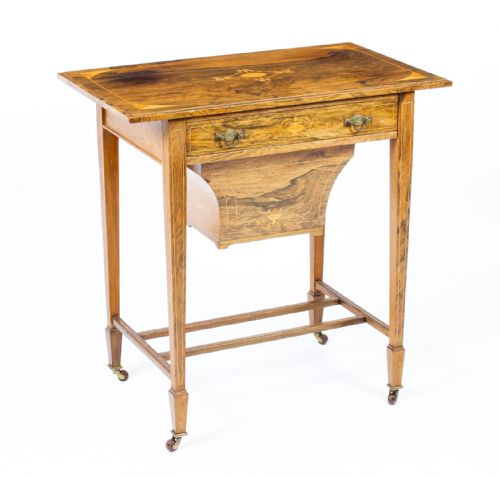


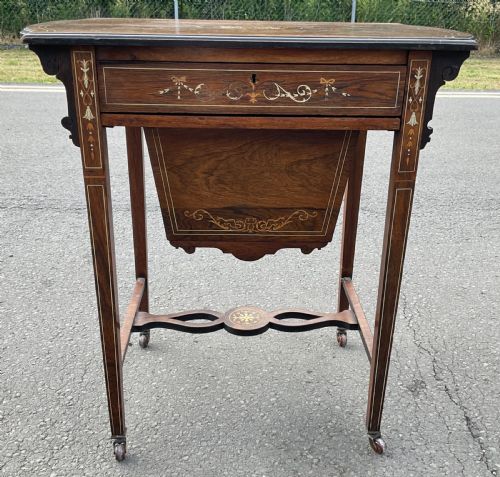


Inlaid Workbox Table
An inlaid workbox table is a practical sewing cabinet finished with decorative timber marquetry, combining a lidded storage compartment with a useful display surface.
Inlaid Workbox Table
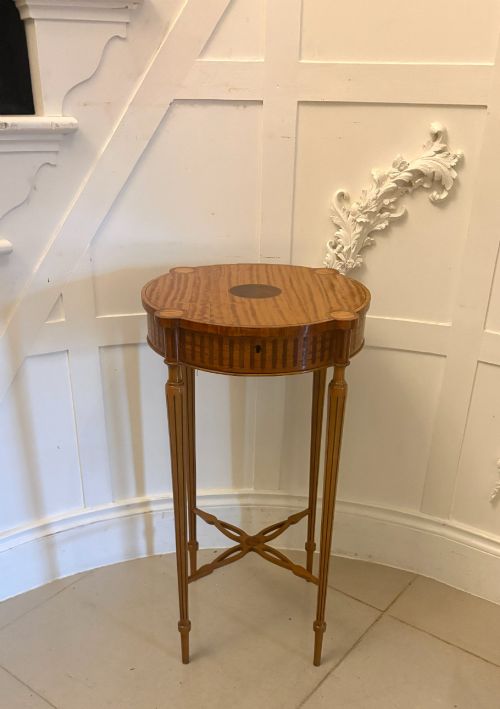
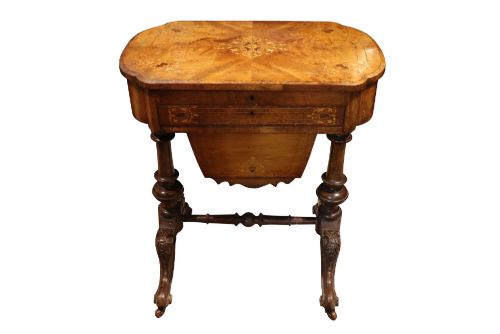
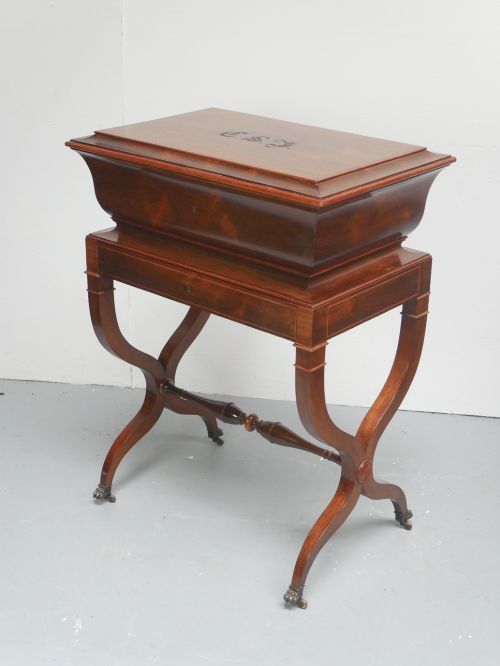
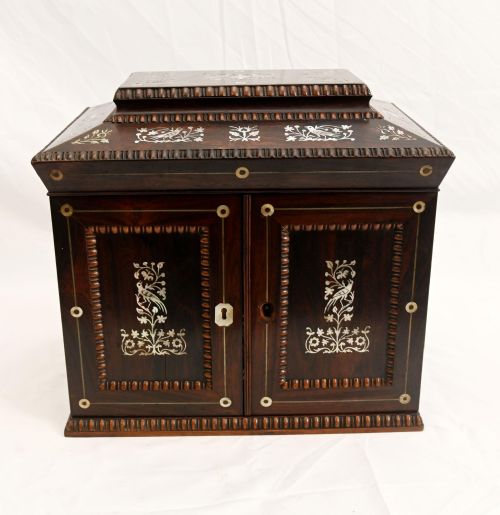
The inlaid workbox table combines a functional container for needlework with the form of a small occasional table, serving both domestic utility and polite display in the parlour. When you search for an inlaid workbox table, you encounter pieces designed primarily for sewing, embroidery, and small crafts, often featuring lift-off lids, fitted internal compartments, and hanging fabric bags beneath.
The examples appearing on this page span the Regency, Victorian, and Edwardian eras, alongside French and Anglo-Indian regional variants. Walnut and burr walnut dominate the selection, accompanied by rosewood, mahogany, and satinwood, frequently enriched with contrasting wood inlays, boxwood lines, and brass stringing.
Functional diversity runs through the selection, with sewing tables, games tables, occasional tables, and jewellery chests sharing the characteristic lidded box construction. The typical piece encountered here rests on turned or carved supports, sometimes taking a trumpet shape or a conical body designed to conceal wool bags and sewing paraphernalia.
What varies in quality
The distinction between ordinary and superior examples lies in the selection of timber veneers and the precision of the marquetry work. Highly figured burr walnut or richly grained rosewood matched across the lid demonstrates superior material choice, whereas plain timbers indicate a more utilitarian workshop origin.
Interior organisation and joinery refinement further separate the grades, as fitted compartments with individual covers and delicate bone or ivory pulls reflect greater artisan investment. The crispness of the boxwood and satinwood stringing, together with the stability of the pedestal or leg assembly, determines the overall execution standard of the piece.
Inlaid Workbox Table Retail Price Guide 2026
Typical asking prices for inlaid workbox table among the pieces listed under this phrase on Sellingantiques today, from the lower quarter to the upper quarter. They describe what is for sale here now, not the wider market.
Form variations include sewing tables, trumpet workboxes, occasional tables, and games boards.
Lesage
The Inlaid Workbox Table Glossary
- Burr walnut
- A prized timber harvested from walnut tree growths, displaying swirling, highly figured grain patterns utilised on table lids.
- Stringing
- Narrow inlay lines of contrasting wood, such as boxwood or ebony, used to outline geometric panels on the table surface.
- Trumpet table
- A Victorian form featuring an octagonal or conical body widening towards the base, resembling the bell of a musical instrument.
- Marquetry
- Decorative patterns formed by fitting together contrasting pieces of wood veneer onto a structural carcase.
- Satinwood
- A luminous, hard yellowish timber from tropical trees employed for contrasting inlay work and banding.
Inlaid Workbox Table: Frequently Asked Questions
What is an inlaid workbox table used for?
These pieces served nineteenth-century households as specialised containers for sewing needles, threads, and ongoing embroidery projects while doubling as small side tables in a parlour or drawing room.
The lidded top opens to reveal fitted compartments for small tools, keeping domestic needlework organised and out of sight when visitors arrived.
How do I tell Victorian from Edwardian tables?
Victorian examples frequently employ dark, heavily figured burr walnut or rosewood with rich polish, substantial pedestal bases, and elaborate inlaid boxwood motifs.
Edwardian pieces tend to utilise lighter mahogany or satinwood timbers with restrained shell inlays, slender tapered legs, and a lighter structural appearance overall.
Where should I place one at home?
An inlaid workbox table functions well beside a sofa or armchair as an occasional surface for a lamp, book, or small decorative object.
The enclosed storage space beneath the lid remains practical for holding modern sewing supplies, remote controls, or stationery out of view.