



Inlaid Wooden Vanity Chest
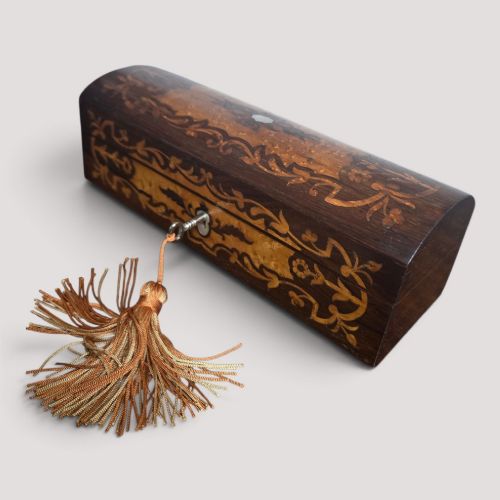
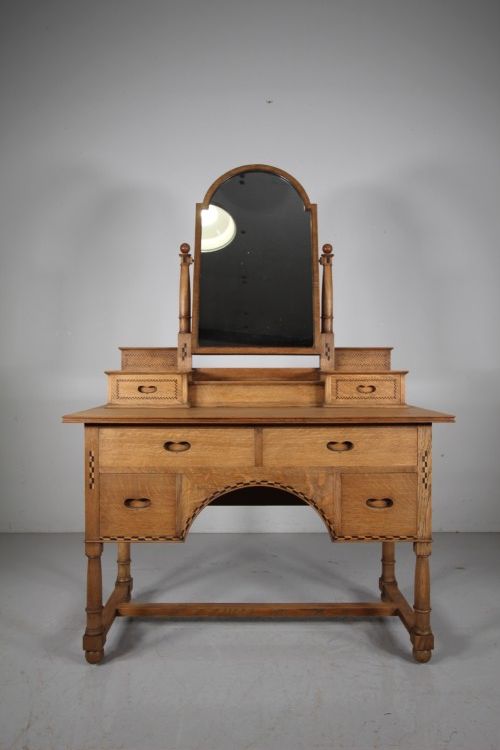
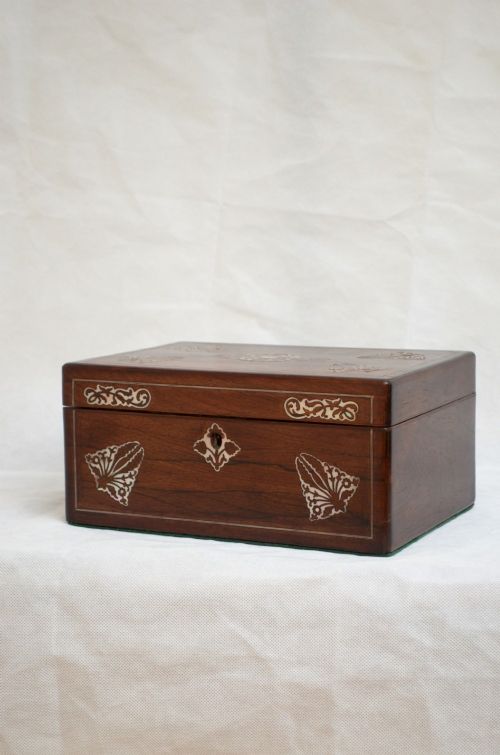
These inlaid wooden vanity chest examples span Victorian and Edwardian periods, bringing fitted compartments and marquetry details straight into the bedroom.
Inlaid Wooden Vanity Chest
When you search for an inlaid wooden vanity chest, you enter a field of Victorian and Edwardian dressing tables, jewellery cabinets, and tabletop trinket boxes. These pieces range from compact workboxes with fitted trays to larger kneehole dressing tables designed for the bedroom.
The versions you meet most frequently on this page combine rosewood or walnut carcases with contrasting satinwood, brass, and mother-of-pearl inlay. Styles stretch from Dutch marquetry and the Aesthetic Movement to Arts and Crafts interpretations.
Makers such as Gillows and Heals appear among the listings, alongside unmarked pieces built for the nineteenth-century home. Whether you select a multi-ring jewelery box or a full dressing table, each piece reflects the domestic storage needs of the eighteen-eighties and surrounding decades.
How they were made
Cabinetmakers built these vanity chests and dressing tables using dense hardwoods including rosewood, walnut, oak, and satinwood, often applying veneers over secondary timbers. Surfaces received elaborate decoration through contrasting satinwood stringing, brass detailing, and mother-of-pearl or pearl inlay set flush into the timber.
Marquetry techniques created pictorial panels, particularly evident in Dutch marquetry examples and Aesthetic Movement pieces. Interiors typically featured fitted trays, compartments lined for jewellery, and occasionally silver stringing to delineate storage sections.
Inlaid Wooden Vanity Chest Retail Price Guide 2026
Typical asking prices for inlaid wooden vanity chest among the pieces listed under this phrase on Sellingantiques today, from the lower quarter to the upper quarter. They describe what is for sale here now, not the wider market.
Listings span the nineteenth century up to nineteen-ten, recording materials from brass and glass to coromandel and oak.
What varies in quality
The distinction between standard and superior pieces rests on the precision of the marquetry and the complexity of the internal fittings. Finer cabinets display meticulous mother-of-pearl placement and intricate satinwood inlay that remains intact across the carcase.
Original fitted trays, integrated mirrors, and labelled maker attribution elevate an item above simpler utility boxes. The integration of brass hardware and the crispness of the timber grain determine the standing of each dressing table or trinket box.
Gillows·Heals
The Inlaid Wooden Vanity Chest Glossary
- Marquetry
- The art of applying pieces of veneer to a structure to form decorative patterns. This technique defines the floral and geometric surfaces seen on Dutch and Victorian boxes.
- Satinwood
- A durable, lustrous timber native to India and Ceylon, used extensively for contrasting inlay and stringing. Its pale yellow colour brightened nineteenth-century furniture.
- Mother of Pearl
- The iridescent inner layer of mollusc shells, shaped into thin plaques and embedded into timber surfaces. It provides bright contrast against dark rosewood and walnut carcases.
- Stringing
- A narrow strip of contrasting wood or metal inlaid into a groove on a furniture surface. It outlines panels and drawers on Victorian and Edwardian pieces.
- Kneehole
- A desk or dressing table configuration featuring a central recess for the legs, flanked by pedestals of drawers. This form appeared frequently in Aesthetic Movement designs.
Inlaid Wooden Vanity Chest: Frequently Asked Questions
What is an inlaid wooden vanity chest?
An inlaid wooden vanity chest encompasses dressing tables, travel boxes, and jewellery cabinets produced during the nineteenth and early twentieth centuries. These pieces combine fitted internal trays with decorative wood veneers.
Craftsmen utilised rosewood, walnut, and satinwood, embellishing the exteriors with brass, mother-of-pearl, and marquetry. They served as personal storage for jewellery, cosmetics, and small trinkets.
How do I date a Victorian dressing table?
Dating these pieces relies on stylistic cues, timber choices, and construction methods recorded across the Victorian and Edwardian eras. Rosewood and heavy mother-of-pearl inlay typify the mid-nineteenth century.
Later pieces often reflect Arts and Crafts or Edwardian sensibilities with simpler oak or mahogany frames. Labels from makers such as Gillows or Heals provide precise attribution when present.
Were these boxes used for travel?
Many examples on this page are designated as travelling vanity or jewellery boxes, equipped with secure locks and fitted compartments. They allowed owners to transport personal valuables safely.
Larger dressing tables and kneehole cabinets remained static bedroom furniture, whereas smaller workboxes and trinket chests moved between rooms or accompanied journeys.
How do I maintain wood inlay?
Maintaining inlaid wooden chests involves keeping them away from direct sunlight and extreme humidity changes. Stable indoor environments prevent the wood veneers and mother-of-pearl from lifting.
Applying appropriate furniture wax preserves the lustre of rosewood, walnut, and satinwood without damaging delicate stringing or brass elements.