




Inlaid Wooden Treen
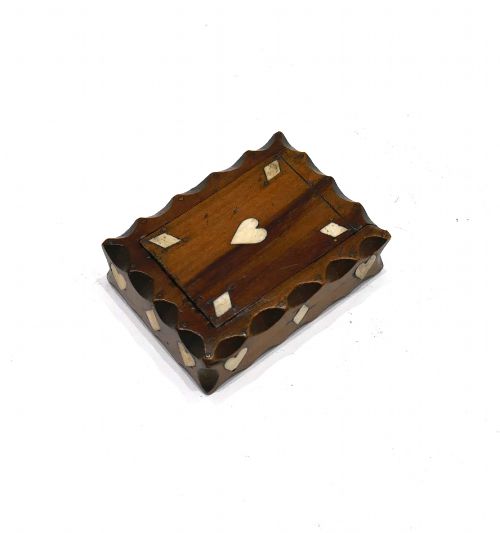
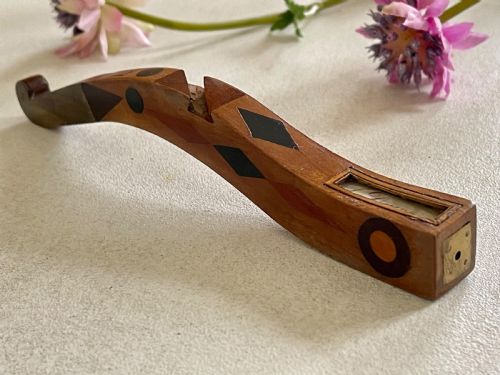
These inlaid wooden treen items are small, functional objects worked in timber and enhanced with bone or brass, prized for their intricate vernacular detail.
Inlaid Wooden Treen
When you search for inlaid wooden treen, you encounter practical household and personal items made primarily during the Georgian and Victorian periods. These utilitarian objects span forms such as snuff boxes, snuff shoes, knitting sheaths, baskets, and chamber sticks.
The pieces on this page lean heavily towards folk art, incorporating vernacular design traditions from England and Wales. You are most likely to meet small personal containers, particularly fruitwood snuff boxes shaped like shoes, books, or shuttles.
Makers of these items utilised native timbers, turning and carving them by hand before embellishing the surfaces with contrasting materials. The resulting objects combine everyday utility with decorative geometric and figurative motifs.
How they were made
Makers worked with fruitwood, walnut, mahogany, and assorted specimen woods, shaping the bodies through turning on a lathe or careful hand carving. These timber foundations provided stable surfaces for intricate surface decoration.
Inlay work relied on contrasting materials such as bone, brass wire, and lighter woods to form geometric shapes like diamonds, triangles, circles, and hearts. Craftsmen set these inlays flush into the timber ground, often complementing the work with chip carving or pyrography.
Inlaid Wooden Treen Retail Price Guide 2026
Typical asking prices for inlaid wooden treen among the pieces listed under this phrase on Sellingantiques today, from the lower quarter to the upper quarter. They describe what is for sale here now, not the wider market.
The listings show materials spanning fruitwood, walnut, mahogany, hardwood, bone, and brass wire.
What varies in quality
The standard of these pieces depends upon the precision of the joinery and the fineness of the inlay work. Finer examples display tightly fitted bone or brass elements that follow the curves of the turned or carved wooden body without gaps.
Design complexity also separates standard items from exceptional ones, particularly where makers shaped the timber into recognizable figurative forms like shoes or books. The crispness of chip carving and the preservation of the original surface patina dictate the visual appeal.
The Inlaid Wooden Treen Glossary
- Treen
- Small handmade wooden household objects and utilitarian wares. The term derives from the old English word for tree.
- Snuff box
- A small lidded container designed to hold powdered tobacco. These often feature elaborate inlay or figurative shapes.
- Knitting sheath
- A domestic tool tucked into a belt or apron to hold a single knitting needle steady. They frequently feature geometric chip carving and inlay.
- Specimen wood
- An object constructed from multiple different types of timber chosen for their contrasting natural colours. Makers used these to showcase botanical variety.
- Chip carving
- A technique where small chips are removed from the surface of a piece of wood with a knife to create geometric patterns.
Inlaid Wooden Treen: Frequently Asked Questions
What is inlaid wooden treen?
These items are small, functional wooden objects decorated with contrasting materials like bone or brass. They include domestic implements and personal accessories made by hand.
Most examples date from the Georgian and Victorian eras, reflecting regional folk art traditions across England and Wales.
How were snuff boxes used?
People carried these small lidded containers in pockets or waistcoats to hold pinches of powdered tobacco. Owners offered small amounts to companions as a social courtesy.
The hinged or sliding lids kept the contents dry and secure during daily travel.
How do I care for wooden treen?
Keep these items away from direct sunlight and steady heat sources to prevent the timber from splitting. Sudden changes in humidity can cause bone or brass inlays to loosen from the wood.
Apply a light application of appropriate wax occasionally to maintain the dry lustre of the surface.
How do I tell Victorian treen from Georgian?
Georgian pieces often display simpler mahogany or fruitwood construction with understated chip carving or basic inlay. Victorian items frequently embrace denser geometric patterns using bone, brass wire, and multiple specimen woods.
Folk art influences remain strong across both periods, though Victorian examples sometimes adopt more playful figurative shapes.
What is Tunbridge Ware?
This is a specialised form of decorative woodwork featuring intricate mosaic patterns made from tiny wood blocks. Artisans arranged thousands of distinct timber squares to form pictorial or geometric designs.
Items such as baskets utilised this technique to create detailed surface decoration.