


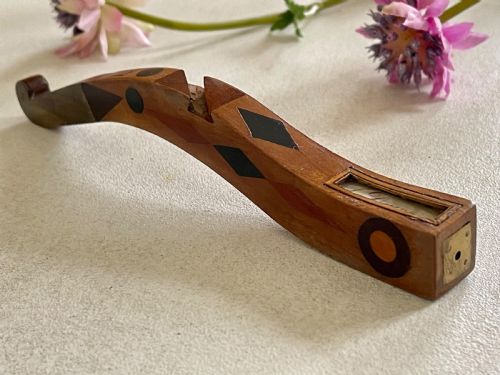


Inlaid Wood Treen
These inlaid wood treen pieces are small domestic objects decorated with contrasting materials, offering tactile charm for any collector.
Inlaid Wood Treen
Inlaid wood treen comprises small turned and carved wooden objects designed for everyday domestic use, carrying decorative motifs set into the primary timber. When searching for inlaid wood treen, you encounter functional items such as snuff boxes shaped like shoes, knitting sheaths, baskets, and goblets.
The pieces span several periods from the Georgian era through the Victorian period and into the Arts and Crafts movement. Folk art examples feature prominently, showing vernacular carving alongside precise geometric decoration.
Snuff boxes form a major part of the selection, often taking whimsical forms like ladies feet in open toed shoes or double-opening designs. Collectors also find practical items like chamber sticks, swagger sticks, and carpet bowls.
Materials and construction
Craftsmen utilised a variety of hardwoods including walnut, mahogany, yew, and fruitwood as the primary body for these items. These timbers provided stable surfaces for intricate turning on a lathe or hand-carving with gouges and knives.
Decoration relied on contrasting inserts of boxwood, sycamore, brass wire, bone, and abalone. Makers depressed these materials into pre-cut channels or recesses in the wood to create geometric patterns, hearts, diamonds, and bird motifs.
Inlaid Wood Treen Retail Price Guide 2026
Typical asking prices for inlaid wood treen among the pieces listed under this phrase on Sellingantiques today, from the lower quarter to the upper quarter. They describe what is for sale here now, not the wider market.
Materials recorded across the items include walnut, mahogany, yew, fruitwood, brass wire, bone, and abalone.
Assessing quality and execution
Quality rests upon the precision of the inlay work and the crispness of the carving. Superior examples display tightly fitted contrasting woods and metal wire without visible gaps or excessive adhesive filler.
The originality of the surface finish and the retention of delicate details, such as chip-carved hearts or engraved bone accents, distinguish finer pieces from standard utilitarian objects.
The Inlaid Wood Treen Glossary
- Treen
- Small handmade wooden objects for the home. The term derives from the old word for tree.
- Tunbridge Ware
- Woodware decorated with mosaic patterns made from tiny wood blocks. It originates from Kent and employs numerous natural wood colours.
- Knitting sheath
- A device tucked into an apron or belt to hold a knitting needle steady. They frequently feature geometric chip carving.
- Carpet bowl
- A solid wooden ball rolled across indoor carpets in a game similar to bowls. They often display concentric bands of different inlaid woods.
- Swagger stick
- A short cane carried by gentlemen as a fashion accessory. Examples in this category incorporate inlaid wood sections.
Inlaid Wood Treen: Frequently Asked Questions
What is treen?
Treen refers to small, functional wooden objects made for domestic use before the widespread manufacture of plastic and cheap ceramics.
Items range from snuff boxes and knitting sheaths to goblets and small bowls, valued for their craftsmanship and tactile qualities.
How do I date inlaid wood pieces?
Dating relies on identifying the timber species, the style of decoration, and the construction methods used by the maker.
Georgian pieces often display mahogany and simple heart inlays, whereas Victorian examples frequently incorporate brass wire, abalone, or more complex folk art motifs.
Were shoe snuff boxes used?
Shoe snuff boxes served as pocket containers for holding dry snuff tobacco during the Georgian and Victorian eras.
Carvers shaped these boxes to resemble gentlemen or ladies footwear, sometimes adding double openings or inlaid decoration to amuse the user.
How should I care for wooden treen?
Keep wooden treen out of direct sunlight and away from rapid temperature changes to prevent the wood and inlay from drying out and cracking.
An occasional application of microcrystalline wax helps protect the surface and maintains the contrast between the inlaid woods.