




Inlaid Wooden Timepiece
An inlaid wooden timepiece brings warmth and mechanical rhythm to a room, offering functional charm rooted in centuries of cabinet-making.
Inlaid Wooden Timepiece
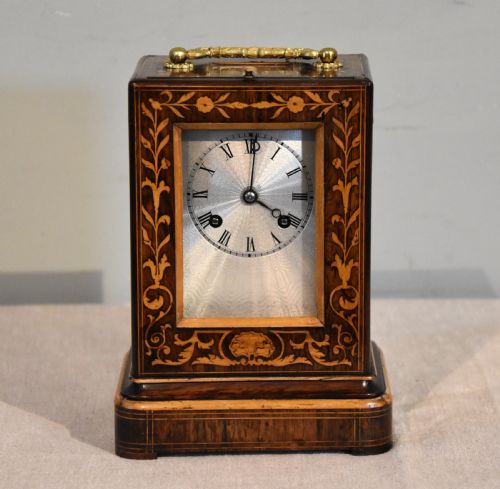
An inlaid wooden timepiece is a portable domestic clock housed in a timber case embellished with contrasting veneer or stringing. The items collected under this search phrase span centuries of domestic horology, originating from workshops across Britain and France.
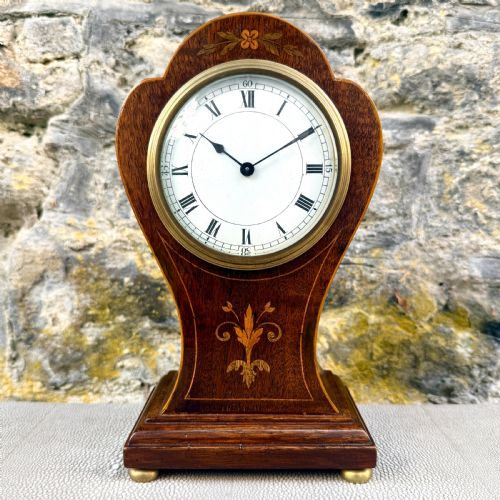
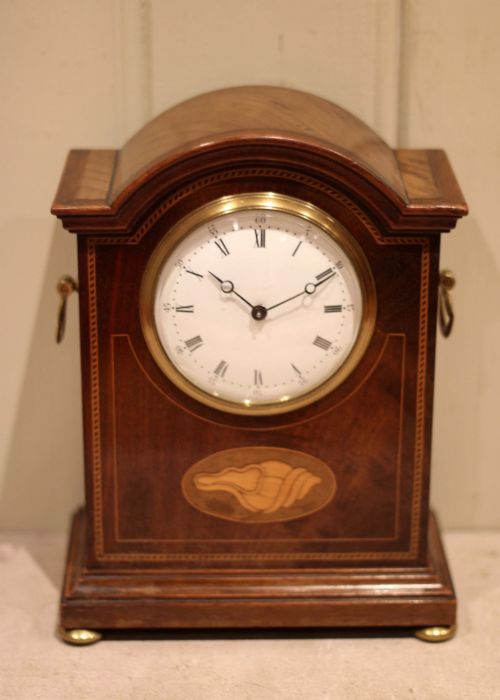
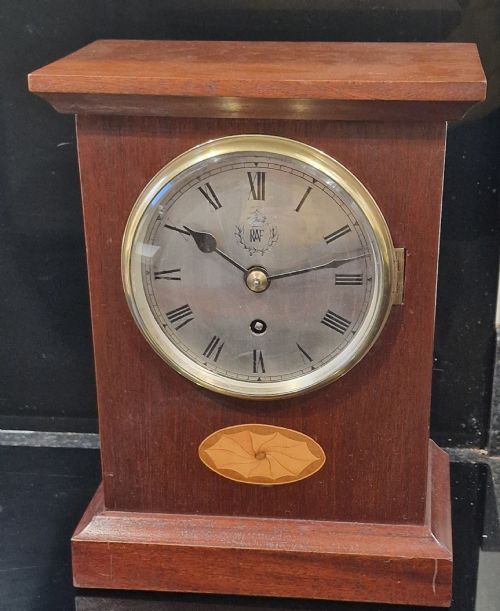
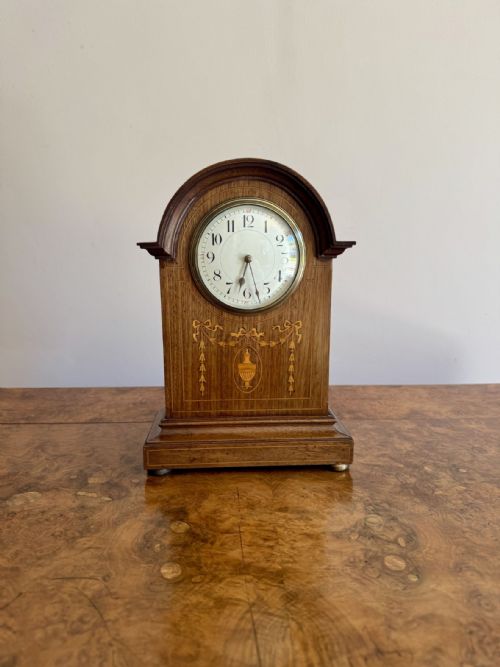
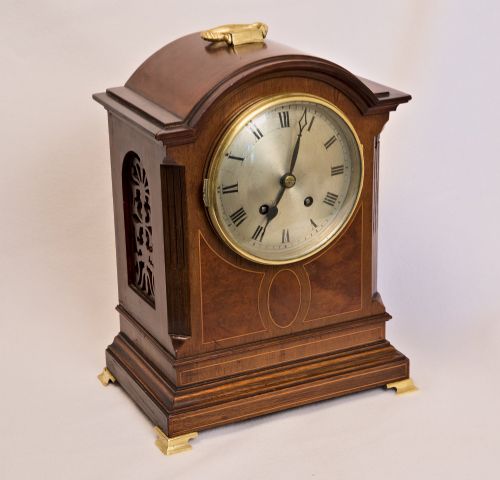
The version most commonly met on this page is the Edwardian mahogany mantel clock, frequently decorated with satinwood inlay and standing on delicate bracket feet. These pieces range from simple lancet and balloon shapes to architectural bracket and wall clocks.
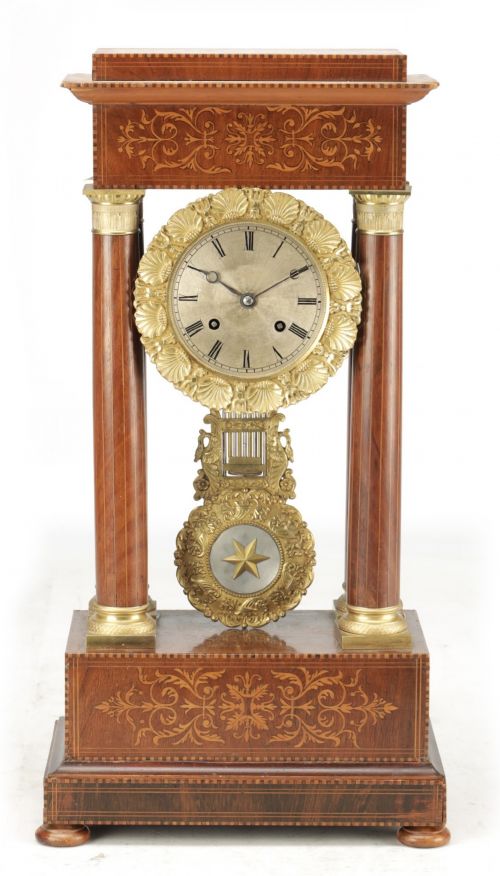
Makers and provincial retailers alike produced these items for domestic interiors, utilising dense hardwoods to showcase both precise joinery and careful dial placement. Collectors encounter varying forms, from French rosewood library clocks to English oak balloon cases.
Materials and construction
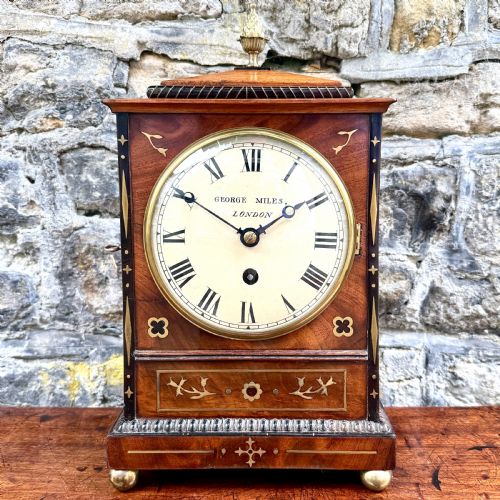
Cabinet-makers constructed the cases using solid and veneered timbers such as mahogany, rosewood, and oak, applying boxwood and satinwood inlay to create geometric borders or floral motifs. Brass fittings, including bezels, handles, and dial surrounds, provide structural contrast and functional support.
The interior mechanical movements rely on brass plates, steel gears, and enamel or brass dials, often paired with glass viewing panels. Enamel dials feature delicate painted numerals, whilst the timber cases are finished to highlight natural grain patterns alongside intricate marquetry.
Listings feature mahogany, rosewood, and oak cases embellished with satinwood and boxwood inlay across the nineteenth and early twentieth centuries.
Judging quality and craftsmanship
Quality rests in the precision of the cabinet-making and the crispness of the inlay work, where tight joints and balanced proportions distinguish finer examples from standard production. The subtlety of the satinwood or boxwood lines and the preservation of the original timber finish dictate the visual appeal of a case.
Horological merit separates simpler pieces from superior items, visible in signed movements by notable makers and the complexity of the interior mechanism, such as fusee setups. Original dials, well-matched hands, and untouched case patination elevate an object above later replacements.
Bush of London·Bryson Edinburgh·Hyde of Salisbury·Kleyser of London·Malecot of Paris
The Inlaid Wooden Timepiece Glossary
- Timepiece
- A clock that tells the time without striking on the hour or playing musical tunes. These movements focus purely on the escapement and gear train necessary to rotate the hands.
- Fusee
- A conical pulley connected to the mainspring by a cord or chain that equalises the driving force as the spring unwinds. This mechanism improves timekeeping consistency in better bracket and library clocks.
- Marquetry
- The art of applying pieces of veneer to a structure to form decorative patterns or pictures. Craftsmen utilise contrasting woods like rosewood and satinwood to build up intricate floral or geometric designs.
- Lancet top
- A clock case shaped with a pointed, arching top resembling a Gothic lancet window. This architectural silhouette appears frequently in Edwardian mahogany designs.
- Bracket clock
- A portable table or shelf clock historically designed to sit upon a matching wall bracket. Over time, the term became applied to larger table clocks regardless of whether a wall shelf accompanied them.
Inlaid Wooden Timepiece: Frequently Asked Questions
How do I wind an antique wooden timepiece?
Wind the clock using the appropriate key inserted into the winding arbor on the dial, turning gently until you feel firm resistance. Avoid over-winding, as this can strain the mainspring and disrupt the gear train.
Consult the specific movement type before turning the hands, as certain striking or fusee mechanisms require specific handling to prevent damage to the internal components.
Where should I place a mantel clock?
Position the clock on a stable, level surface away from direct sunlight, draughts, and sudden temperature fluctuations. Mantelpieces, sideboards, and library shelves provide traditional settings that support reliable operation.
Ensure the surface does not vibrate excessively, which can cause the pendulum to swing unevenly or stop the escapement entirely.
How can I tell an Edwardian clock from a Victorian one?
Edwardian cases often feature lighter mahogany timbers with delicate satinwood inlay, frequently displaying balloon or lancet silhouettes. The decorative focus leans towards refined stringing and occasionally floral motifs.
Victorian pieces tend to utilise heavier rosewood or dark mahogany veneers, sometimes incorporating French portico styles or bolder brass mounts reflecting mid to late nineteenth-century tastes.
What is the difference between a French and English movement?
French movements of the nineteenth century frequently employ platform escapements or silk-suspension pendulums housed in rosewood or portico cases. They often carry signatures from Parisian makers or retailers on the backplate.
English movements commonly feature robust chain-driven or gut-line fusee systems built for precision timekeeping, often mounted within heavier mahogany or oak architectural bracket cases.