



Inlaid Wooden Secret Box
An inlaid wooden secret box offers a clever hiding place for valuables, combining fine cabinet-making with concealed compartments.
Inlaid Wooden Secret Box
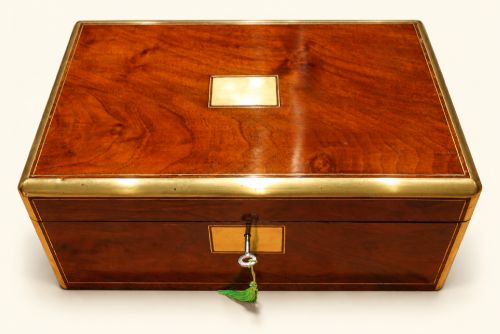
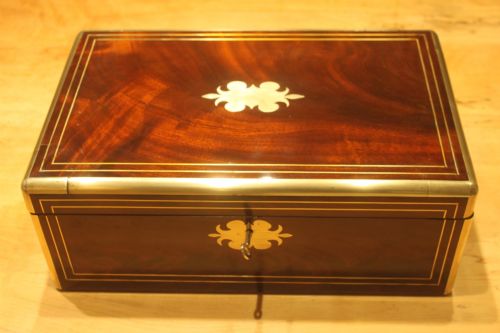
When you search for an inlaid wooden secret box, you are looking at practical containers designed to safeguard letters and small possessions behind hidden panels. The pieces on this page span the Georgian, Victorian, and 1920 periods, taking the form of writing slopes, boxes, and cases.
The Victorian examples form the largest group you will encounter here, typically constructed from walnut, figured walnut, or burr walnut with brass binding and secret drawers. Alongside these sit Georgian rosewood models and later 1920 Art Deco Odeon style secret safe books.
Military campaign writing slopes also appear within this selection, offering utilitarian brass edges and specialised compartments such as secret sovereign sections or candle sconces. Each piece relies on clever joinery to conceal internal drawers from casual observation.
Materials and construction
Cabinet-makers built these boxes using dense timbers such as mahogany, rosewood, and various grades of walnut, frequently applying wood veneer or satinwood and burr walnut to external surfaces for decorative grain patterns. Brass featured heavily as an inlay material and as protective corner binding or edging.
Internal mechanisms relied on precise woodworking to create secret drawers and concealed compartments that operated through hidden spring releases or sliding panels. High-security locking mechanisms, such as Bramah locks requiring specific keys, secured the primary lids.
Inlaid Wooden Secret Box Retail Price Guide 2026
Typical asking prices for inlaid wooden secret box among the pieces listed under this phrase on Sellingantiques today, from the lower quarter to the upper quarter. They describe what is for sale here now, not the wider market.
Some military campaign boxes double as lighting rigs, packing their own candle sconces alongside secret sovereign slots.
Judging quality in secret boxes
Quality reveals itself in the crispness of the brass inlay and the precision with which hidden panels and secret drawers fit into their surrounds. Superior pieces maintain seamless integration of moving parts so that concealed compartments remain entirely undetectable when closed.
The selection of timber grain, particularly in figured and burr walnut or rosewood surfaces, distinguishes finer workshops from standard production. Attribution to notable makers such as George Austin of Dublin further elevates the standing of an individual piece.
George Austin of Dublin
The Inlaid Wooden Secret Box Glossary
- Writing slope
- A portable desk with a hinged sloping lid designed for correspondence, often fitted with internal compartments for inkwells and stationery. These frequently house the secret drawers found in this category.
- Figured walnut
- Timber exhibiting an attractive, highly figured grain pattern naturally occurring in the walnut tree. Cabinet-makers utilised this wood extensively for decorative veneering on Victorian boxes.
- Bramah lock
- A high-security cylinder lock invented by Joseph Bramah, known for its cylindrical key and pick-resistant design. These locks denote superior quality on period writing boxes.
- Campaign writing slope
- A sturdy portable desk built for military officers on the move, characterised by brass binding and flush handles. These pieces often incorporate specialised internal sections like candle sconces and sovereign holders.
Inlaid Wooden Secret Box: Frequently Asked Questions
How do I find the secret drawers?
Secret drawers typically require removing a false bottom, sliding a specific panel, or releasing a hidden wooden spring catch inside the main compartment. Examining the internal dimensions often reveals unexpected gaps where these compartments hide.
Taking your time to gently test removable partitions and side panels prevents damage to the original nineteenth-century mechanisms.
What were writing slopes used for?
Writing slopes served as portable desks before the widespread use of fixed stationary furniture, allowing users to write letters while travelling or moving between rooms in a large house. The slanted lid provided an ergonomic surface for handwriting.
Internal wells held ink, pens, and blotting paper, while the flat base rested securely on a lap or table.
How do I tell Victorian from Georgian boxes?
Georgian boxes frequently utilise dense rosewood with restrained brass inlay and simpler internal layouts. They date from the late eighteenth and early nineteenth centuries.
Victorian pieces often feature figured or burr walnut with heavier brass binding, more elaborate secret drawer arrangements, and occasionally maker attributions.
What is an Art Deco secret safe book?
An Art Deco secret safe book is a 1920s novelty container styled to resemble a bound volume while functioning as a secure hiding place. These pieces utilise the Odeon style popular during the period.
They offer an alternative form of concealment to the traditional wooden writing slope.