



Inlaid Wooden Bed
An inlaid wooden bed brings warmth and intricate detail to a bedroom, combining sturdy timber frames with decorative craftsmanship.
Inlaid Wooden Bed
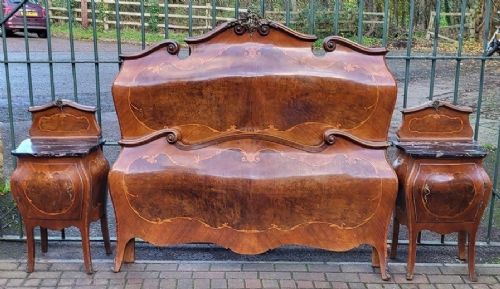
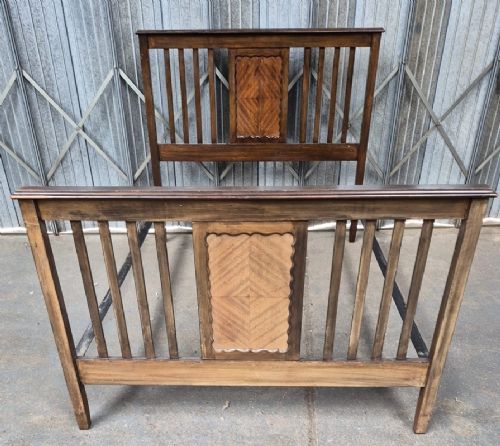
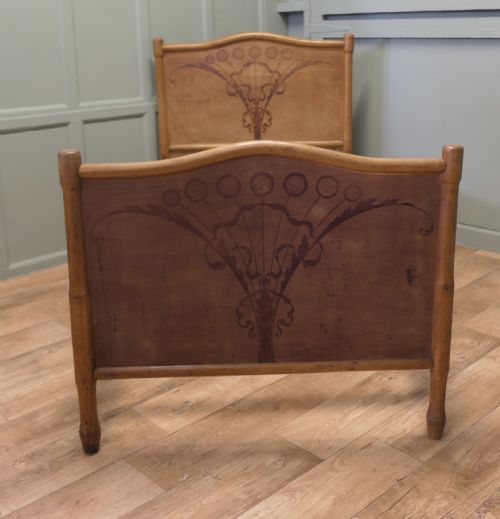
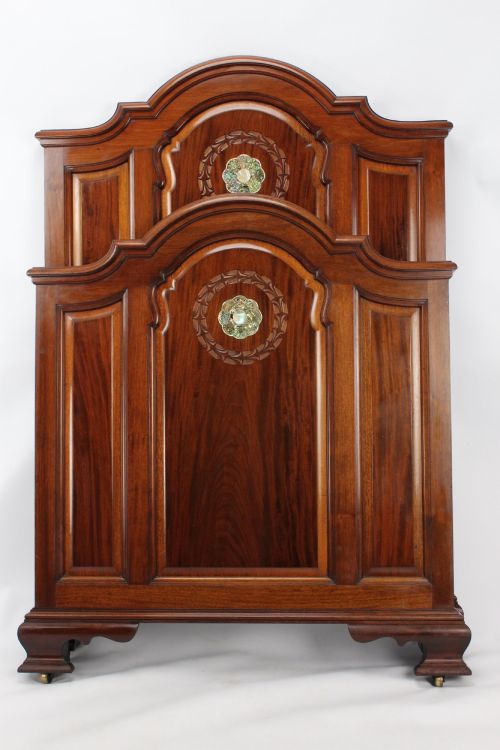
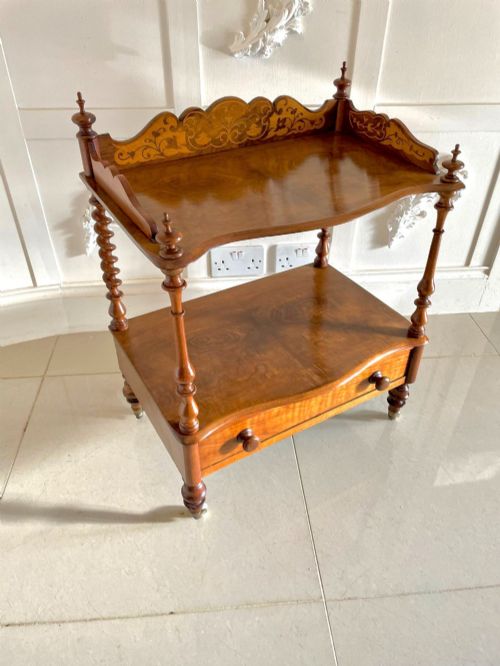
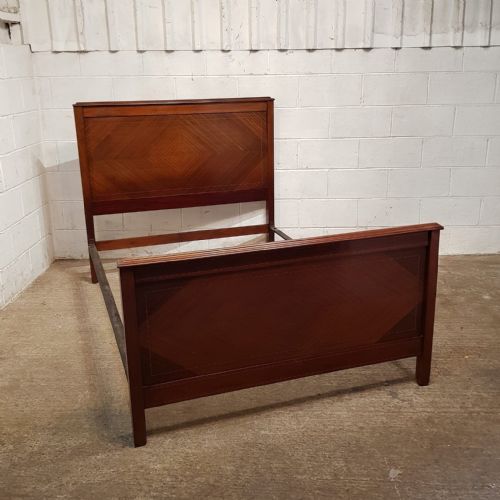
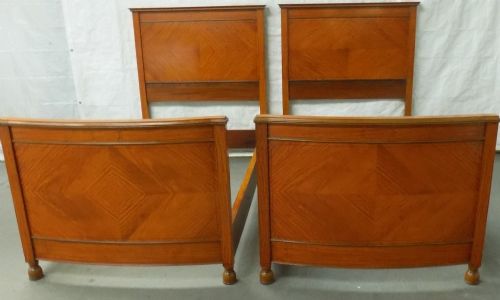
An inlaid wooden bed is a substantial frame designed for sleeping, decorated with contrasting wood veneers, fruitwoods, or mother-of-pearl. These pieces range from grand king-size proportions down to single frames and bedsteads.
The versions most commonly met on this page date from the Edwardian period and around 1900, often constructed in mahogany, walnut, or satinwood. Many feature specific regional details such as French styling or British Edwardian craftsmanship.
While primarily constructed as full bedsteads, related forms sometimes appear alongside them, including bedroom suites and occasional tables. Buyers encounter single beds, double beds, and larger king-size formats suited to diverse room dimensions.
How they were made
Makers built these frames using solid woods like mahogany, walnut, and oak, often applying fine veneers such as burr walnut, fruitwood, and satinwood to create decorative surfaces. Marquetry and parquetry techniques involved fitting small pieces of contrasting timber or mother-of-pearl and abalone into prepared recesses within the primary wood.
Structural stability relied on traditional joinery methods, occasionally reinforced with iron, brass, or ormolu mounts. The combination of dense base timbers and delicate inlay work required precise hand-cutting to ensure the decorative elements remained flush with the surrounding surface.
Inlaid Wooden Bed Retail Price Guide 2026
Typical asking prices for inlaid wooden bed among the pieces listed under this phrase on Sellingantiques today, from the lower quarter to the upper quarter. They describe what is for sale here now, not the wider market.
Listings feature beds spanning from the seventeenth century through the Victorian and Edwardian eras, up to Art Deco designs.
What varies in quality
The standard of an inlaid wooden bed depends largely on the precision of the marquetry and the choice of timbers used for the contrasting details. Pieces utilising burr walnut, fruitwood, or mother-of-pearl display greater refinement when the cuts fit tightly without excessive filler.
Design complexity and the reputation of the maker also divide standard examples from exceptional ones. Frames produced by known makers or featuring balanced proportions across large headboards demonstrate superior workshop execution.
Jacob and Joseph Kohn·Heal's·Louis Majorelle
The Inlaid Wooden Bed Glossary
- Inlay
- A technique where pieces of a contrasting material are inserted into a recessed wooden surface to form a design.
- Marquetry
- Formed by assembling various veneers into pictorial or geometric patterns before applying them to the frame.
- Parquetry
- A geometric mosaic of wood pieces used for decorative surface patterns on furniture.
- Bedstead
- A framework of a bed designed to support the mattress and spring system.
- Tester
- A wooden canopy over a bed, supported by the posts or frame.
Inlaid Wooden Bed: Frequently Asked Questions
How do I measure for a vintage bed?
Historic bed sizes often differ from modern standard mattress dimensions, particularly older French or Edwardian formats. Measure the internal width and length of the wooden frame carefully before sourcing a mattress.
Allow extra clearance for decorative headboards, footboards, and any attached side tables or ensuite nightstands. Checking the exact outer dimensions ensures the piece fits comfortably within your bedroom layout.
Are these beds suitable for daily use?
Most antique wooden bed frames are robustly constructed from hardwoods like mahogany and walnut, making them entirely suitable for regular sleeping arrangements. Modern slats or discreet base adaptations are often integrated to support contemporary mattresses securely.
Care should be taken when moving these heavier frames to protect the delicate inlay work and structural joints. Regular checks of the bolts and fittings will keep the bed stable over years of use.
How do I identify an Edwardian bed?
Edwardian beds frequently feature lighter mahogany or satinwood timbers combined with restrained inlay patterns. The styling often reflects a simpler, airier aesthetic compared to heavier Victorian predecessors.
Look for clean lines, panelled or railed headboards, and characteristic craftsmanship dating from the late nineteenth or early twentieth century. Maker marks or stamps can sometimes be found on the interior rails.
What maintenance does inlaid wood require?
Inlaid wooden surfaces benefit from stable room temperatures and protection from direct sunlight to prevent the timber and veneers from drying out. Routine dusting with a soft, dry cloth is usually sufficient for daily care.
Occasional application of appropriate furniture wax helps preserve the sheen of the wood and protects the delicate marquetry. Avoid using harsh chemical cleaners or excess moisture on veneered surfaces.