




Inlaid Wood Nesting Tables
These inlaid wood nesting tables offer a practical way to multiply surface space while displaying period craftsmanship in mahogany, rosewood, and satinwood.
Inlaid Wood Nesting Tables
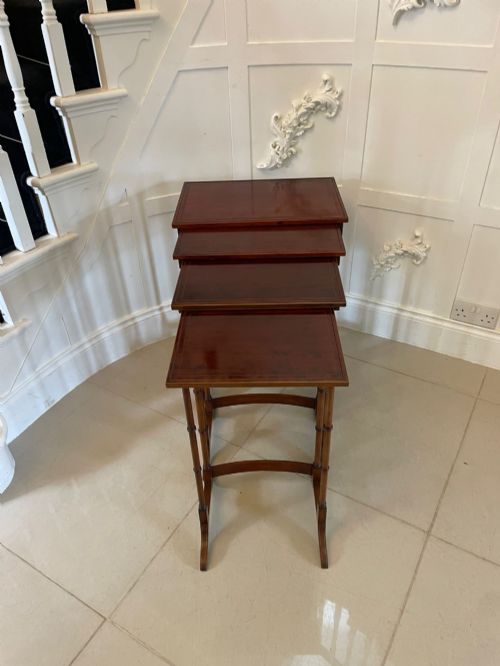
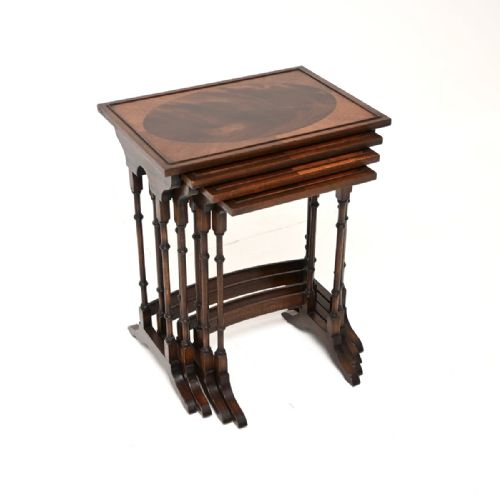
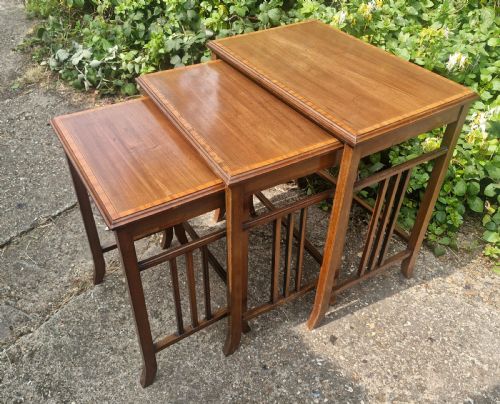
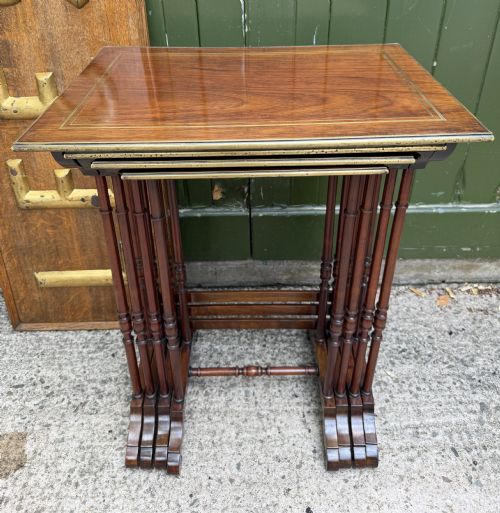
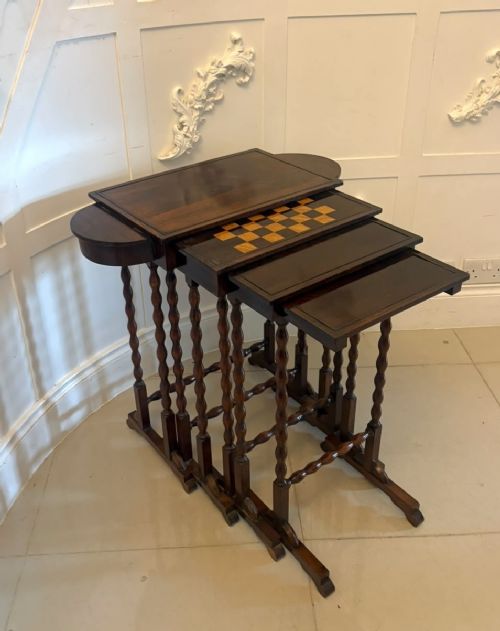
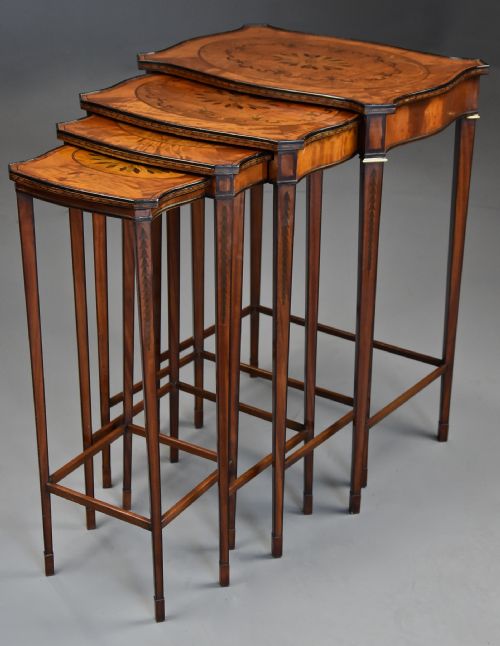
Inlaid wood nesting tables comprise sets of occasional tables sized to slide beneath one another when floor space is at a premium. The selection here centres heavily on Edwardian quartetto sets, alongside Regency and Victorian examples.
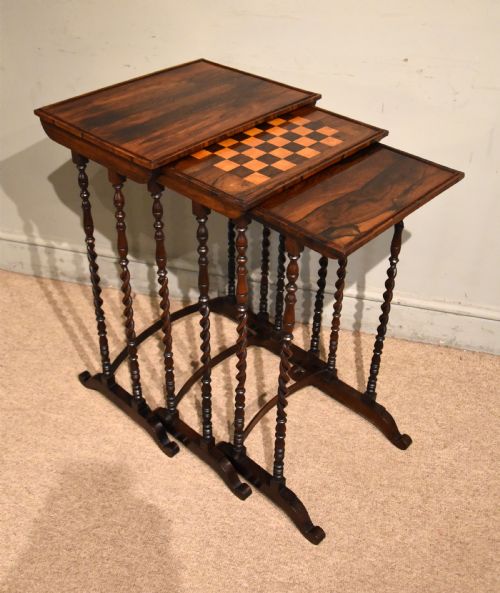
A buyer seeking inlaid wood nesting tables encounters forms ranging from sets of three to quartetto sets of four tables. Most pieces adopt rectangular, serpentine, or kidney shapes designed to pull out easily for tea or writing.
Origins span the nineteenth and early twentieth centuries, with Edwardian satinwood and mahogany pieces dominating the selection. Makers from these periods adapted Georgian styles and Sheraton Revival motifs for domestic drawing rooms.
What varies in quality
Quality rests on the crispness of the inlay work and the choice of cabinet timbers, from standard mahogany to figured satinwood or amboyna. Superior sets maintain structural stability across all four tiers without excessive play in the legs.
Finer examples incorporate complex serpentine outlines, kidney-shaped tops, or integrated chess boards rather than plain rectangular surfaces. The integration of Killarney ware marquetry or Gillows attribution elevates certain pieces above standard production.
Listings feature mahogany, satinwood, rosewood, walnut, and amboyna woods, accompanied by boxwood inlay, brass, and marquetry.
The Inlaid Wood Nesting Tables Glossary
- Quartetto
- A matched set of four nesting tables designed to slide together. The term appears frequently in nineteenth and early twentieth-century records.
- Marquetry
- The art of forming decorative patterns by fitting together veneers of different woods, and occasionally other materials. This technique decorates many tabletop surfaces.
- Satinwood
- A durable, yellowish-gold timber valued for its lustrous grain and used extensively during the Sheraton Revival period. It accepts fine inlay work with high contrast.
- Stringing
- Thin lines of contrasting wood or light-coloured boxwood inlaid into the primary timber to outline panels or tabletops. It defines the edges of many Edwardian pieces.
Inlaid Wood Nesting Tables: Frequently Asked Questions
How were nesting tables used?
These tables served as portable surfaces in drawing rooms and parlours for tea, needlework, or writing.
Servants moved individual tiers around the room as needed before sliding them back into a single stack.
What is a quartetto set?
A quartetto set consists of four graduate tables designed to nest inside one another.
This format gained popularity during the Regency period and remained a staple of Edwardian cabinetmaking.
How do I care for inlaid wood?
Keep the wood away from direct sunlight and heat sources to prevent the veneers and inlay from lifting.
Polish the surfaces occasionally with traditional beeswax rather than modern silicone sprays.
How do I distinguish Edwardian from Regency?
Regency tables often feature heavy rosewood grains, brass inlay, and sabre legs reflecting neoclassical taste.
Edwardian pieces tend to use satinwood or mahogany with lighter Sheraton Revival stringing and tapered spade feet.