

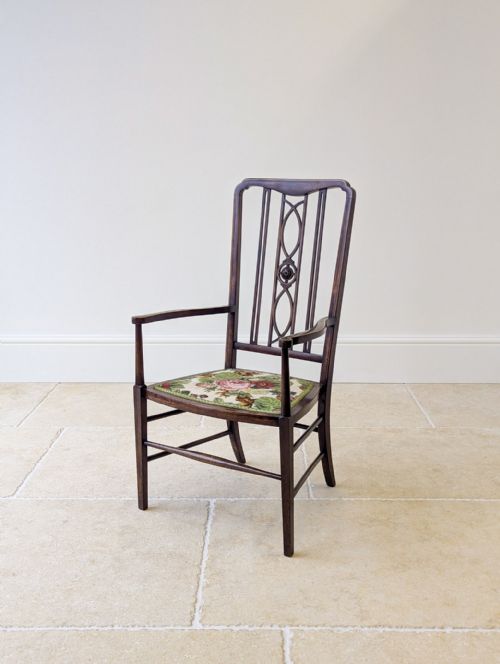
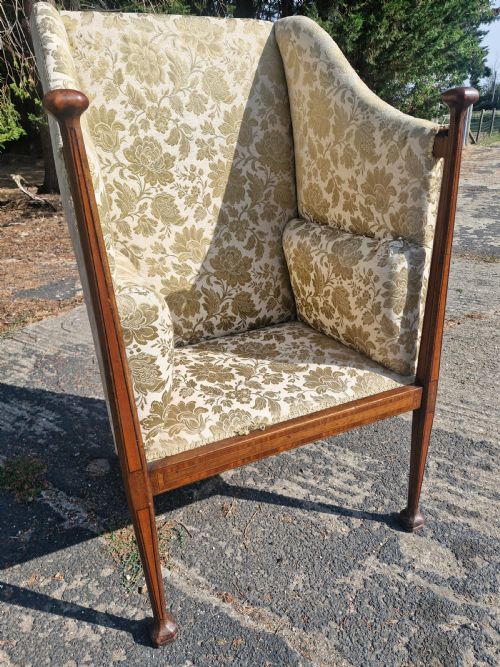


Inlaid Wood Arm Chair
An inlaid wood arm chair brings refined surface detail to seating, uniting structured timber forms with contrasting veneers.
Inlaid Wood Arm Chair
When you search for an inlaid wood arm chair, you encounter seated furniture embellished with contrasting timber veneers, floral motifs, or metallic stringing. The pieces span periods from the eighteenth century through the Edwardian era, encompassing diverse structural forms.
The historical origins range from English revival pieces to Dutch marquetry carvers and Chinese brass-inlaid horseshoe chairs. These diverse regional traditions share a reliance on decorative surface work applied to sturdy wooden frames.
How they were made
Cabinetmakers utilised solid timbers such as mahogany, rosewood, and satinwood for the primary frames, providing structural integrity for daily seating. Craftspeople then recessed contrasting woods, brass lines, or ivory into the surfaces to create geometric or pictorial patterns.
Marquetry techniques involved cutting intricate pictorial veneers from various woods and assembling them into panels before gluing them onto the chair backs and rails. Upholstery, fabric, and leather elements were subsequently added to the seats and arms for comfort.
Inlaid Wood Arm Chair Retail Price Guide 2026
Typical asking prices for inlaid wood arm chair among the pieces listed under this phrase on Sellingantiques today, from the lower quarter to the upper quarter. They describe what is for sale here now, not the wider market.
Some nineteenth-century makers even employed ivory and silver alongside wood inlay to ensure your sitting room outshone the neighbours.
What varies in quality
The standard of an inlaid wood arm chair depends upon the precision of the veneer work and the integration of the decorative motifs into the structural timber. Sharp, tight junctions between contrasting woods indicate superior cabinetmaking compared to clumsy, wide filler joints.
The choice of primary wood and secondary veneers dictates the overall elegance, with dense rosewood and finely grained satinwood commanding greater visual depth. Furthermore, the originality of the structural joinery and the retention of period upholstery styles determine the integrity of the piece.
Gillow
The Inlaid Wood Arm Chair Glossary
- Marquetry
- A decorative technique applying pieces of veneer to a structure to form intricate pictorial designs and patterns. This method allows cabinetmakers to create complex floral or geometric scenes across flat chair backs.
- Bergere
- An enclosed upholstered armchair with a wooden frame and woven cane panels on the back and sides. These seats frequently incorporate satinwood inlays and require supportive cushions.
- Elbow chair
- A term historically used to describe an armchair with armrests, suitable for a desk or occasional use. These chairs often feature inlaid mahogany or rosewood frames.
- Stringing
- Thin lines of contrasting wood or brass inlaid into channels cut into the primary timber. This linear detail defines the edges and structural outlines of the chair.
Inlaid Wood Arm Chair: Frequently Asked Questions
What is an inlaid wood arm chair?
An inlaid wood arm chair is a seated piece featuring decorative wood veneers or brass lines embedded into its wooden frame. These additions transform functional seating into ornamental furniture.
Such chairs appear in styles ranging from Sheraton revival to Edwardian salon designs, utilising woods like mahogany and rosewood.
How do I identify an Edwardian inlaid chair?
Edwardian inlaid chairs typically display satinwood and marquetry motifs set into lighter mahogany or rosewood frames. They reflect late nineteenth and early twentieth-century revivals of earlier classical styles.
These pieces often serve as occasional, tub, or salon armchairs, marked by delicate tapering legs and refined floral panels.
Where were these chairs used historically?
These armchairs functioned primarily in polite domestic interiors such as libraries, drawing rooms, and studies. They provided comfortable seating while displaying the refined tastes of the household.
Library bergere chairs suited reading spaces, whereas lighter salon and corner chairs occupied formal reception rooms.
How should I care for an antique inlaid chair?
Preserving an inlaid wood arm chair requires maintaining stable indoor humidity to prevent the delicate veneer from lifting. Gentle dusting and occasional application of appropriate furniture wax protect the polished surface.
Keep such chairs away from direct sunlight and heat sources to safeguard both the timber and any fabric or leather upholstery.