


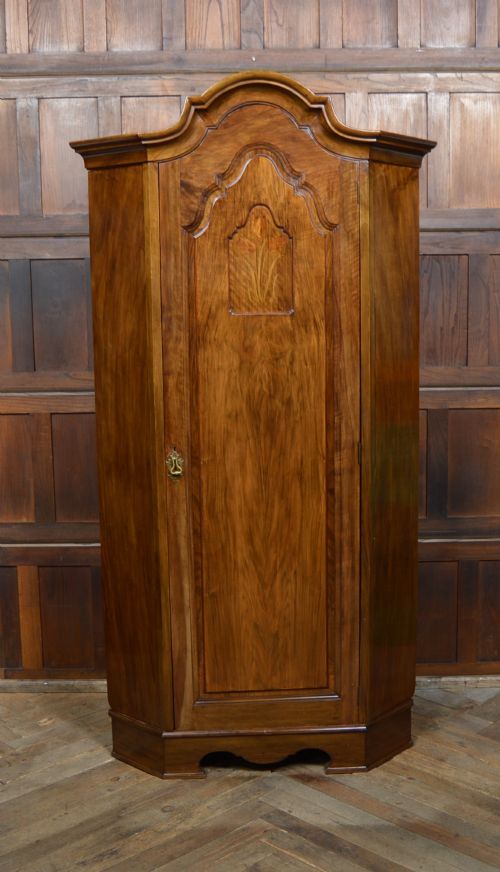
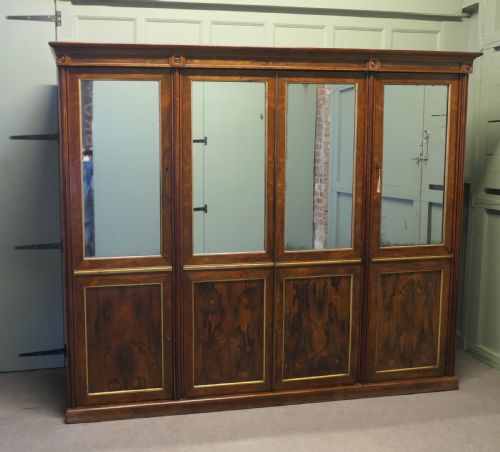
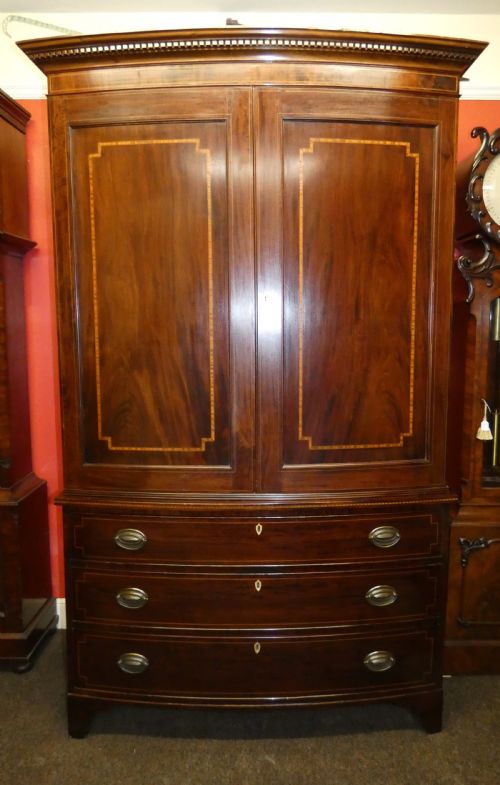
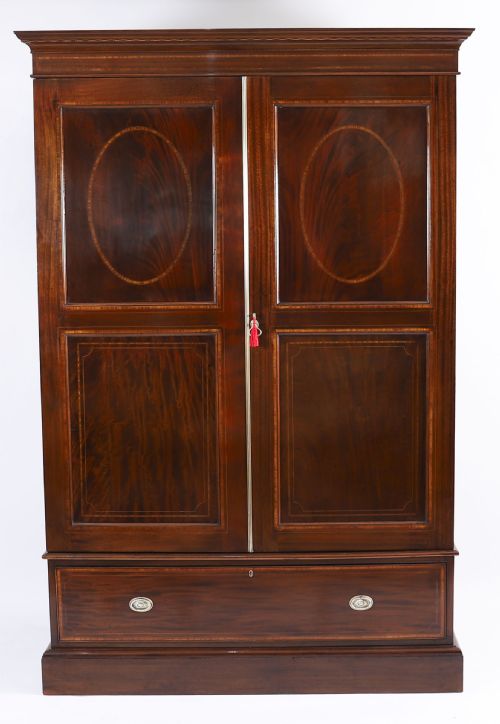
Inlaid Wardrobe
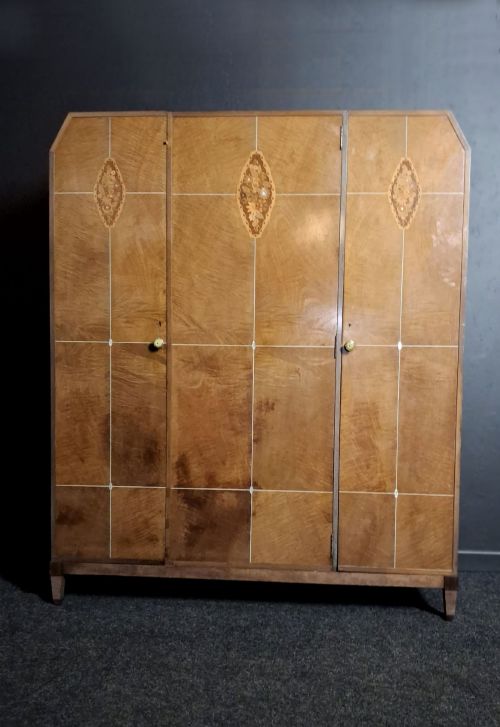
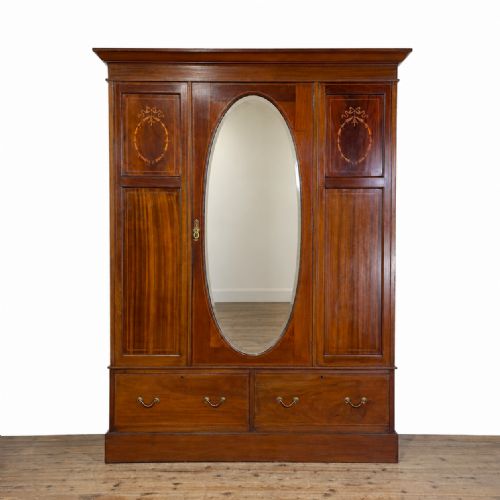
An inlaid wardrobe brings timber grain and contrasting woodwork together to anchor a bedroom with substantial storage.
Inlaid Wardrobe
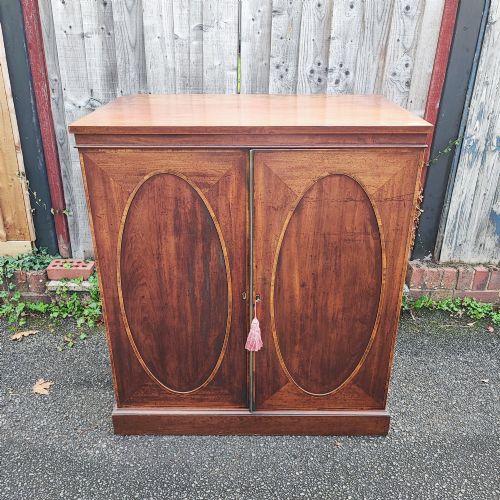
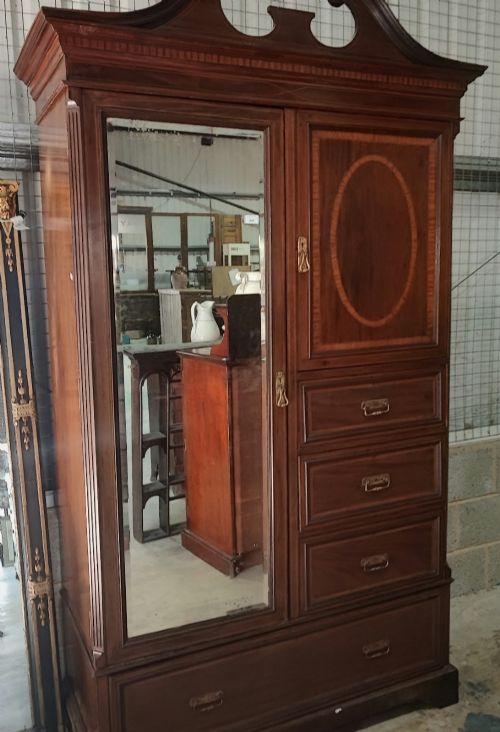
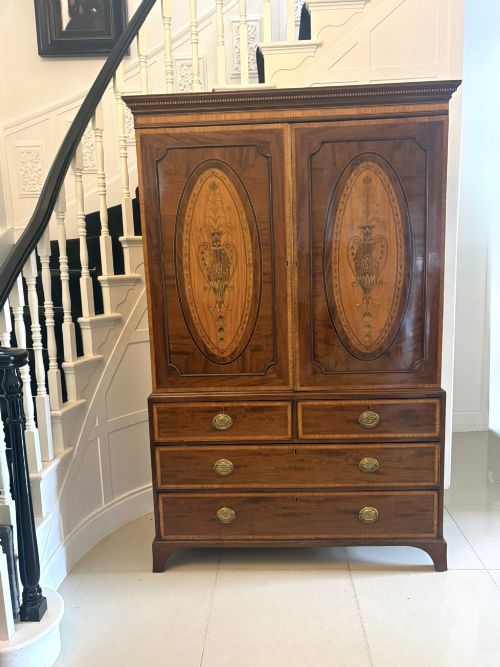
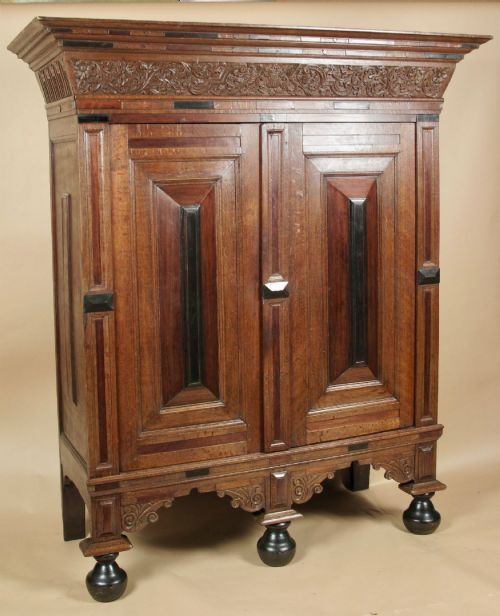
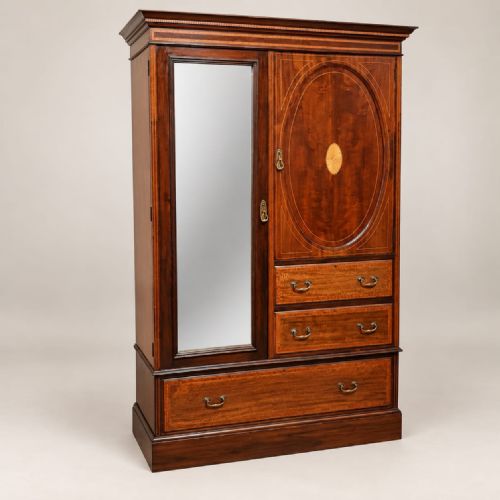
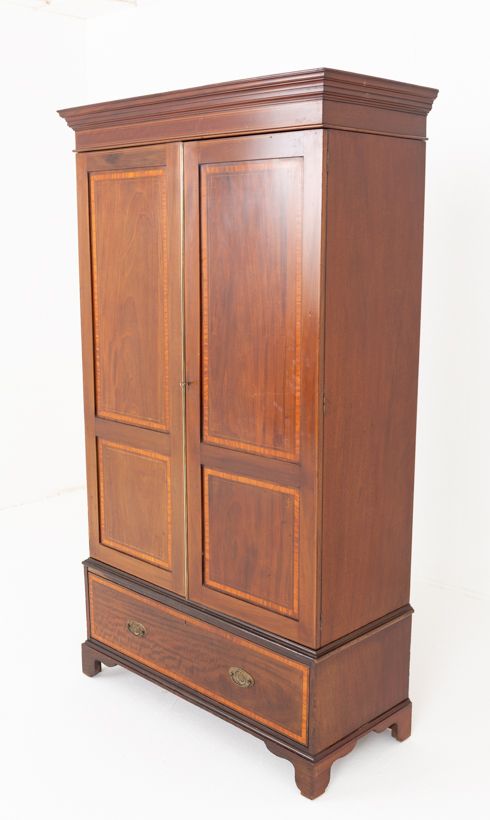
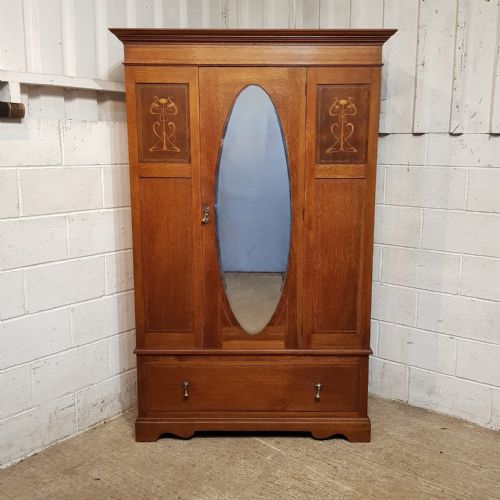
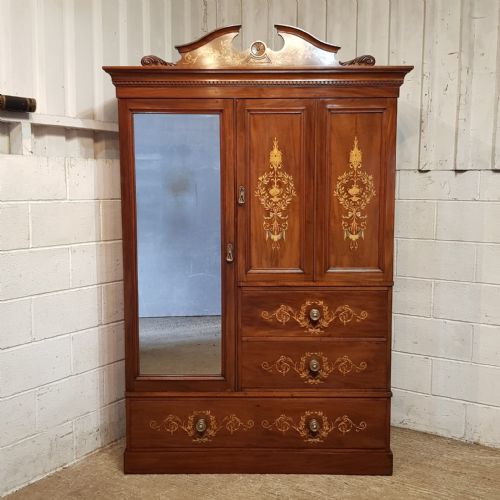
An inlaid wardrobe satisfies the search for large bedroom storage fitted with contrasting wood decoration or marquetry. These pieces originate across the eighteenth, nineteenth, and early twentieth centuries, spanning Georgian, Victorian, Edwardian, and Arts and Crafts periods.
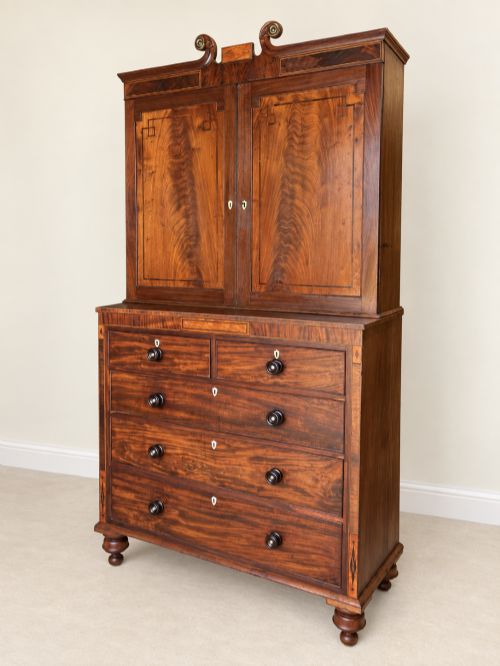
The selection includes tall linen presses, compactums, and triple wardrobes alongside corner cabinets and combination pieces. Mahogany and satinwood predominate, set with boxwood and brass details.
Georgian and Edwardian iterations appear most frequently on this page, offering panelled doors and hanging space suited to period and traditional interiors.
Materials and construction methods
Cabinet makers utilised solid and veneered timbers including mahogany, walnut, oak, and satinwood, applying contrasting stringing and geometric boxwood inlay into the primary surface. Marquetry panels display detailed floral motifs formed from various dyed and natural woods.
Frames incorporate brass hardware, glass mirror plates, and occasional hand-painted decorative panels to finish large doors and breakfront cornices.
Inlaid Wardrobe Retail Price Guide 2026
Typical asking prices for inlaid wardrobe among the pieces listed under this phrase on Sellingantiques today, from the lower quarter to the upper quarter. They describe what is for sale here now, not the wider market.
Listings feature satinwood, mahogany, oak, and walnut across Georgian, Victorian, and Edwardian periods.
Distinctions in construction and finish
Quality rests upon the precision of the timber selection and the integration of the inlay work. Flame mahogany veneers and finely cut satinwood banding show greater hand skill than simpler surfaces.
Internal configuration also separates examples, with compactums offering fitted linen slides, drawers, and hanging sections arranged with deliberate symmetry.
Edwards and Roberts·Shapland and Petter·Druce and Co·Wylie Lochhead·Waring and Gillow
The Inlaid Wardrobe Glossary
- Linen press
- A tall cabinet featuring upper sliding trays for folded textiles above a chest of lower drawers. This form evolved into the modern wardrobe as hanging garments grew in popularity.
- Compactum
- A multi-compartment wardrobe combining hanging space, drawers, shelves, and linen slides within a single unified carcass. These fitted interiors maximise storage capacity.
- Marquetry
- The decorative technique of arranging thin veneers of different coloured woods into pictorial or floral patterns. Craftsmen apply these veneers directly to the structural carcase.
- Crossbanded
- A border of veneer laid around the perimeter of a panel with the wood grain running perpendicular to the centre. This frames the main timber surface.
- Cornice
- The moulded architectural projection crowning the top of the wardrobe. It finishes the upper edge and conceals joints.
Inlaid Wardrobe: Frequently Asked Questions
What is a compactum wardrobe?
A compactum is a multi-purpose wardrobe designed to hold various types of clothing in a single unit. It typically combines hanging space, sliding linen shelves, and drawers.
These pieces offer efficient internal organisation for bedrooms lacking standalone chest of drawers furniture.
What woods were used for inlay?
Cabinet makers used contrasting lighter timbers such as boxwood and satinwood to create decorative lines, borders, and motifs against darker backgrounds like mahogany and walnut.
Marquetry panels also incorporated various dyed and natural hardwoods to form complex floral and geometric pictures.
How do I fit a large wardrobe into a modern room?
Measure your ceiling height and floor space carefully before selecting, as many period wardrobes are tall and built in a single heavy carcass. Consider triple wardrobes and compactums that dismantle into sections for transport.
Position the piece away from direct heat sources to protect the polished wood surfaces and timber veneers.