






Inlaid Walnut Coffer
An inlaid walnut coffer is a robust storage piece patterned in timber and bone, offering both deep historical utility and rich decorative presence for the home.
Inlaid Walnut Coffer
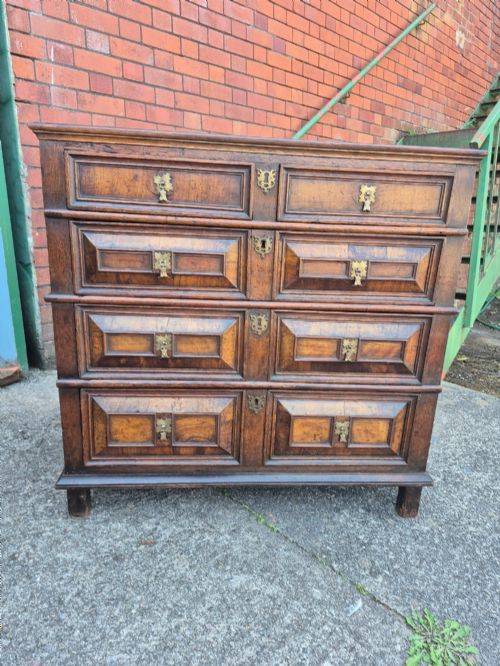
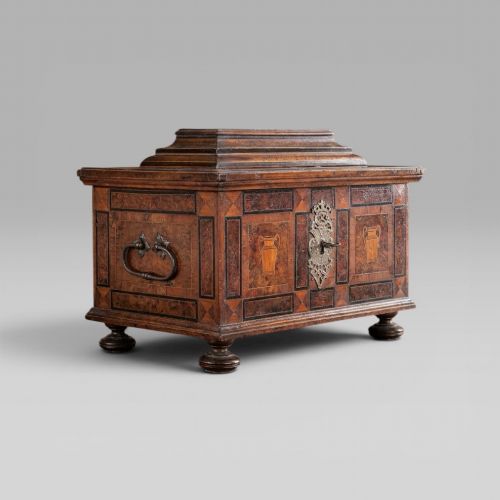
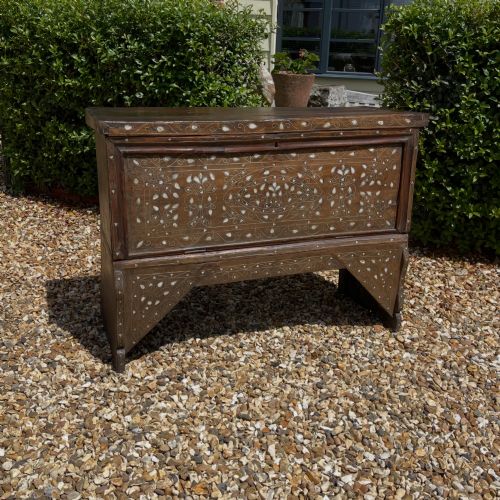
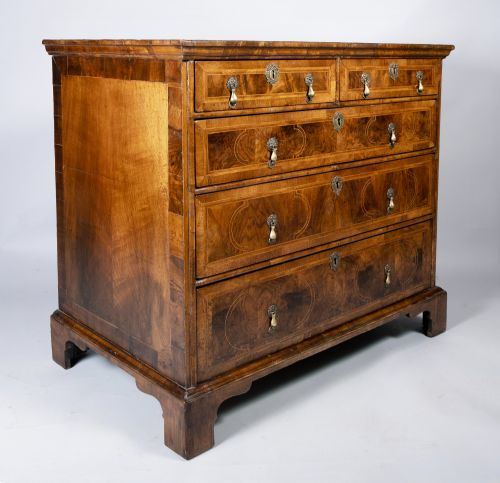
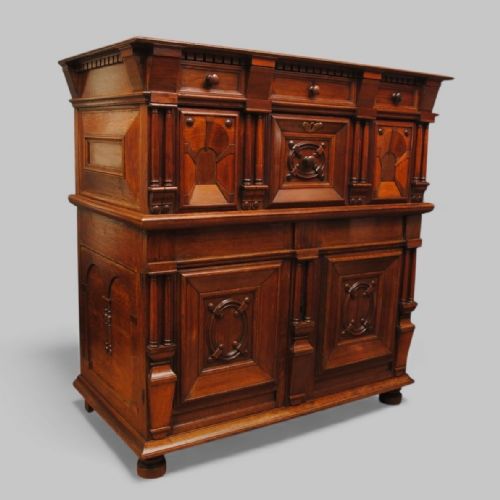
An inlaid walnut coffer combines structural timberwork with decorative surface detailing, frequently seen across continental and British examples from the seventeenth century onward. Buyers seeking an authentic inlaid walnut coffer will encounter domestic trunks, heavy caskets, and geometric chests spanning various European traditions.
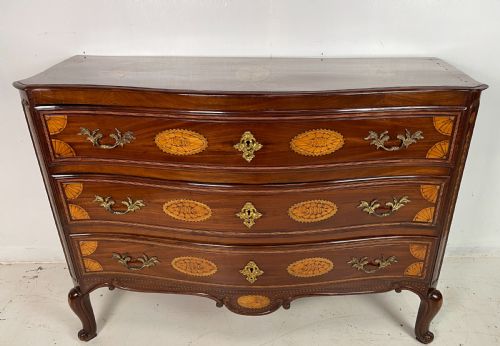
Makers utilised rich burr walnut, fruitwood, and oak foundations, ornamenting the surfaces with intricate marquetry, brass mounts, and bone inlay. These pieces vary from austere seventeenth-century geometric designs to profusely decorated nineteenth-century revival and Ottoman interpretations.
While the terminology shifts across eras toward chests of drawers or cabinets, the core identity of the coffer remains a secure lidded receptacle. Surviving examples demonstrate how cabinetmakers adapted the form for domestic storage, travel, and display over four centuries.
Assessing quality and execution
Quality rests in the precision of the timber selection and the crispness of the marquetry cutting. Superior examples display tightly matched burr veneers and harmonious colour transitions across the contrasting woods.
The integrity of the internal construction, including secondary timbers and original hardware like locks and hinges, defines the standing of a piece. Finer items retain their delicate bone or metal stringing intact, with minimal replacement to the decorative surface.
Inlaid Walnut Coffer Retail Price Guide 2026
Typical asking prices for inlaid walnut coffer among the pieces listed under this phrase on Sellingantiques today, from the lower quarter to the upper quarter. They describe what is for sale here now, not the wider market.
Several items conceal secret drawers behind sliding panels, designed to guard small treasures from curious household guests.
Whytock & Reid
The Inlaid Walnut Coffer Glossary
- Marquetry
- The art of applying pieces of veneer to a structure to form decorative patterns. Craftsmen used various tinted woods and bone to create elaborate pictures or geometric designs.
- Burr walnut
- Wood taken from a growth on a walnut tree, yielding swirling grain patterns. This highly prized material provides rich texture on decorative panels.
- Casket
- A small decorative box or chest used for storing valuables or documents. These portable receptacles often feature complex internal compartments and fine metal mounts.
- Stringing
- Thin inlay lines of contrasting wood or bone set into channels in the primary timber. This technique outlines panels and drawers to add definition.
- Coffer
- A large wooden chest traditionally used for storing garments, valuables, or dry goods. Early versions feature heavy hinged lids and robust framing.
Inlaid Walnut Coffer: Frequently Asked Questions
How are these coffers dated?
Dating relies on observing construction methods, timber choices, and stylistic cues such as geometric moulding or marquetry motifs. Seventeenth-century pieces typically show hand-split secondary woods and simpler mortise and tenon joinery.
Later Victorian or continental revival pieces often employ machine-sawn veneers and different locking mechanisms. Comparing the hardware and internal linings helps confirm the manufacturing era.
Where were these pieces made?
Surviving examples originate from workshops across Britain, the Netherlands, Germany, Italy, and the Ottoman Empire. Each region developed distinct preferences for specific fruitwoods, bone inlay styles, and carcass proportions.
Continental makers often favoured profuse floral marquetry, whereas British makers frequently concentrated on geometric walnut veneers or plain oak framing.
How should I clean the wood?
Maintenance requires gentle dusting with a dry, soft cloth to prevent abrasive particles from accumulating on the veneer. Avoid modern chemical polishes that can degrade historical finishes and soften the aged surface.
Applying microcrystalline wax periodically helps nourish dry walnut and protects the delicate inlay work from atmospheric moisture changes.
Can I use a coffer daily?
These pieces function well for storing blankets, linens, or keepsakes in modern living spaces. Placing them away from direct heat sources and strong sunlight prevents the walnut veneer from drying and splitting.
Lifting heavy items out carefully ensures the antique hinges and internal partitions remain stable under normal household use.