




Inlaid Walnut Bedroom Chest
An inlaid walnut bedroom chest brings rich grain and intricate bandings to domestic spaces, offering both generous storage and distinct period character.
Inlaid Walnut Bedroom Chest
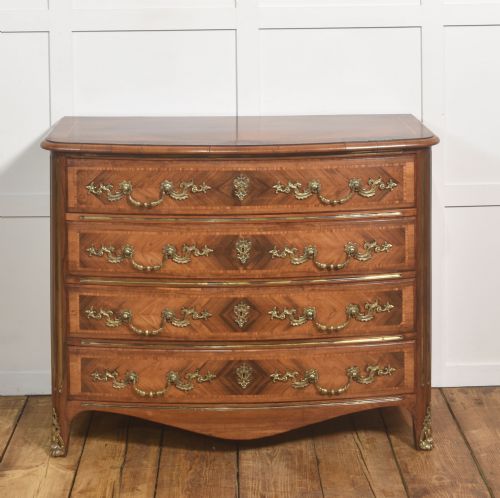
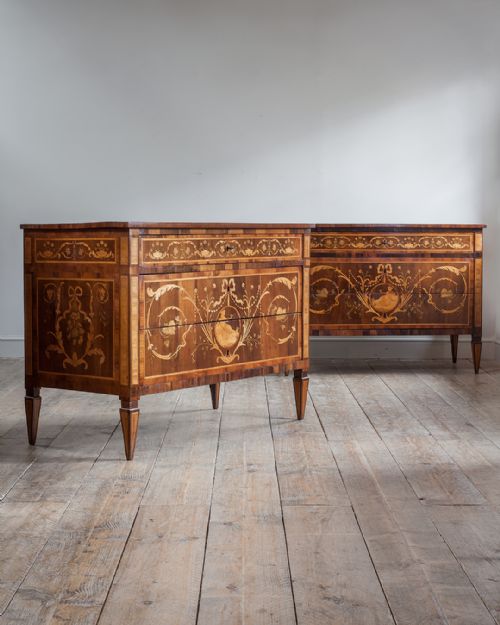
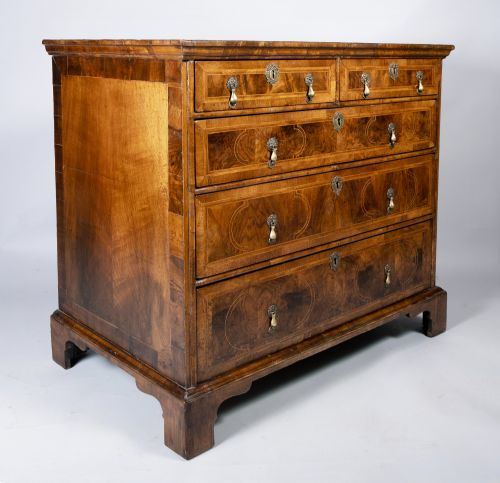
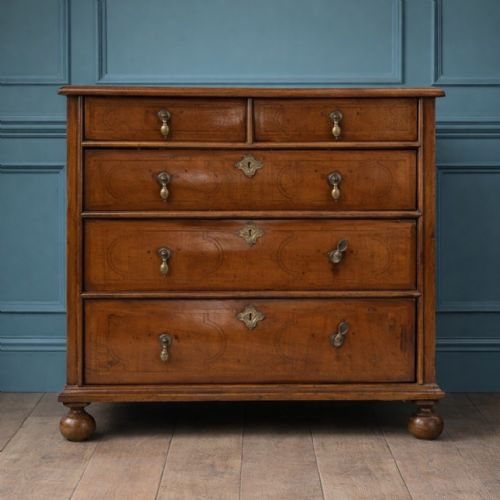
An inlaid walnut bedroom chest encompasses storage forms spanning the seventeenth century through to the twentieth century, with particular representation from eighteenth-century Georgian and continental workshops. Buyers encounter regional variations ranging from English walnut chests of drawers to French commodes and Italian examples.
The pieces on this page comprise chests of drawers, dressing tables, wardrobes, linen presses, and complete bedroom suites. Marquetry, satinwood banding, and fruitwood details frequently decorate the primary walnut carcases.
Early periods such as Queen Anne and William and Mary appear alongside Victorian and later interpretations. Continental production supplies significant numbers of marble-topped commodes alongside domestic English forms.
Factors influencing quality
Quality rests upon the selection and retention of the timber veneers, where richly figured burr walnut or balanced book-matched grain commands greater visual presence. The precision and complexity of the marquetry or stringing work also differentiate standard pieces from finer productions.
The integrity of the original construction, including the survival of period brass hardware and stable carcase timbers, dictates the standard of each piece. Superior examples maintain crisp inlay lines and smooth drawer operation without excessive timber replacement.
Listings span from the seventeenth century through to the 1930s, featuring walnut, brass, marble, fruitwood, kingwood, oak, satinwood, and burr walnut.
Holland and Sons
The Inlaid Walnut Bedroom Chest Glossary
- Marquetry
- Decorative veneer work forming pictorial or geometric patterns using various coloured woods. This technique adorns many continental commodes and drawer fronts.
- Commode
- A low chest of drawers or cabinet, often originating from French or Italian workshops. These pieces frequently feature marble tops and shaped serpentine fronts.
- Burl walnut
- Timber taken from the root growth of a walnut tree, yielding swirling grain patterns. It provides highly decorative surfaces for premium cabinet fronts.
- Stringing
- Thin lines of contrasting timber inlaid into the surface of furniture to create borders and panels. English Georgian pieces often utilise this method.
- Semainiere
- A tall seven-drawer chest designed to hold a week of garments. This French form appears in nineteenth-century walnut configurations.
Inlaid Walnut Bedroom Chest: Frequently Asked Questions
How do I date an inlaid walnut chest?
Dating relies upon examining construction methods, timber choice, and hardware styles. Early pieces from the seventeenth and eighteenth centuries often display hand-cut dovetails and native walnut framing.
Later Victorian and continental iterations incorporate machine assistance, different secondary woods, and distinct decorative motifs such as heavier marble slabs or elaborate marquetry.
What is the difference between an English chest and a continental commode?
English chests of drawers typically present rectilinear proportions with crossbanding and brass drop handles. They focus primarily on timber figure and restrained stringing lines.
Continental commodes, particularly French and Italian examples, frequently feature serpentine or bombe shapes, elaborate marquetry scenes, and marble tops. They serve a more decorative function within the bedroom.
How should I care for walnut veneer?
Walnut veneer requires stable environmental conditions away from direct sunlight and strong heat sources. Excessive dryness can cause timber shrinkage and lifting of the delicate surface layers.
Regular dusting with a dry cloth and occasional application of appropriate wax maintain the finish. Avoid silicone-based polishes which damage historic polished surfaces.
Are marble tops original to these chests?
Many continental commodes and later nineteenth-century pieces were designed specifically with fitted marble tops to provide durable surfaces. These stone slabs form an integral part of the piece's construction and weight.
English walnut chests rarely feature marble, relying instead on solid walnut or veneered timber tops surrounded by moulded framing.