

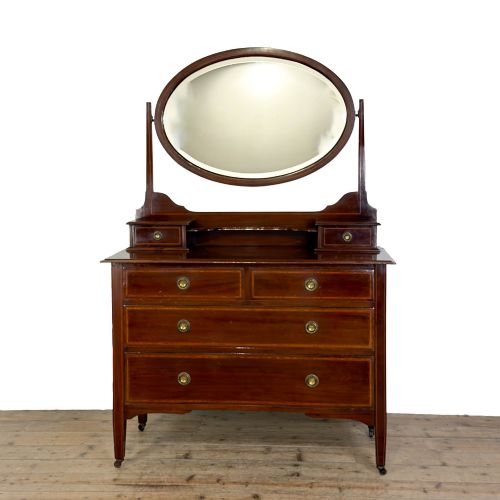
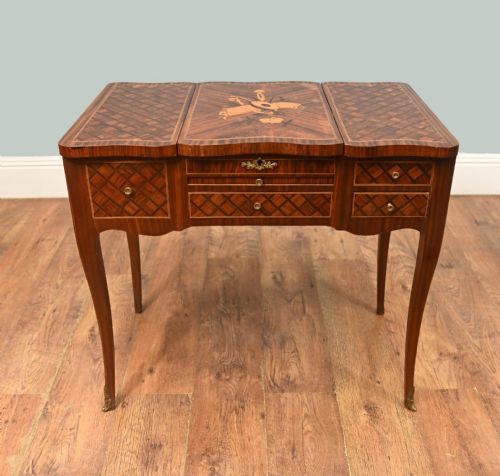


Inlaid Vanity Desk
When you want an inlaid vanity desk, you are choosing a piece that combines a writing surface with a dressing station.
Inlaid Vanity Desk
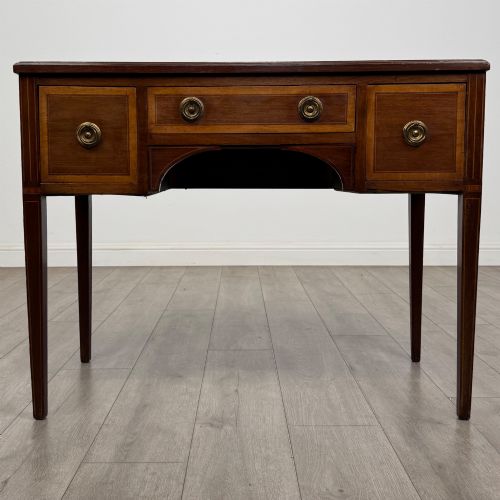
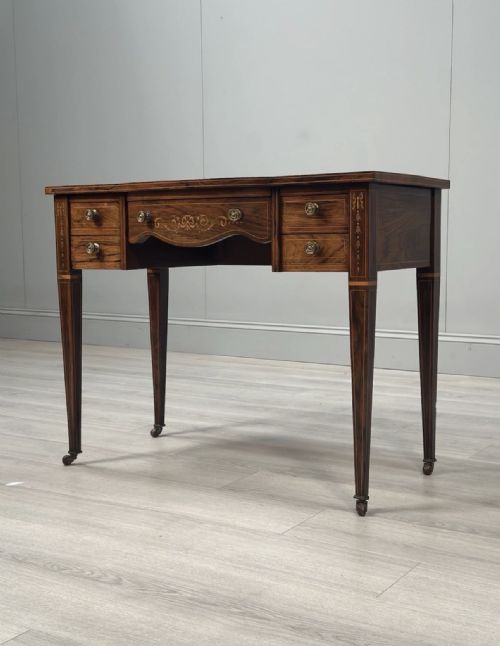
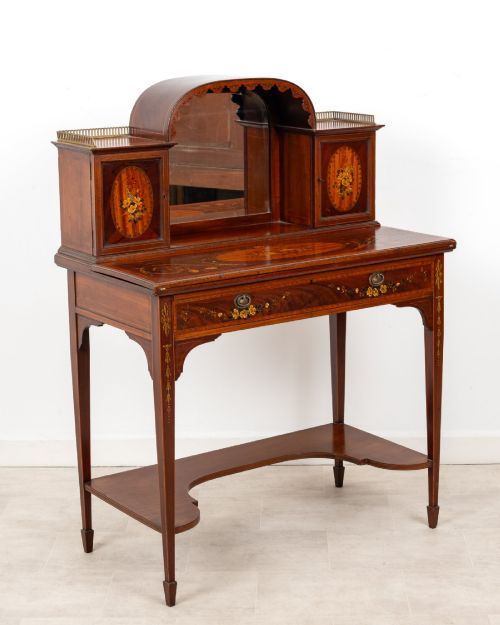
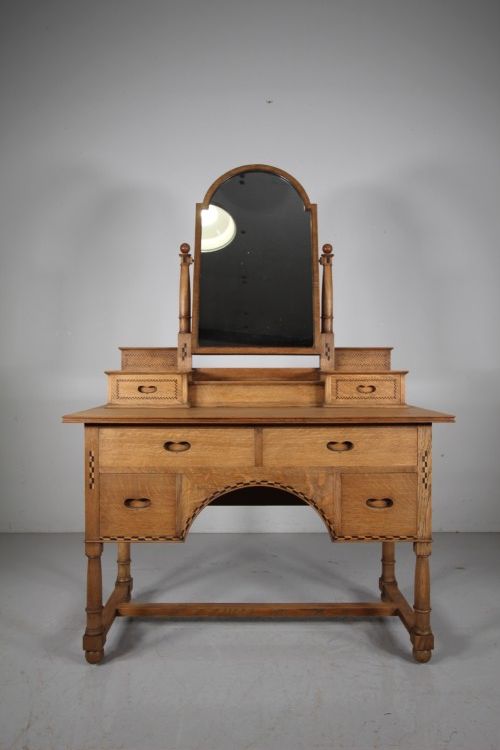
An inlaid vanity desk serves as a dual-purpose surface for writing and personal grooming, often taking the form of a dressing table, a writing desk, or a bonheur du jour. When you examine this selection, you encounter pieces originating from the Georgian, Victorian, and Edwardian periods, alongside revival styles.
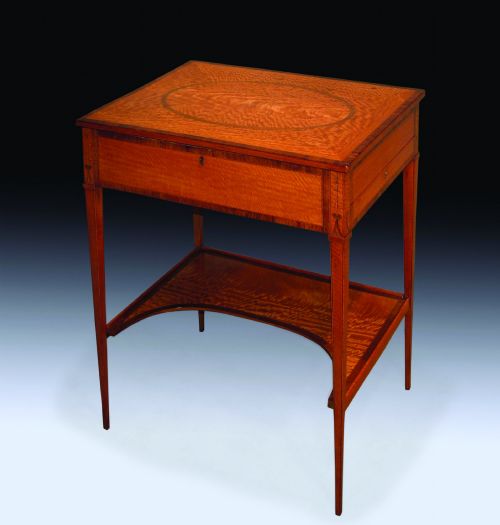
The most common examples you meet on this page are Edwardian and Victorian creations constructed from mahogany or satinwood, featuring decorative inlay and fitted mirrors or compartments. These forms bridge the gap between practical study furniture and refined dressing room appointments.
Makers and workshops of the nineteenth and early twentieth centuries produced these items in various regional interpretations, from Scottish tables to London cabinet makers' outputs. The range spans simple dressing tables with inlaid borders to elaborate kneehole desks and kidney-shaped writing tables.
How they were made
Cabinet makers utilised solid timbers and veneers of mahogany, satinwood, rosewood, and walnut, building structural carcases that supported delicate decorative surfaces. They integrated contrasting lighter woods such as boxwood to create geometric stringing and floral motifs across the drawer fronts and tabletops.
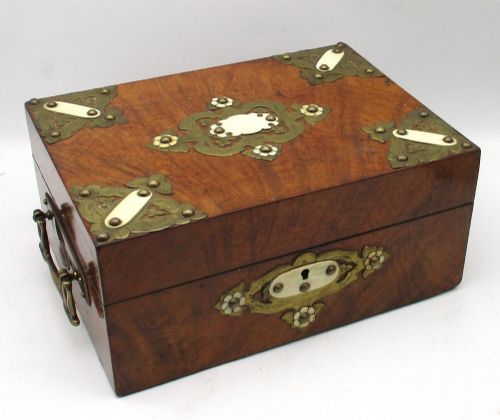
Specialised techniques like marquetry allowed artisans to form pictorial scenes using varied wood veneers, while brass hardware provided functional handles and key escutcheons. Interior elements often incorporated leather writing inserts, glass components, and secret compartments operated by hidden mechanisms.
Listings feature mahogany, satinwood, rosewood, and walnut timbers alongside brass hardware and leather writing inserts.
What varies in quality
The distinction between standard examples and the finest items rests upon the precision of the cabinet work and the complexity of the marquetry. Superior pieces exhibit seamless integration of contrasting woods and retain documented maker attribution or stamped signatures on the drawer framing.
Heavier construction using burr walnut or figured mahogany, paired with original hardware and fitted interior compartments, marks the upper tier of the range. Simpler variations rely on painted decoration rather than intricate wood inlay to achieve their surface pattern.
Edwards & Roberts·Heals·Wright & Hunter of Belfast·Gillows
The Inlaid Vanity Desk Glossary
- Bonheur du Jour
- A small ladies writing desk featuring a superstructure of small drawers, shelves, or a cabinet above the writing surface. This French form became particularly popular during revival periods.
- Marquetry
- The art of forming decorative patterns and pictures on wooden surfaces by applying veneers of different timbers, metals, or shells. It differs from simple inlay by covering the entire background.
- Satinwood
- A durable, lustrous timber imported from the West Indies and Ceylon, known for its pale golden yellow colour and natural sheen. It served as a primary ground for late eighteenth-century and revival pieces.
- Stringing
- A narrow strip of contrasting wood inlaid into the surface of a furniture piece to create thin decorative borders and outlines. Boxwood is frequently used for this purpose against dark mahogany.
- Kneehole
- A recessed space beneath the centre of a desk or dressing table designed to accommodate the user's legs, usually flanked by pedestals of small drawers. This arrangement provides stable storage without blocking the seating position.
Inlaid Vanity Desk: Frequently Asked Questions
What is a bonheur du jour?
A bonheur du jour is a small ladies writing desk featuring a raised superstructure of drawers and pigeonholes above the main writing surface.
Cabinet makers designed these pieces for light correspondence and cosmetic storage in private sitting rooms.
How do I identify an Edwardian desk?
Edwardian desks often display lighter satinwood or mahogany construction, delicate boxwood stringing, and Sheraton Revival decorative motifs.
They date from the early twentieth century and generally feature simpler proportions than heavier Victorian predecessors.
Where were these desks used?
Original owners placed these tables in private dressing rooms, boudoirs, and drawing rooms for morning correspondence and grooming.
Their compact footprints allowed them to sit against walls or near windows where natural light favoured writing.
What is the difference between inlay and marquetry?
Inlay involves setting pieces of wood into recessed cavities carved into a solid timber ground to form linear patterns.
Marquetry covers the entire surface with a veneer mosaic composed of multiple timber species assembled to create pictorial designs.