

Inlaid Tray
An inlaid tray brings centuries of meticulous wood and metal craft to the table, offering a functional surface that doubles as decorative art.
Inlaid Tray
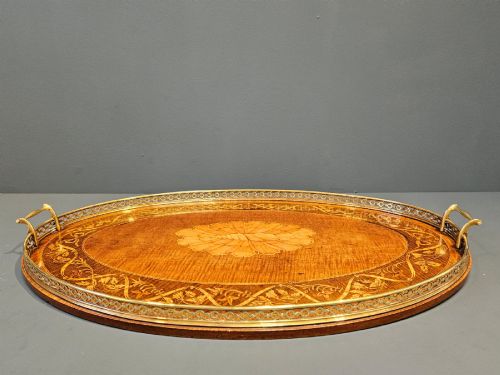
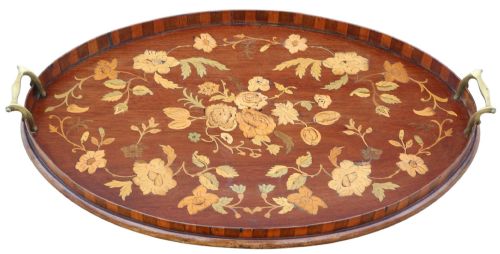
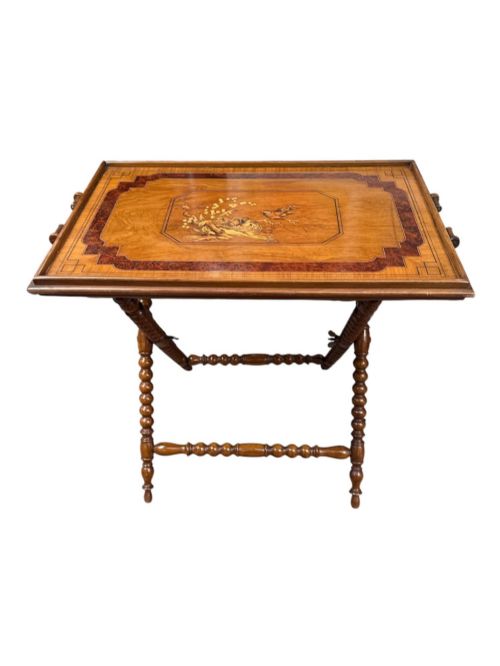
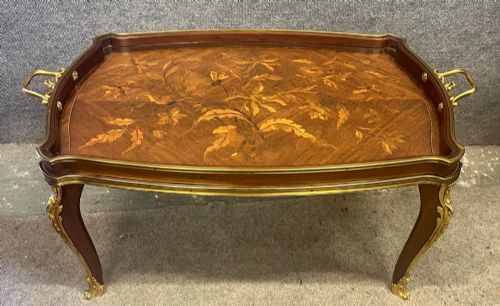
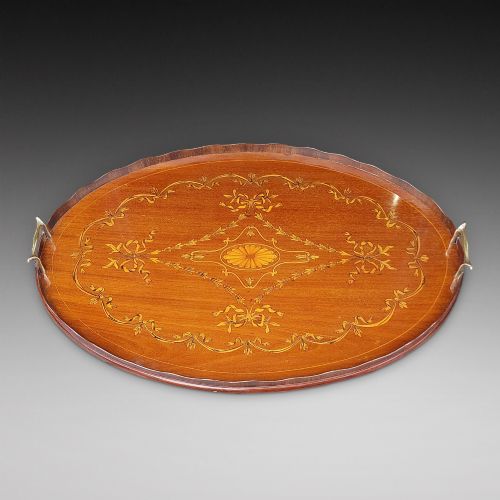
An inlaid tray encompasses serving pieces, butler trays, and decorative platters spanning the Georgian, Victorian, and Edwardian eras. These items serve daily domestic functions while displaying intricate surface ornamentation.
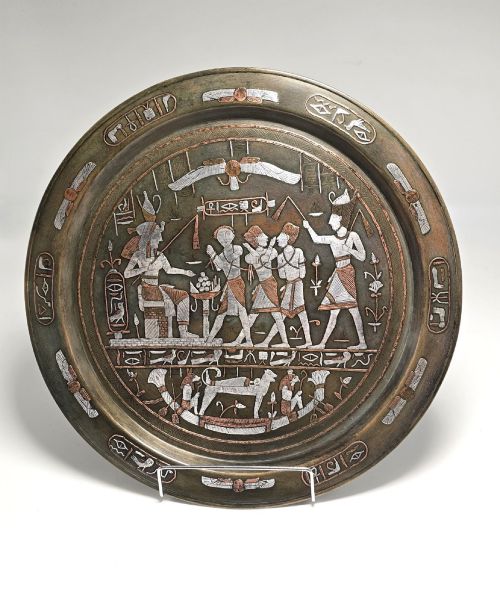
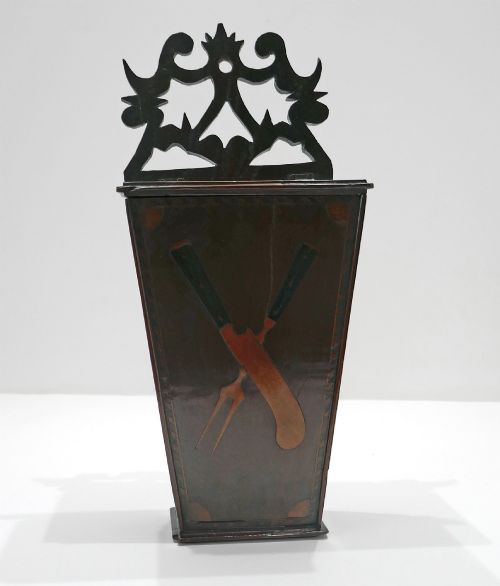
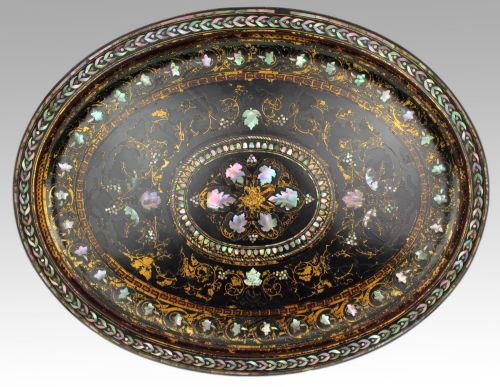
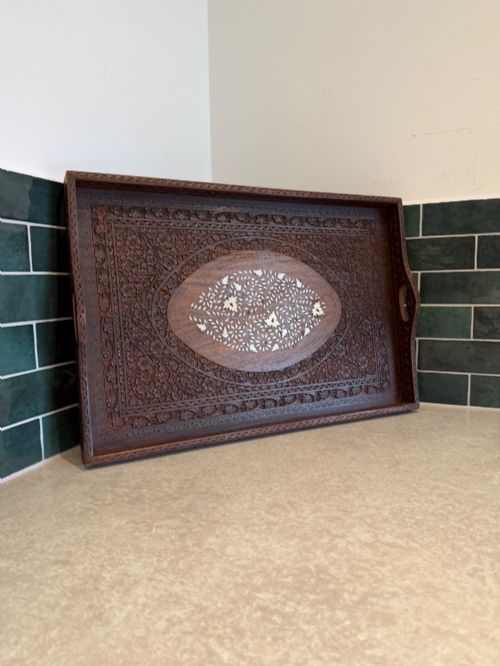
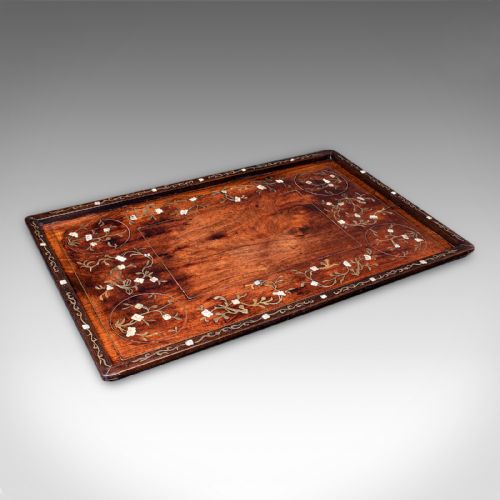
The selections on this page feature mahogany, satinwood, and rosewood foundations embellished with contrasting timbers, brass, or mother-of-pearl. Makers utilised diverse regional traditions, from English Sheraton Revival designs to Anglo-Indian and Middle Eastern metalwork.
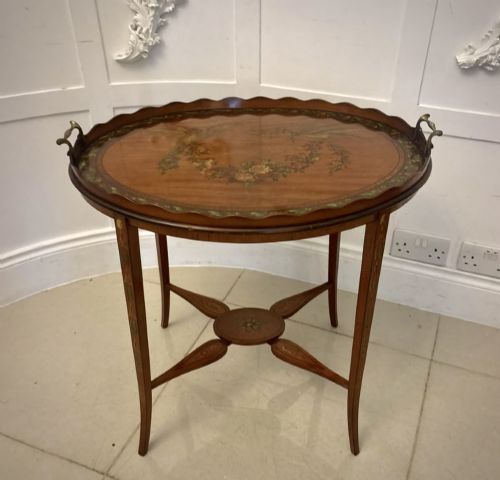
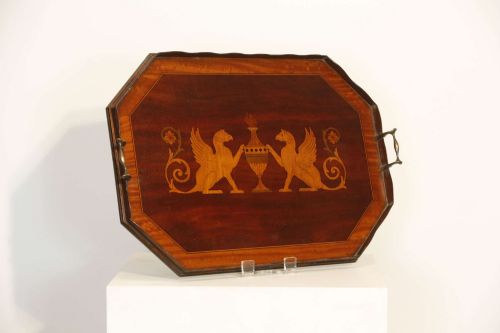
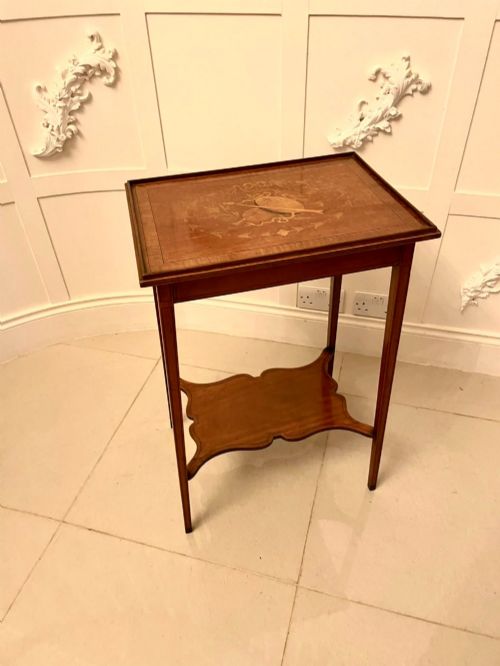
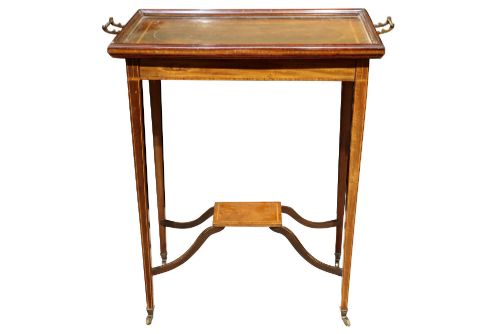
Oval and kidney shapes dominate the domestic tea and serving forms, alongside octagonal plates and occasional table adaptations. Buyers encounter both utilitarian afternoon tea pieces and highly decorative display items.
Materials and Technique
Craftsmen built the primary structure using dense hardwoods such as mahogany, walnut, or teak, often forming raised galleries to secure contents. Marquetry and parquetry techniques required slicing thin veneers of satinwood, boxwood, and ebony to form geometric or pictorial motifs.
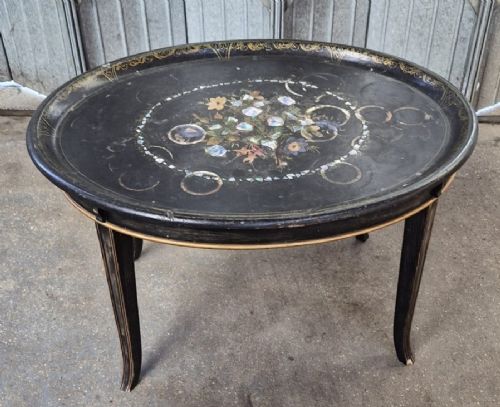
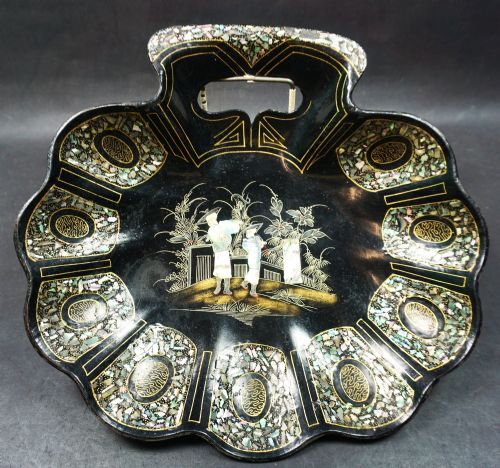
Metal inlay involved incising channels into copper, brass, or tortoiseshell grounds to embed contrasting wires and plates, a method prominent in Cairo ware and Boulle work. Shell and mother-of-pearl elements were hand-carved and set flush into wood or lacquer surfaces.
Inlaid Tray Retail Price Guide 2026
Typical asking prices for inlaid tray among the pieces listed under this phrase on Sellingantiques today, from the lower quarter to the upper quarter. They describe what is for sale here now, not the wider market.
The selection includes pieces spanning the Georgian, Victorian, and Edwardian periods, constructed from mahogany, satinwood, brass, and tortoiseshell.
Craftsmanship and Execution
The distinction between ordinary and exceptional pieces lies in the precision of the veneer work and the crispness of the individual botanical or geometric motifs. Finer examples display seamless integration where different timbers meet, with no visible gaps or excessive filler.
The integrity of the structural frame, particularly at the joints of raised edges and handles, dictates the durability of serving pieces. Superior items maintain smooth, even patination across both the inlaid surface and the underlying timber base.
Edwards and Roberts·Waring and Gillow
The Inlaid Tray Glossary
- Marquetry
- The art of forming decorative patterns by fitting together thin veneers of wood, shell, or ivory onto a structural base. This technique creates pictorial scenes or scrolling foliage across tabletops and serving surfaces.
- Parquetry
- A geometric mosaic of wood pieces used for floors and furniture decoration, creating repeating patterns like cubes or chequers. It relies on precise angles and contrasting timber tones.
- Satinwood
- A lustrous, yellow-brown timber imported from tropical regions, prized by cabinetmakers for its reflective grain. It frequently forms the contrasting background or primary field in Sheraton Revival pieces.
- Gallery
- A raised ornamental border surrounding the edge of a tray, table, or desk stand to prevent objects from sliding off. These borders are pierced from solid wood or assembled from brass and silver plate.
- Boulle work
- A style of ornate marquetry consisting of tortoiseshell and brass inlaid in contrasting positive and negative patterns. Named after a French royal cabinetmaker, it appears on nineteenth-century desk accessories.
Inlaid Tray: Frequently Asked Questions
How were serving trays used historically?
Serving trays functioned primarily during afternoon tea and formal dining to transport porcelain teapots, cups, and silver service items between rooms. Servants also utilised them to clear tables and present correspondence.
Over time, many of these pieces transitioned into permanent display roles on side tables or stands, holding decorative objects rather than serving food.
How do I care for an antique wooden tray?
Keep wooden pieces away from direct heat sources and strong sunlight to prevent the timber and delicate veneers from drying out or splitting. Maintaining a stable room humidity preserves the historic glue and backing materials.
Apply a microcrystalline wax periodically to nourish the polished surface and protect the wood against minor moisture marks. Avoid using abrasive household cleaners or soaking the piece in water.
What is the difference between Victorian and Edwardian styles?
Victorian designs tend to feature heavier timbers, darker finishes, and dense ornamentation that reflects the industrial ambition and global trade of the nineteenth century. Pieces from this period often incorporate bold brass galleries or extensive marquetry.
Edwardian pieces generally lean towards lighter aesthetics, favouring bright satinwood foundations, delicate floral swags, and graceful kidney shapes inspired by eighteenth-century neoclassical revivals.
Can I use an antique tray for daily serving?
Many antique trays retain robust structural integrity, but older veneers and delicate shell or metal inlays require careful handling to avoid accidental impact damage. Condensation from cold glasses or heat from heavy teapots can compromise historic French polish.
For practical daily entertaining, many collectors place a modern glass protector inside the gallery or restrict the tray to decorative display and dry use.