



Inlaid Timber Box
An inlaid timber box brings together fine cabinet-making and decorative marquetry, offering a handsome receptacle for letters, tea, or trinkets that anchors a room with period charm.
Inlaid Timber Box
An inlaid timber box represents a broad tradition of small decorative container work, spanning tea caddies, snuff boxes, writing desks, and blanket chests. These pieces emerge across the eighteenth, nineteenth, and early twentieth centuries in various regional and formal designs.
The most common examples met here belong to the Georgian and Victorian periods, with tea caddies and small desktop or jewellery boxes forming the bulk of the selection. Woods such as mahogany, walnut, rosewood, and satinwood dominate the domestic output alongside specialised forms like Tunbridge Ware.
Makers utilised distinct regional timbers and decorative motifs, from parquetry patterns to shell inlays and specimen wood mosaics. Each vessel served a specific household function, preserving precious dry goods, writing equipment, or personal keepsakes.
How they were made
Cabinet-makers constructed the carcase from solid timbers or applied veneers such as mahogany, rosewood, amboyna, and coromandel over a secondary wood base. Interiors often featured fitted compartments, foil linings, or velvet and silk inserts tailored to the specific contents.
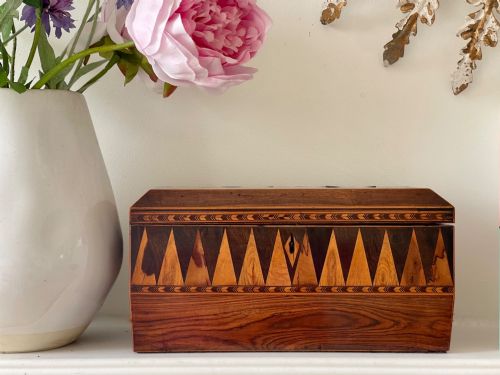
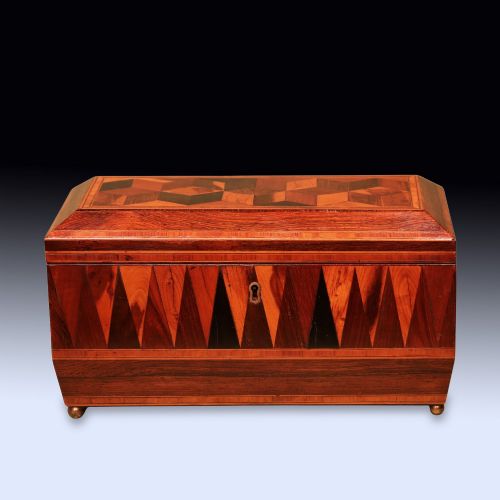
Decoration relied on contrasting woods like boxwood, satinwood, and various fruitwoods cut into geometric parquetry, delicate stringing, or pictorial marquetry. Specialists also employed bone, brass, and pearl elements to accent the exterior surfaces.
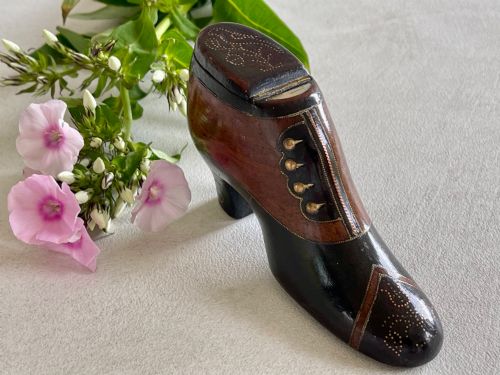
Some nineteenth-century snuff boxes were carved into the shape of shoes complete with tiny double-opening lids.
What varies in quality
The standard of an inlaid timber box depends heavily on the precision of the veneer work and the complexity of the contrasting wood patterns. Finely executed pictorial marquetry or intricate Tunbridge Ware mosaic work signal superior workshop output compared to simpler linear stringing.
The choice of primary and secondary timbers also dictates grade, with dense exotic woods like coromandel and partridge wood sitting alongside domestic walnut and mahogany. Original interior fittings, working locks with keys, and uncompromised structural joinery further elevate the piece.
Henry Hollamby
The Inlaid Timber Box Glossary
- Tunbridge Ware
- A form of woodworking peculiar to Kent featuring mosaic patterns assembled from thousands of tiny tinted wood blocks. This meticulous technique created detailed pictorial designs of flora, fauna, and geometric bands on box lids.
- Marquetry
- The art of applying pieces of veneer to a structural structure to form decorative patterns or pictures. Craftsmen matched grains and hues of various woods to achieve tonal depth without relying on paint.
- Parquetry
- Geometric mosaic woodwork arranged in repeating patterns such as cubes, triangles, or chequers. It creates a striking visual texture across flat surfaces like tea caddy lids.
- Caddy
- A small container originally designed for storing loose tea leaves securely. Georgian and Victorian examples frequently featured internal compartments and locking lids to protect expensive imports.
Inlaid Timber Box: Frequently Asked Questions
What were tea caddies used for?
Tea caddies held valuable loose tea leaves in locked compartments to protect them from dampness and pilfering by household staff.
Because tea was an expensive commodity during the Georgian and Victorian eras, these boxes were kept under the direct supervision of the head of the house.
How do I care for antique wood boxes?
Keep wooden boxes away from direct sunlight and sudden temperature shifts to prevent the veneers from lifting or splitting.
Apply a microcrystalline wax sparingly to nourish the timber surface without building up excessive residue over the marquetry.
What is Tunbridge Ware?
Tunbridge Ware refers to wooden items decorated with mosaics made from tiny blocks of naturally coloured timbers. These minute pieces formed intricate pictures of butterflies, flowers, or geometric grids.
Originating in Kent, this technique reached its height during the nineteenth century on small domestic boxes and sewing caskets.
How can I tell a Georgian box from a Victorian one?
Georgian boxes tend to feature restrained classical proportions with simpler stringing, brass bracket feet, and rich mahogany or satinwood surfaces. Their interior compartments were often minimal and functional.
Victorian pieces frequently display heavier ornamentation, exotic veneers like coromandel and amboyna, and more complex internal mechanisms for stationery or jewellery storage.