





Inlaid Tabletop Cabinet
An inlaid tabletop cabinet brings centuries of meticulous woodwork to a desk or dresser, offering compact storage for documents, jewellery and precious specimens.
Inlaid Tabletop Cabinet
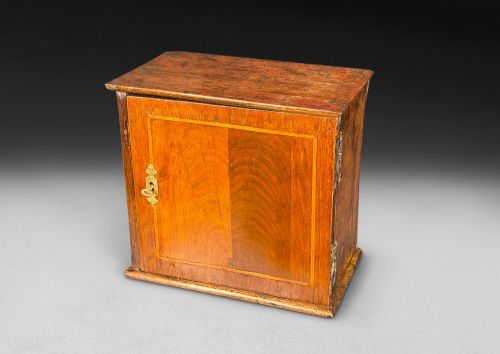
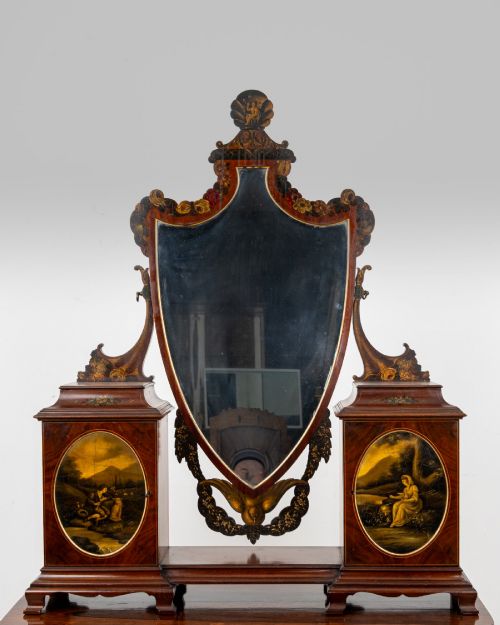
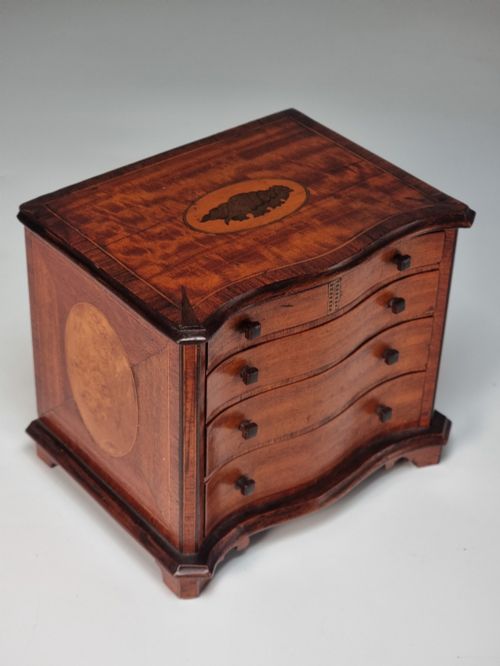
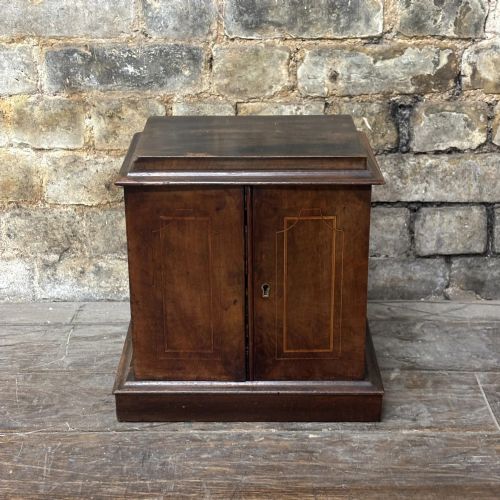
An inlaid tabletop cabinet combines fine decorative craftsmanship with small-scale utility, designed to sit upon larger furniture rather than stand on the floor. Pieces meeting this description span several centuries, with examples emerging from periods such as the Georgian era, the Victorian age and the Edwardian years.
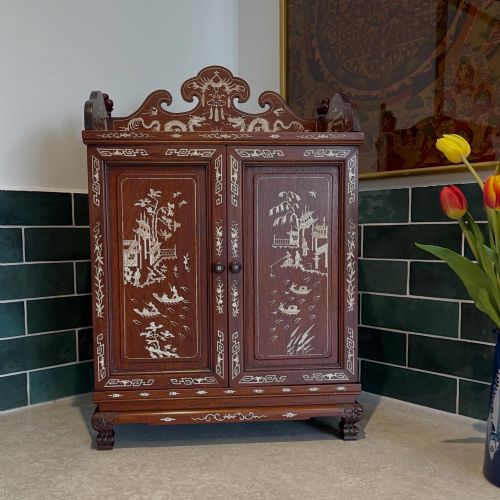
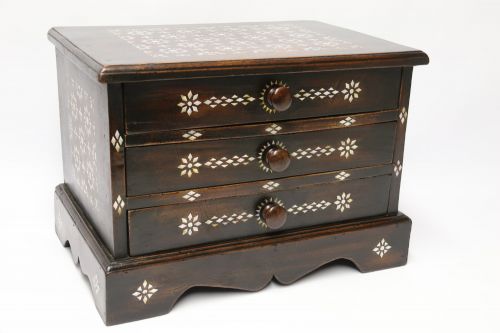
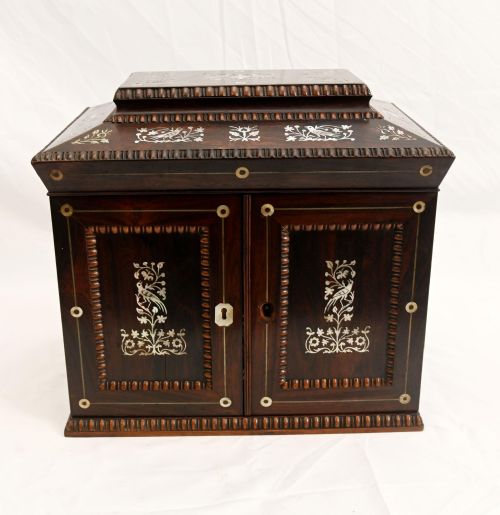
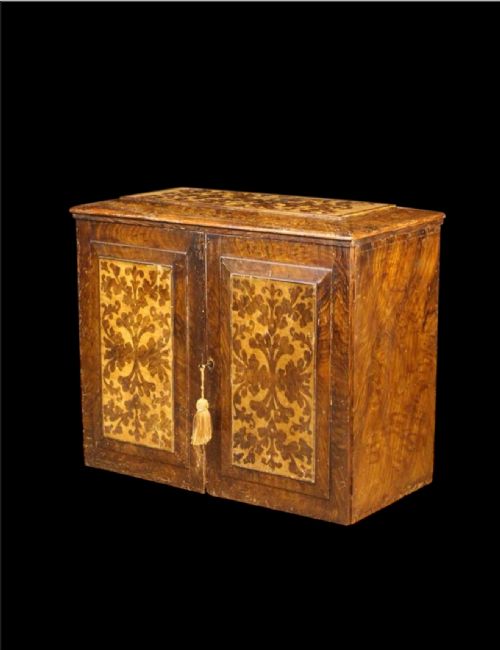
The assortment encompasses varied forms ranging from miniature chests of drawers and stationery boxes to collector chests and jewellery chests. Mahogany, walnut and rosewood form the structural foundation of many examples, accented by marquetry, boxwood, satinwood and mother of pearl.
Origin and stylistic influence extend across British workshops, Anglo-Indian craft, Ottoman design and continental traditions. These works served domestic and specialised roles, functioning as repositories for personal correspondence, trinkets or natural history specimens.
Materials and construction methods
Cabinetmakers utilised dense hardwoods like mahogany, walnut and rosewood to construct the carcass, ensuring stability for delicate miniature forms. Surface decoration relied on contrasting timbers such as satinwood and boxwood, alongside shell inlays like mother of pearl.
Marquetry and parquetry techniques required precise cutting of veneer to create intricate geometric or pictorial patterns across doors, lids and drawer fronts. Brass fittings, including escutcheons, handles and hinges, provided structural reinforcement and visual contrast against the dark wood.
Inlaid Tabletop Cabinet Retail Price Guide 2026
Typical asking prices for inlaid tabletop cabinet among the pieces listed under this phrase on Sellingantiques today, from the lower quarter to the upper quarter. They describe what is for sale here now, not the wider market.
One cabinet from the Edwardian era incorporates a revolving bookcase, proving that even desk accessories needed to spin.
Assessing quality and execution
Quality rests upon the precision of the woodwork and the crispness of the inlay work. Finer pieces demonstrate seamless integration of contrasting timbers and shell into the primary surface, with tightly fitted joints and smooth drawer movement.
The choice of secondary woods and the refinement of internal fittings, such as velvet linings or secret compartments, distinguish standard production from exceptional works. Original brass hardware and well-preserved surface patination further elevate the standing of a piece.
A. F. Lloyd, Bideford
The Inlaid Tabletop Cabinet Glossary
- Inlay
- The technique of inserting pieces of contrasting material into a depressed wooden surface to form a design. This method defines the primary visual characteristic of these small cabinets.
- Marquetry
- Formed by assembling decorative wood veneers into elaborate pictorial or geometric motifs before applying them to the carcass. It requires considerable skill to align the grain and colour of each timber.
- Stationery cabinet
- A desktop box fitted with internal divisions, pigeonholes or small drawers for holding writing paper and envelopes. These pieces became particularly popular during the nineteenth century.
- Collector chest
- A small cabinet containing multiple shallow drawers designed for storing natural history specimens, coins or medals. They often feature secure locking mechanisms to protect fragile contents.
- Escritoire
- A small writing cabinet featuring a fall-front desk flap or internal compartments for correspondence. Some examples incorporate revolving elements or tabernacle structures.
Inlaid Tabletop Cabinet: Frequently Asked Questions
What were inlaid tabletop cabinets used for?
These cabinets served multiple domestic purposes, holding personal correspondence, precious jewellery, inkwells and small keepsakes. Collectors also utilised them to store classification specimens, coins and medals.
Their compact scale allowed owners to keep valuable or sensitive items secure and organised in a parlour, study or bedroom.
How do I date an antique tabletop cabinet?
Dating relies on examining the secondary timbers, construction methods, hardware style and decorative motifs. Georgian pieces often display restrained mahogany proportions, while Victorian and Edwardian examples frequently incorporate elaborate mother of pearl or satinwood inlay.
Changes in lock mechanisms, drawer dovetails and internal linings also provide reliable chronological markers for the period of manufacture.
How should I care for a wood tabletop cabinet?
Maintain the wood by keeping the cabinet away from direct sunlight, central heating vents and extreme humidity fluctuations. These environmental controls prevent the delicate veneers and mother of pearl inlays from lifting or cracking.
Apply a microcrystalline wax occasionally to nourish the timber surface and preserve the historic patina without clogging fine inlay grooves.