

Inlaid Storage Chest
An inlaid storage chest brings together functional containment and meticulous decorative craft, offering traditional utility through timeless timber and detailed ornamentation.
Inlaid Storage Chest
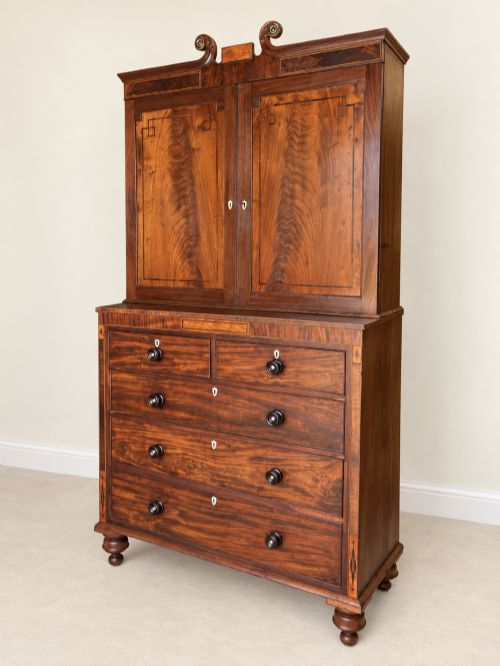
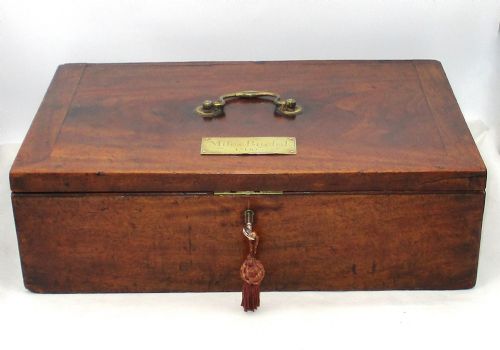
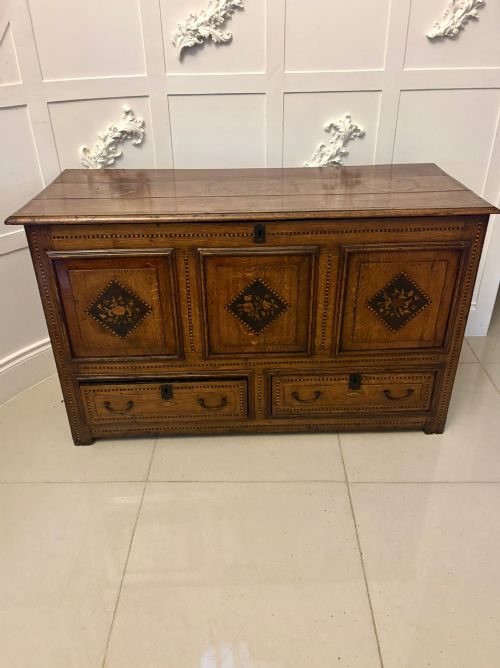
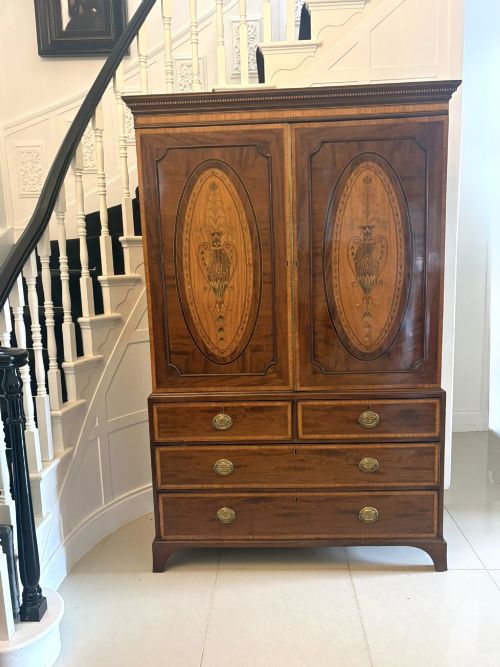
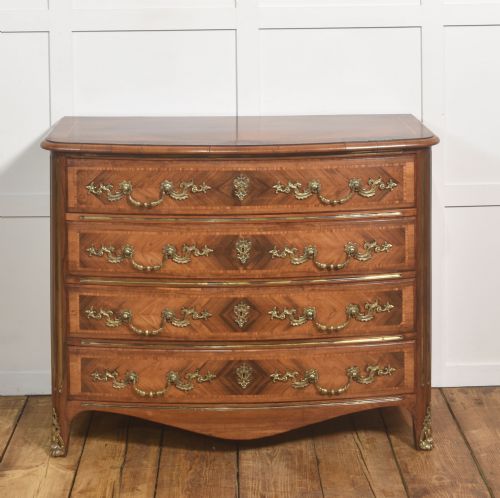
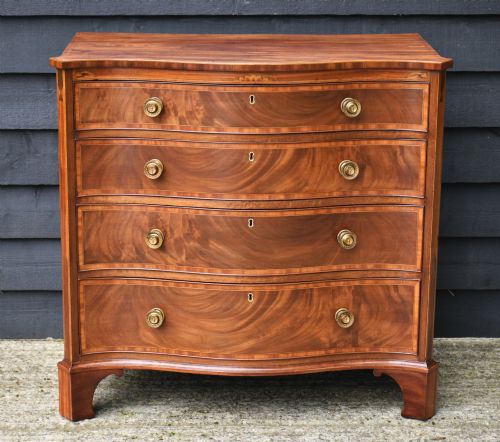
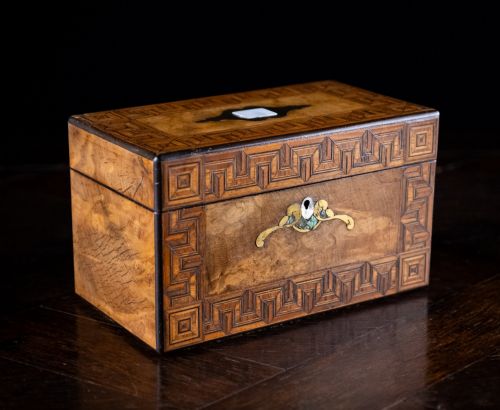
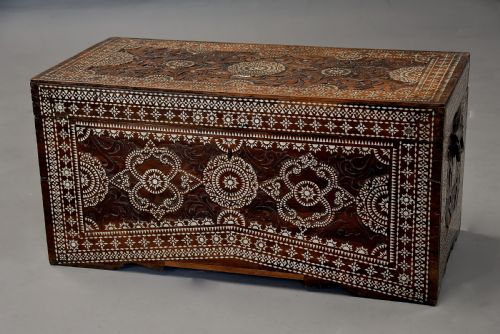
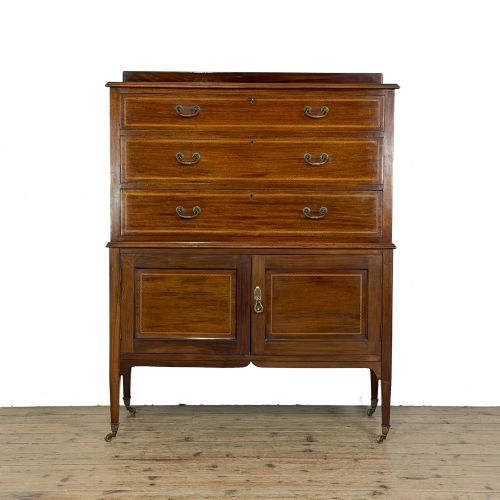
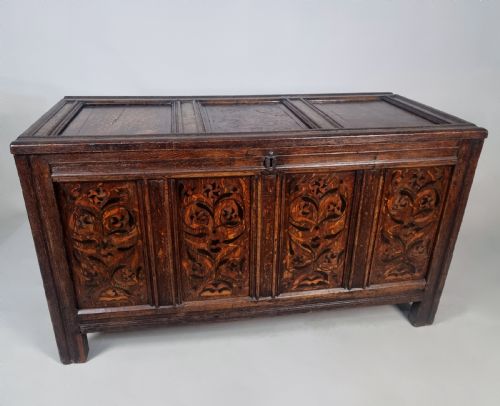
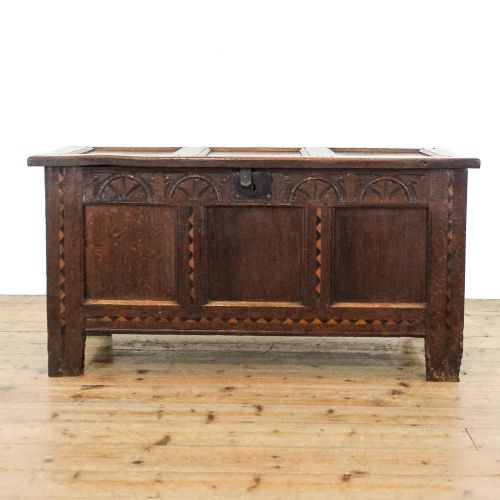
An inlaid storage chest spans several centuries of cabinet-making, encompassing large bedroom wardrobes, mule chests, and smaller lidded coffers designed for secure containment. The pieces meeting this search phrase range from substantial 17th-century oak coffers to refined Georgian mahogany linen presses and delicate Victorian tea caddies.
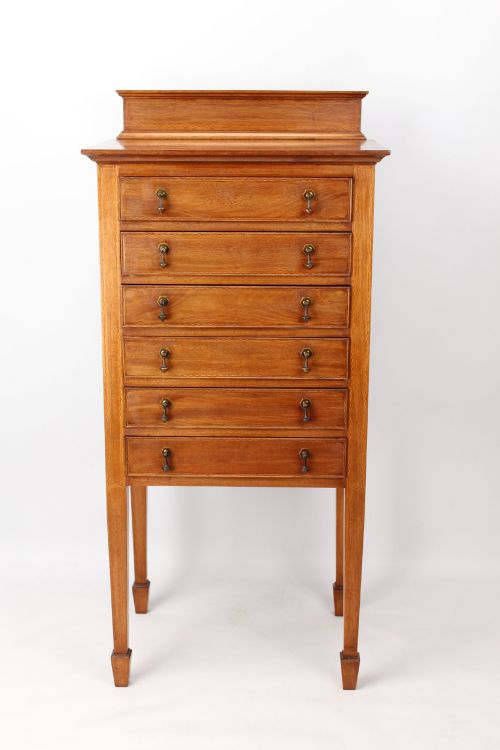
Buyers will frequently encounter larger case pieces such as chests of drawers and linen presses alongside compact tabletop caskets and trunks. These objects served essential domestic purposes for linen, documents, and valuables, adapting their form across the Georgian, Victorian, and Edwardian eras.
How they were made
Cabinet-makers relied on sturdy primary hardwoods including oak, walnut, and mahogany, providing a stable structural carcass for daily utility. These timbers were selected for their durability and grain pattern, forming the robust foundation necessary for large chests and smaller boxes alike.
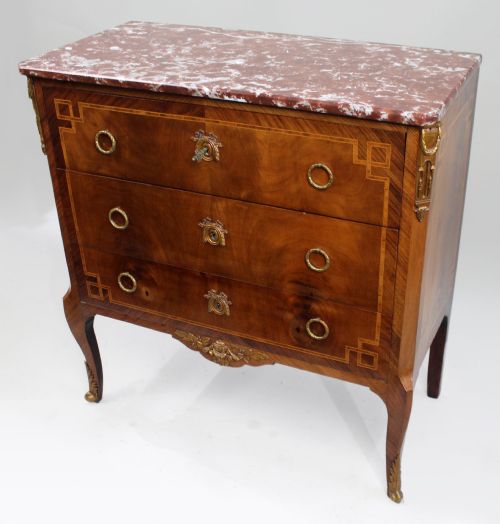
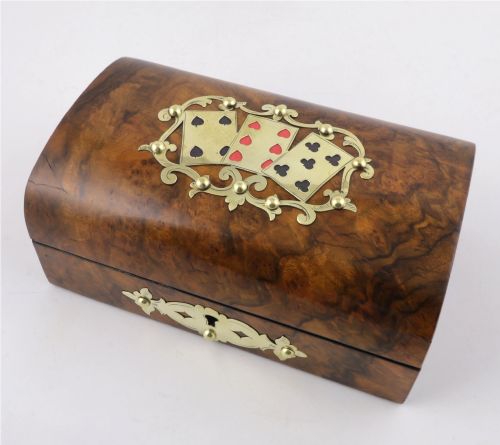
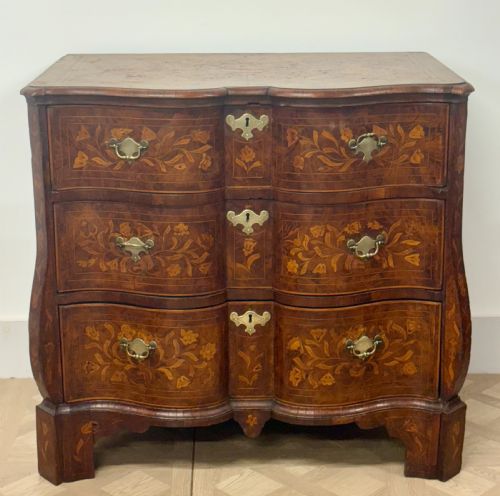
Decorative surface enrichment utilised contrasting woods such as satinwood, boxwood, and fruitwood, alongside insertions of brass, mother-of-pearl, and marquetry pictorial panels. Artisans embedded these materials directly into the timber surface to create geometric parquetry or elaborate floral and figurative compositions.
Decorative surface enrichment incorporates boxwood, satinwood, fruitwood, mother-of-pearl, and brass.
What varies in quality
The standard of an inlaid storage chest depends heavily on the precision of the joinery and the execution of the decorative veneer work. Superior examples demonstrate seamless integration where contrasting elements sit entirely flush within the surrounding wood.
Mastery is also evident in the handling of secondary timbers, dovetail construction within drawer boxes, and the preservation of original brass hardware. Pieces originating from prominent workshops display a sharper definition in carved details and a more coherent compositional balance across the facade.
Druce & Co
The Inlaid Storage Chest Glossary
- Marquetry
- The art of creating decorative pictures or patterns by applying thin veneers of various timbers to a structural surface. This technique allows for elaborate floral and figurative designs across the front of a chest.
- Parquetry
- Geometric mosaic woodwork formed by small pieces of timber arranged in repeating patterns. It differs from marquetry by focusing on symmetrical angles and lines rather than pictorial representation.
- Mule chest
- A traditional storage chest featuring one or more drawers beneath the main lidded compartment. It bridges the transition between a simple coffer and a full chest of drawers.
- Linen press
- A tall cabinet designed specifically for storing folded garments and household textiles, often featuring sliding trays enclosed by upper doors above a chest base.
- Teapoy
- A small decorative chest or caddy supported on a central pillar or legs, originally utilised for storing precious loose tea leaves.
- Tunbridge ware
- A distinct form of British woodwork characterised by tiny mosaic tiles created from naturally coloured woods to form intricate geometric pictures.
Inlaid Storage Chest: Frequently Asked Questions
What is an inlaid storage chest used for?
These pieces served practical domestic storage functions across centuries, housing garments, linens, documents, and precious commodities. Their enclosed compartments protected contents from dust and light while offering secure containment within the household.
Today, they function as versatile statement furniture in living spaces and bedrooms, continuing their original role as decorative receptacles for household items.
How do I tell Georgian periods apart?
Georgian pieces generally exhibit proportion, restraint, and the predominant use of solid mahogany with subtle stringing or classical brass handles. As the period progressed into the late 18th century, lighter satinwood veneers and neoclassical motifs gained popularity.
Earlier Georgian work relies on robust proportions and darker walnut or oak foundations, whereas Regency variations introduce bolder classical brass accents and simpler architectural lines.
Are smaller boxes considered storage chests?
Smaller lidded caskets, tea caddies, and document boxes share the fundamental construction methods and decorative inlay techniques of their larger architectural counterparts. They function on a miniature scale as portable repositories for valuables and correspondence.
Cabinet-makers applied the same marquetry and parquetry skills to these tabletop objects as they did to substantial bedroom wardrobes and linen presses.
How do I care for antique inlaid furniture?
Maintain a stable indoor environment away from direct sunlight and rapid temperature fluctuations to prevent the timber from warping or shrinking. Consistent humidity levels protect fragile veneer adhesives and prevent the inlay from lifting.
Apply traditional beeswax sparingly and buff gently with a soft cloth to preserve the natural lustre of the wood without sealing the surface with modern synthetics.